
USB-C Cable Certification Guide 2026: How to Verify Your Cable Is Genuine and Safe
In the rapidly expanding market for USB-C cable products, certification is your single most reliable indicator of quality, safety, and performance compliance. With counterfeit and substandard cables flooding online marketplaces, understanding USB-C certification programs has become essential for procurement professionals, IT managers, and informed consumers alike.
This comprehensive guide from Eilinks Electronics – a certified USB-C cable manufacturer with over 15 years of industry experience – explains every major certification you need to recognize when sourcing cables for personal or enterprise use.
Why USB-C Certification Matters More Than Ever in 2026
A genuine, certified USB4 cable or Thunderbolt 4 cable undergoes hundreds of hours of laboratory testing before reaching the market. These tests verify electrical safety under extreme conditions, signal integrity at maximum rated speeds, mechanical durability through thousands of plug-unplug cycles, and electromagnetic compatibility with nearby wireless devices.
Non-certified cables skip this rigorous process entirely. Common consequences include:
- Data corruption or slow transfer speeds: Poorly shielded internal wiring causes bit errors at high data rates, leading to file corruption during large transfers or automatic speed fallback that defeats the purpose of buying high-speed cables.
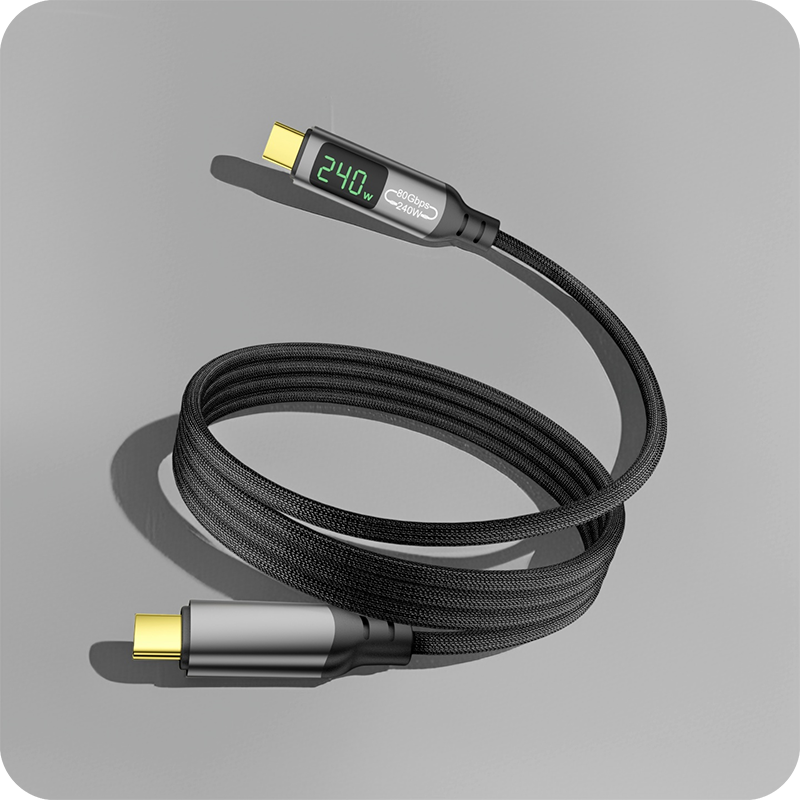
- Overheating and fire risk: Undersized internal conductors cannot safely carry advertised power levels. When used with 240W USB-C chargers, non-certified cables can reach dangerous temperatures within minutes.
- Device port damage: Out-of-spec connector tolerances can physically damage your laptop’s or phone’s USB-C port pins over repeated use.
- Emission violations: Unshielded designs may emit radio frequency interference that disrupts Wi-Fi, Bluetooth, or cellular signals in office environments.
The Major USB-C Certifications Explained
USB-IF Certification (USB Implementers Forum)
The USB-IF operates the industry’s most widely recognized USB certification program. Products bearing the official USB logo have been independently tested at authorized laboratories and verified against the latest USB specifications. Key certifications include:
| Certification Logo | What It Guarantees | Data Speed | Power Delivery |
|---|---|---|---|
| USB4 Version 2.0 | Highest-speed USB4 support, PAM3 signaling | 80 Gbps | Up to 240W (EPR) |
| USB4 Version 1.0 | Original USB4 spec compliance | 40 Gbps | Up to 100W |
| SuperSpeed USB 20Gbps | USB 3.2 Gen 2×2 performance | 20 Gbps | Up to 100W |
| SuperSpeed USB 10Gbps | USB 3.2 Gen 2 / USB 3.1 Gen 2 | 10 Gbps | Up to 100W |
| USB Type-C 2.1 / 2.0 | Connector and cable assembly compliance | Varies | Up to 240W (EPR) |
To verify any product’s USB-IF certification status, visit the official USB-IF Certified Product Listing database at usb.org. Search by manufacturer name or model number to see the complete test report and certification scope.
Thunderbolt Certification (Intel / USB-IF Joint Program)
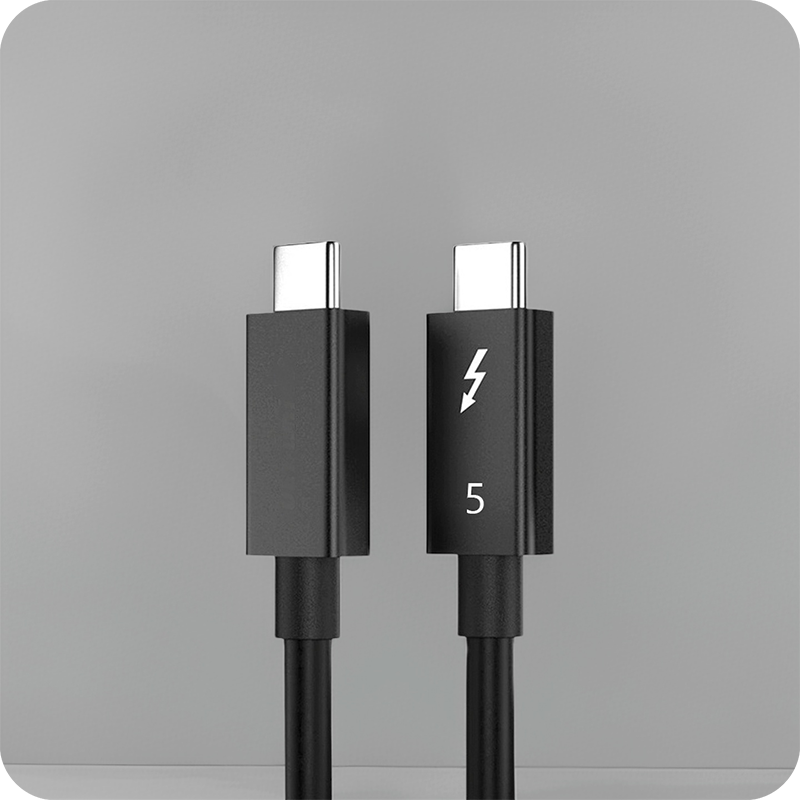
All Thunderbolt 4 cable and Thunderbolt 5 cable products must pass an additional layer of testing beyond basic USB4 requirements. Thunderbolt certification validates PCIe tunneling capability, DisplayPort Alternate Mode support, minimum system wake-from-sleep functionality, and stricter power delivery thresholds.
If your workflow involves connecting external GPUs (Thunderbolt 4 Cable), multiple 4K/8K displays, or pro-grade storage arrays, always choose a Thunderbolt-certified cable to guarantee compatibility across all these demanding use cases.
UL / ETL Safety Certification (North America & Global)
Electrical safety certification from UL (Underwriters Laboratories) or ETL (Intertek’s mark) verifies that a cable’s materials meet flammability resistance standards, its connectors are mechanically robust enough to prevent accidental exposure to live contacts, and its construction complies with national electrical codes. For enterprise deployments, requiring UL or ETL listing on all purchased cables is considered best practice.
FCC and CE Marking (EMC Compliance)
The FCC (United States) and CE marking (European Union) confirm that a cable’s design does not produce harmful electromagnetic interference. This matters particularly when deploying large numbers of USB-C connections in close proximity – such as docking stations, conference room setups, or server rack configurations where dozens of cables run parallel to each other.
How to Identify Counterfeit or Non-Certified Cables
Red Flags on Product Listings
- No explicit mention of “USB-IF Certified” or “Thunderbolt Certified” anywhere in the description
- Clauses like “compatible with” or “works with” instead of actual certification claims
- Pricing dramatically below established brand-name equivalents (too good to be true usually is)
- Seller refuses to provide certification documentation upon request
- Missing or blurry certification logos on packaging and molded cable connectors
Physical Inspection Tips
When you receive a new USB-C cable, inspect it closely before use:
- Connector shell quality: Genuine certified cables feature precision-molded metal shells with clean laser-engraved branding. Counterfeits often show rough edges, off-center printing, or misspelled logos.
- Cable flexibility: Premium cables use flexible TPE or braided outer jackets that resist kinking. Stiff, PVC-only jackets often indicate lower-quality internal construction.
- Weight: A properly constructed USB4 or Thunderbolt cable has noticeable heft due to its thicker gauge internal wires and shielding layers. Extremely lightweight “high-speed” cables are suspicious.
Enterprise Procurement Checklist
For IT managers and purchasing teams evaluating bulk USB-C cable manufacturer suppliers, we recommend the following verification protocol:
- Request certification documents: Ask for copies of USB-IF certificates, UL listings, and test reports for each SKU you plan to purchase.
- Demand sample evaluation: Order small quantities first for hands-on testing with your specific devices and use cases.
- Verify warranty terms: Reputable manufacturers stand behind their products with multi-year warranties covering both defects and performance failures.
- Check manufacturing location: Cables produced in ISO-certified facilities with documented quality management systems consistently outperform unregulated workshop output.
At Eilinks Electronics, we provide full certification documentation, sample units for evaluation, and dedicated technical support for every B2B partner – ensuring your organization sources only genuinely safe, high-performance USB-C connectivity solutions.
Frequently Asked Questions
Q1: Is USB-IF certification mandatory for selling USB-C cables?
While not legally required in most jurisdictions, using the USB-IF trademarked logo without authorization constitutes trademark infringement. More importantly, major retailers and enterprise buyers increasingly require certification as a baseline vendor qualification criterion.
Q2: Can a cable be Thunderbolt-certified without USB-IF certification?
No. The Thunderbolt certification program is administered jointly by Intel and the USB-IF, so Thunderbolt certification automatically includes USB-IF verification. However, a cable can be USB-IF certified without being Thunderbolt-certified if it meets only the base USB specification requirements.
Q3: Do I need different certifications for USB 3.2 Cable vs USB4 Cable?
Yes. Each speed tier has its own set of test parameters. A USB 3.2 Gen 2×2 certified cable has been validated at 20Gbps, but it has NOT been tested at the 40Gbps or 80Gbps levels required for USB4 certification. Always match your cable’s rating to your intended application.
Q4: How long does USB-IF certification typically take?
For new cable designs, the full USB-IF certification process takes approximately 8-12 weeks from initial submission to final certificate issuance. This timeline accounts for lab scheduling, test execution, failure remediation if needed, and administrative review.
Q5: What happens if I use a non-certified cable with my expensive equipment?
Beyond the immediate risks of overheating and data loss, many device manufacturers explicitly state that using non-certified accessories voids the product’s warranty. For enterprise-grade laptops costing $1,500-$5,000, saving $5-$10 per cable is simply not worth the potential liability.


