
logo
✕
  • Home
  • Products
  • About Us
  • Contact
logo
  • Home
  • Products

    USB-C Cable

    • USB 4.0
    • USB 3.2
    • USB 3.0
    • USB 2.0

    Thunderbolt 5/4/3 Cable

    • Thunderbolt 5 Cable
    • Thunderbolt 4 Cable
    • Thunderbolt 3 Cable

    Audio/video Adapter Cable

    • DisplayPort To HDMI Cable
    • HDMI To DispalyPort Cable
    • HDMI To USB-C Cable
    • USB-C To DisplayPort Cable
    • USB-C To HDMI Cable

    USB-C Adapter

    • USB 4.0
    • USB 3.2
    • USB 3.0
    • USB 2.0
  • About Us
  • Contact
Published by eadmin on 2026-05-07
Categories
  • Blog
Tags

USB-C Cable USB 3.2 vs USB4 vs Thunderbolt Speed Guide 2026

Navigating the differences between USB-C cable USB 3.2 vs USB4 vs Thunderbolt speeds in 2026 can be confusing, with overlapping specifications and marketing jargon making it hard to know which cable delivers what performance. This comprehensive guide from Eilinks Electronics cuts through the confusion, providing clear comparisons of every major USB-C cable standard. Whether you need a basic USB-C cable for charging or a Thunderbolt 5 cable for professional workloads, this guide has you covered.

Complete Speed Comparison Table

Let us start with the definitive comparison of all USB-C cable speed standards available in 2026:

Standard Max Data Speed Max Charging Protocol Tunneling Typical Price Range
USB 2.0 480 Mbps 60W None $3-8
USB 3.2 Gen 1 (USB 3.0) 5 Gbps 100W None $6-12
USB 3.2 Gen 2 10 Gbps 100W None $8-15
USB 3.2 Gen 2×2 20 Gbps 100W None $12-20
USB4 Gen 2×2 (v1.0) 20 Gbps 100W USB 3.2, DP 1.4 $15-25
USB4 Gen 3×2 (v1.0) 40 Gbps 100W USB 3.2, DP 1.4, PCIe $20-35
USB4 v2.0 Gen 4 80 Gbps 240W USB 3.2, DP 2.1, PCIe 4.0 $30-50
Thunderbolt 3 40 Gbps 100W DP 1.4, PCIe 3.0 $20-35
Thunderbolt 4 40 Gbps 100W DP 1.4, PCIe 3.0 $25-40
Thunderbolt 5 80 Gbps (120 asym) 240W DP 2.1, PCIe 4.0 $40-70

USB 3.2 Family Explained

The USB 3.2 family is the most commonly encountered USB-C cable standard. Despite its single version number, it encompasses three distinct speed tiers that can cause significant confusion:

USB 3.2 Gen 1 (Formerly USB 3.0 / USB 3.1 Gen 1)

Running at 5Gbps, this is the baseline high-speed USB standard. It uses a single TX/RX lane pair and is sufficient for most peripherals, external HDDs, and 1080p webcam connections. Eilinks Electronics Gen 1 cables are affordable and widely compatible.

USB 3.2 Gen 2 (Formerly USB 3.1 Gen 2)

Doubling the speed to 10Gbps, Gen 2 uses the same single-lane architecture with more efficient 128b/132b encoding. This is the sweet spot for SATA SSD enclosures and 4K display adapters. Eilinks Electronics Gen 2 cables deliver consistent 10Gbps throughput.

USB 3.2 Gen 2×2

This standard uses two lanes simultaneously to achieve 20Gbps. It requires a USB-C cable with all high-speed differential pairs properly connected. Gen 2×2 is popular for high-speed NVMe enclosures but requires both host and device to support the dual-lane mode.

USB4: The Unified Standard

USB4 consolidates the USB and Thunderbolt protocols into a single specification. Based on the Thunderbolt protocol licensed from Intel, USB4 introduces protocol tunneling – the ability to carry USB, DisplayPort, and PCIe traffic simultaneously over a single connection.

USB4 Version 1.0

Mode Speed Lanes Tunneling
USB4 Gen 2×2 20 Gbps 2 lanes at 10 Gbps USB 3.2, DP 1.4
USB4 Gen 3×2 40 Gbps 2 lanes at 20 Gbps USB 3.2, DP 1.4, PCIe

USB4 Version 2.0

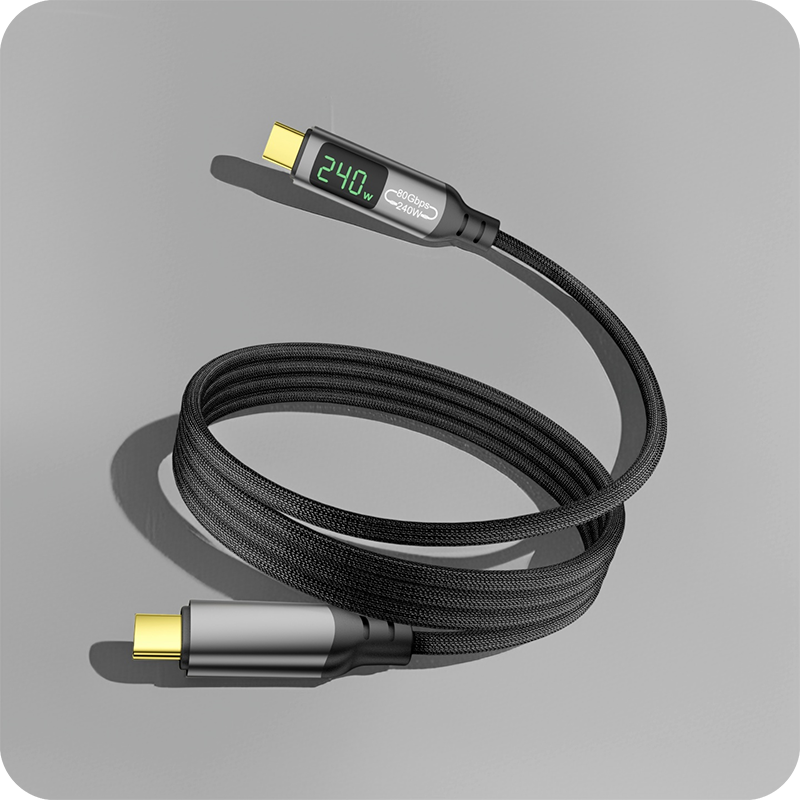
The latest USB4 specification doubles speeds using PAM3 encoding. A USB4 v2.0 cable from Eilinks Electronics supports 80Gbps symmetric or 120Gbps asymmetric bandwidth, making it ideal for 8K displays and high-speed storage.

Thunderbolt: The Premium Tier

Thunderbolt, developed by Intel, represents the premium tier of USB-C cable performance. While USB4 shares Thunderbolt technology, Thunderbolt certification guarantees mandatory features that USB4 makes optional.

Thunderbolt 3 vs Thunderbolt 4

Many users wonder about the difference between TB3 and TB4, as both advertise 40Gbps. The key distinctions are:

Feature Thunderbolt 3 Thunderbolt 4
Max Data Speed 40 Gbps 40 Gbps
PCIe Bandwidth 16 Gbps (minimum) 32 Gbps (mandatory)
Display Support 1x 4K minimum 2x 4K minimum
Power Up to 100W Up to 100W
USB4 Compatibility No Yes (required)
Cable Certification Variable Mandatory

Thunderbolt 5: The New Standard

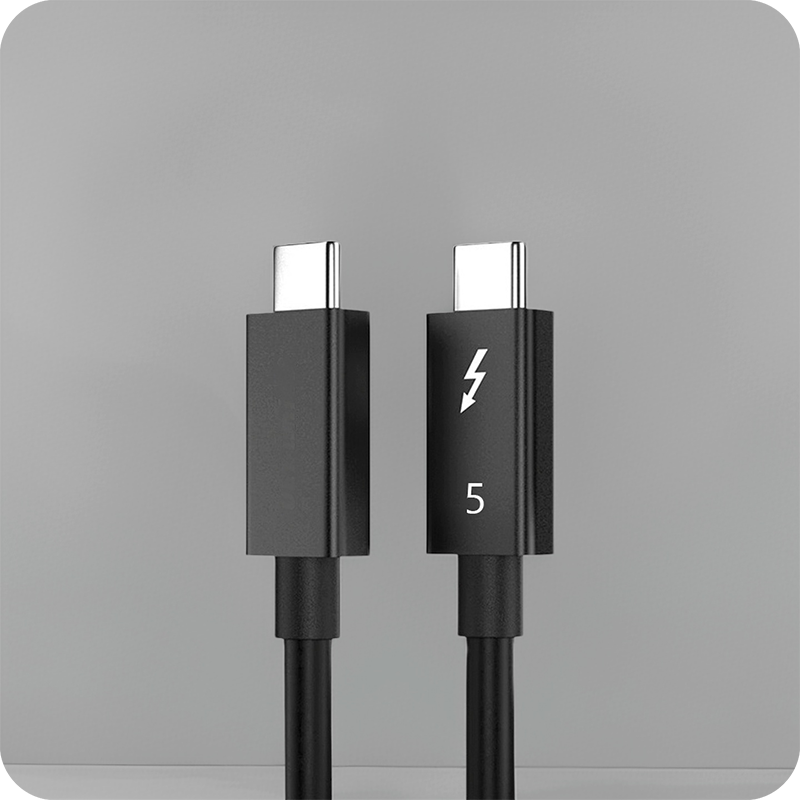
Thunderbolt 5 represents the pinnacle of USB-C cable performance in 2026. With 80Gbps symmetric bandwidth, 120Gbps asymmetric mode, 240W charging, and mandatory PCIe 4.0 x4 tunneling, it is designed for the most demanding professional workflows. Eilinks Electronics Thunderbolt 5 cables are among the first certified products available.

Which Cable Do You Actually Need?

Choosing between USB 3.2, USB4, and Thunderbolt depends on your specific use case. Here is a practical decision guide:

Use Case Minimum Standard Recommended Cable
Charging only (any device) USB 2.0 USB-C charging cable
External HDD / basic peripherals USB 3.2 Gen 1 5Gbps USB-C cable
SATA SSD / 4K single display USB 3.2 Gen 2 10Gbps USB-C cable
NVMe SSD (20Gbps) / dual display USB 3.2 Gen 2×2 20Gbps USB-C cable
Single-cable dock / eGPU Thunderbolt 4 TB4 cable
8K display / pro storage / eGPU Thunderbolt 5 TB5 cable

Backward Compatibility Explained

All USB-C cables are backward compatible with lower-speed standards. A Thunderbolt 5 cable will work with a USB 3.2 Gen 1 port at 5Gbps. However, the reverse is not true – a USB 3.2 cable will not work with Thunderbolt devices that require protocol tunneling. Eilinks Electronics recommends buying the highest-speed cable your budget allows, as this provides the most flexibility for future upgrades.

FAQ Section

Is USB4 the same as Thunderbolt 4?

No. While USB4 Gen 3×2 and Thunderbolt 4 both offer 40Gbps, Thunderbolt 4 mandates PCIe tunneling, dual 4K display support, and strict certification. USB4 makes some of these features optional. A Thunderbolt 4 cable is guaranteed to support all TB4 features.

Can a USB 3.2 cable work with Thunderbolt?

A USB 3.2 USB-C cable will physically connect to a Thunderbolt port, but it will not support Thunderbolt protocol tunneling. The connection will fall back to USB 3.2 speeds and features only.

Is USB4 v2.0 faster than Thunderbolt 4?

Yes. USB4 v2.0 supports 80Gbps compared to Thunderbolt 4 at 40Gbps. However, Thunderbolt 5 matches USB4 v2.0 at 80Gbps with additional mandatory features. Eilinks Electronics offers both options.

Do I need a Thunderbolt cable for an external display?

It depends on the display. A single 4K@60Hz display works with USB 3.2 Gen 2 using DisplayPort Alt Mode. For dual 4K displays, 6K+ displays, or 8K displays, you need USB4 or Thunderbolt 5.

Why are Thunderbolt cables more expensive?

Thunderbolt cables require certified eMarker chips, stricter signal integrity testing, and mandatory USB-IF and Intel certification. The higher cost reflects the more rigorous testing and guaranteed performance that Thunderbolt certification demands. Eilinks Electronics offers competitive pricing on all certified cables.

eadmin
eadmin

Related posts

2026-05-08

USB-C Cable for Drone and Robotics 2026: Lightweight High-Speed Data


Read more
2026-05-08

USB-C Cable for Data Center and Server Room 2026: High-Density Power and Data


Read more
2026-05-08

USB-C Cable Care and Maintenance Guide 2026: Extend Cable Lifespan


Read more

Leave a Reply Cancel reply

Your email address will not be published. Required fields are marked *

Navigation

  • About
  • Contact

Products

  • USB-C Adapter
  • Thunderbolt 5/4/3 Cable
  • Audio/video Adapter Cable
  • USB-C Cable

Contacts

+86 13242969135
Sales@eilinks.com
Chashan Town, Dongguan City, Guangdong , China
© Dongguan Eilinks Eletronics Co.,Ltd All Rights Reserved
  • Consent
  • Details
  • About Cookies

This website uses cookies

We use cookies to personalise content and ads, to provide social media features and to analyse our traffic. We also share information about your use of our site with our social media, advertising and analytics partners who may combine it with other information that you’ve provided to them or that they’ve collected from your use of their services.

Necessary

Necessary cookies help make a website usable by enabling basic functions like page navigation and access to secure areas of the website. The website cannot function properly without these cookies.

Analytics & Performance

Statistic cookies help website owners to understand how visitors interact with websites by collecting and reporting information anonymously.

Marketing

Marketing cookies are used to track visitors across websites. The intention is to display ads that are relevant and engaging for the individual user and thereby more valuable for publishers and third party advertisers.

Cookies are small text files that can be used by websites to make a user's experience more efficient.

The law states that we can store cookies on your device if they are strictly necessary for the operation of this site. For all other types of cookies we need your permission. This means that cookies which are categorized as necessary, are processed based on GDPR Art. 6 (1) (f). All other cookies, meaning those from the categories preferences and marketing, are processed based on GDPR Art. 6 (1) (a) GDPR.

This site uses different types of cookies. Some cookies are placed by third party services that appear on our pages.

You can at any time change or withdraw your consent from the Cookie Declaration on our website.

Learn more about who we are, how you can contact us and how we process personal data in our Privacy Policy.

Please state your consent ID and date when you contact us regarding your consent.

Deny Customize Allow selected Allow all