
Magnetic Anti Tangle USB-C Cable: Coil and Snap Checks
A magnetic anti tangle USB-C cable earns its place in a kit list for two reasons at once: the plug stays put when the cable is tugged, and the cable coils flat instead of knotting in a bag. Eilinks Eletronics assembles this family of consumer charging cables for phone and laptop kits, so both jobs are drawing items.
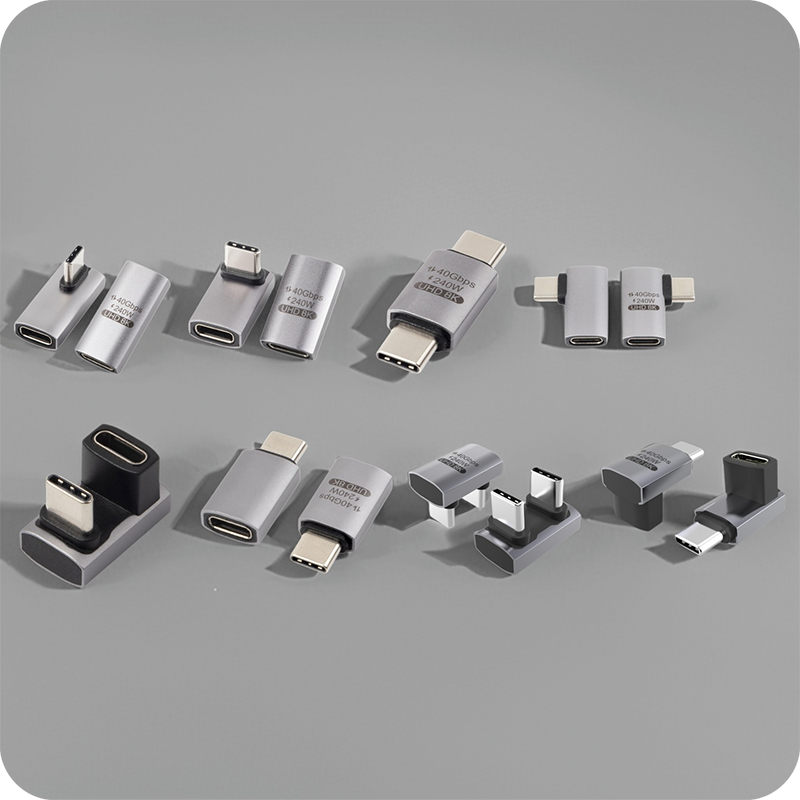
The construction is simple to describe. A standard Type-C plug sits on the host end, a magnet-held tip on the device end, and the length between them is an ordinary charging cable with a jacket chosen to resist tangling; the wider map sits in the full list of connector and jacket options. Most enquiries start with the same two questions: what the magnet actually holds, and what the link carries.
This post works through those questions in the order a buyer meets them: the snap, the charging behaviour, the coil habit, the data rate and the paperwork.
What the Magnetic Tip Actually Holds
The magnetic tip replaces a friction fit with a magnetic one. A cable that is knocked releases instead of levering the receptacle, but the release force is a design choice: a weak magnet drops the device mid-charge while a strong one transfers the whole trip load into the port. The standard Type-C receptacle is rated for 10,000 insertion cycles in the USB Type-C cable and connector specification, and the pogo pins inside a magnetic tip wear on their own schedule.
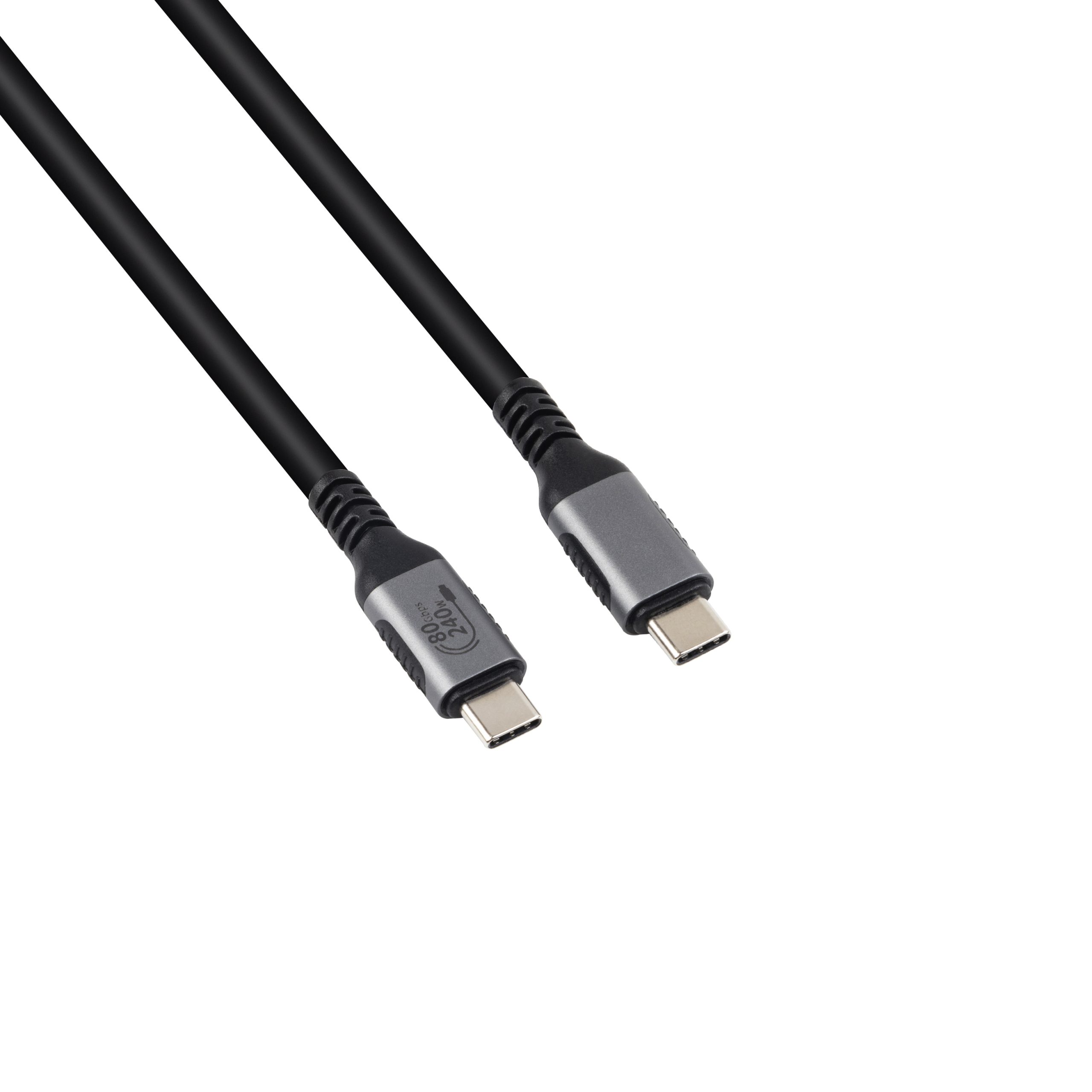
A magnetic anti tangle USB-C cable built in China is only as good as the magnet class behind the tip, and that class is a specification item rather than a marketing one. Eilinks asks for the device mass and the pull direction before quoting, because both move the magnet choice. No specification fixes a tip used as a handle: the contacts take side load every time the device is lifted by the cable.
Does a Magnetic Cable Charge as Fast?
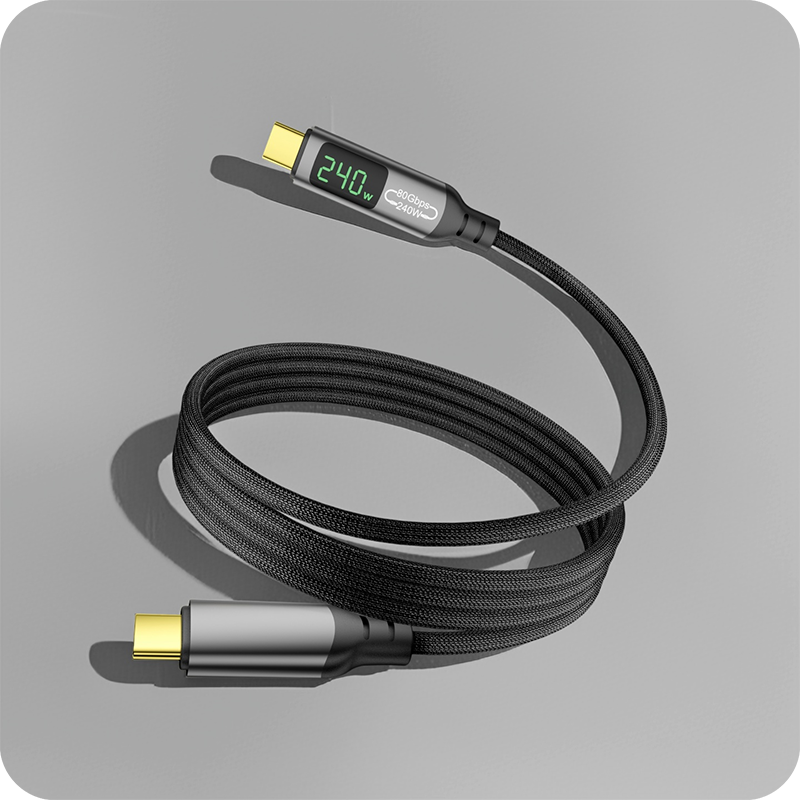
Charging speed is set by the power negotiation, not the magnet. A tip with the full pin set can negotiate 60 W at 20 V × 3 A, and an EPR assembly reaches 240 W at 48 V × 5 A; a tip that only routes USB 2.0 pins caps near 15 W. Check the number printed on the tip or the box: a magnetic USB-C cable charging speed claim without a wattage figure is not a claim.
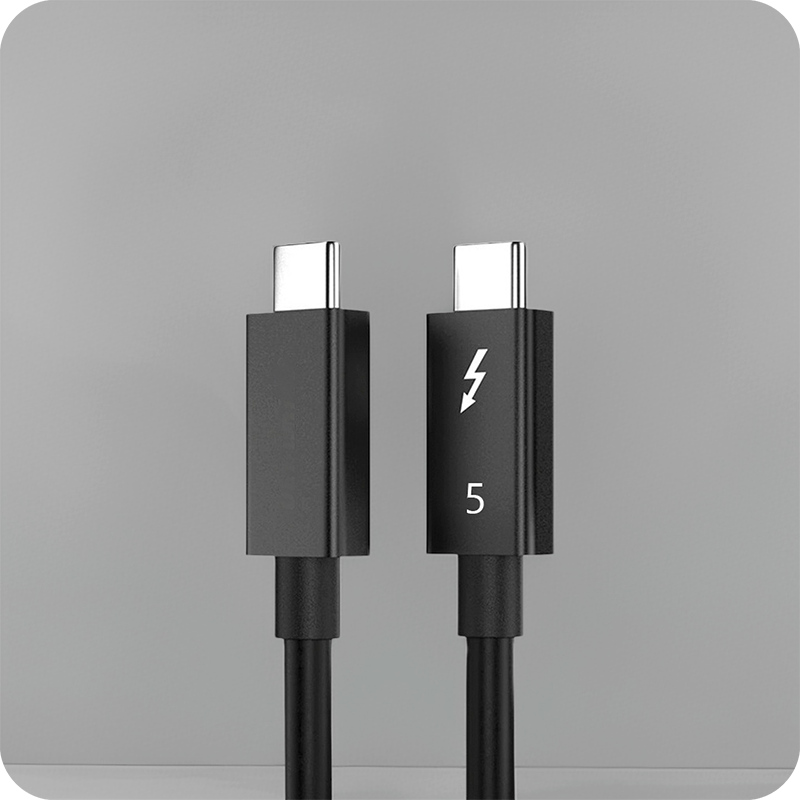
The same arithmetic settles the data question. The magnetic anti tangle USB-C cable supplier that prints the rate on the tip answers the right question, and the honest answer is usually 480 Mbps. The cable on the magnetic nylon braided C-to-C listing from a Chinese manufacturer is the comparison point worth reading before an order is placed.
Coil Memory in a Magnetic Anti Tangle USB-C Cable
Anti-tangle is a property of the jacket and the loop, not the magnet. A flat TPE jacket lies flat and forgets its shape, a nylon braided magnetic USB-C cable holds a loose loop and resists knots, and a silicone sleeve grips itself and remembers every coil. A retractable magnetic USB-C cable takes the length decision away from the user, which works at a desk and badly in a bag.
Braid, Silicone and TPE
The jacket also sets how the cable survives being carried. Braid resists abrasion and shows wear early, useful on a bench; silicone is quiet but picks up dust; TPE is cheapest and stiffest in cold. Eilinks stocks all three jacket options for sample work.
Retractable Variants
A retractable housing adds a second moulded section and a spring, and both are failure points. The mechanism count belongs on the drawing next to the jacket, because a seized housing turns a 1 m cable into a fixed 60 cm one.
| Construction | Effect on the coil | Where it fits |
|---|---|---|
| Flat TPE jacket | Lies flat, low coil memory | Under keyboards and in bags |
| Nylon braid | Holds a loose loop, resists knots | Benches and travel kits |
| Silicone sleeve | Grips itself, high coil memory | Outdoor and field use |
| Retractable spool | Length set by the mechanism | Desks with fixed reach |
- Identify the jacket material on the drawing
- Match the coil habit to the storage method
- Check the loop diameter against the strap or tie
- Record the retraction mechanism count if specified
The magnetic USB-C cable factory in China that answers the coil question with a sample rather than a paragraph is worth a second round. Dongguan Eilinks builds to the coil habit on the order, so the jacket and loop diameter appear on the drawing.
Data Rate Reality on a Magnetic Link
The magnetic USB-C cable vs standard cable comparison is a rate comparison first and a charging comparison second. Most magnetic assemblies are USB 2.0 devices at 480 Mbps, the Hi-Speed rate named in the USB 3.2 page at usb.org, while a plain cable can be a 5 Gbps USB 3.2 Gen 1 link with the full pin count. Where the desk mix matters more than the cable, notes on smartphone charging cable selection cover the phone side.
What 480 Mbps Still Carries
File sync, phone control, firmware updates and audio all fit inside 480 Mbps with room to spare, and the practical test is the job rather than the label: a link that carries a phone’s control traffic all day can still be the wrong link for a capture session. Video is where it stops: a 1080p60 capture stream needs roughly 2.99 Gbps, and a 4K60 frame needs 11.94 Gbps of active video, which is why tethered shooting moves off the magnetic family entirely.
| Desk task | Rate the link has to carry | Outcome on 480 Mbps |
|---|---|---|
| File sync and backup | Sustained sequential reads | Works, limited by the disk |
| Phone tether and control | Low control traffic | Comfortable margin |
| 1080p capture | About 2.99 Gbps of video | Not carried, needs a faster link |
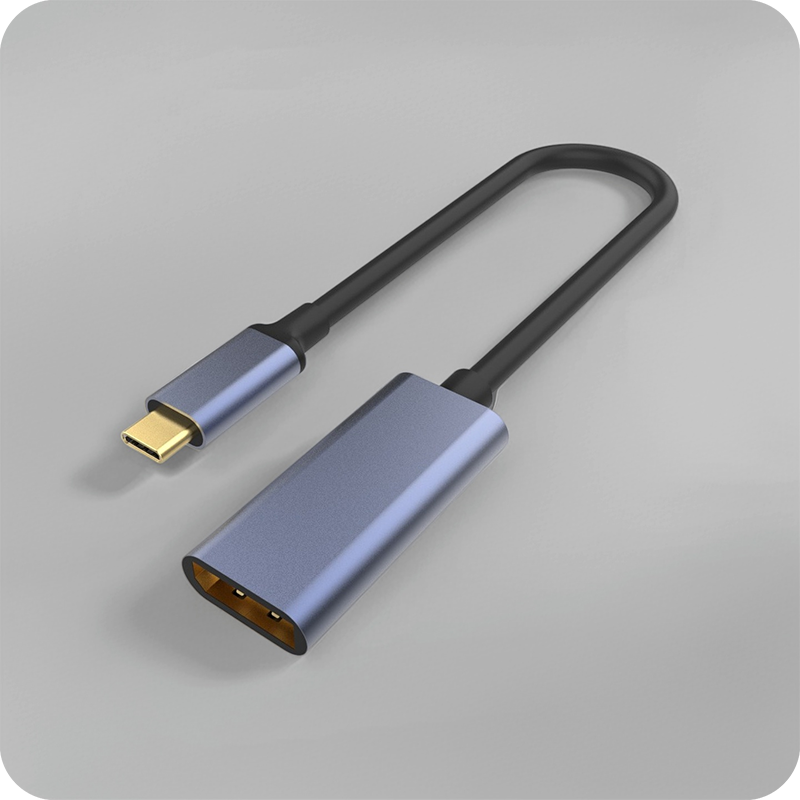
| 4K60 uncompressed | 11.94 Gbps of active video | Not carried, needs Alt Mode |
- List the tasks the cable has to serve
- Note the rate each one needs
- Compare against the rate printed on the tip
- Separate the tasks that need a video link
Length, Retraction and Storage
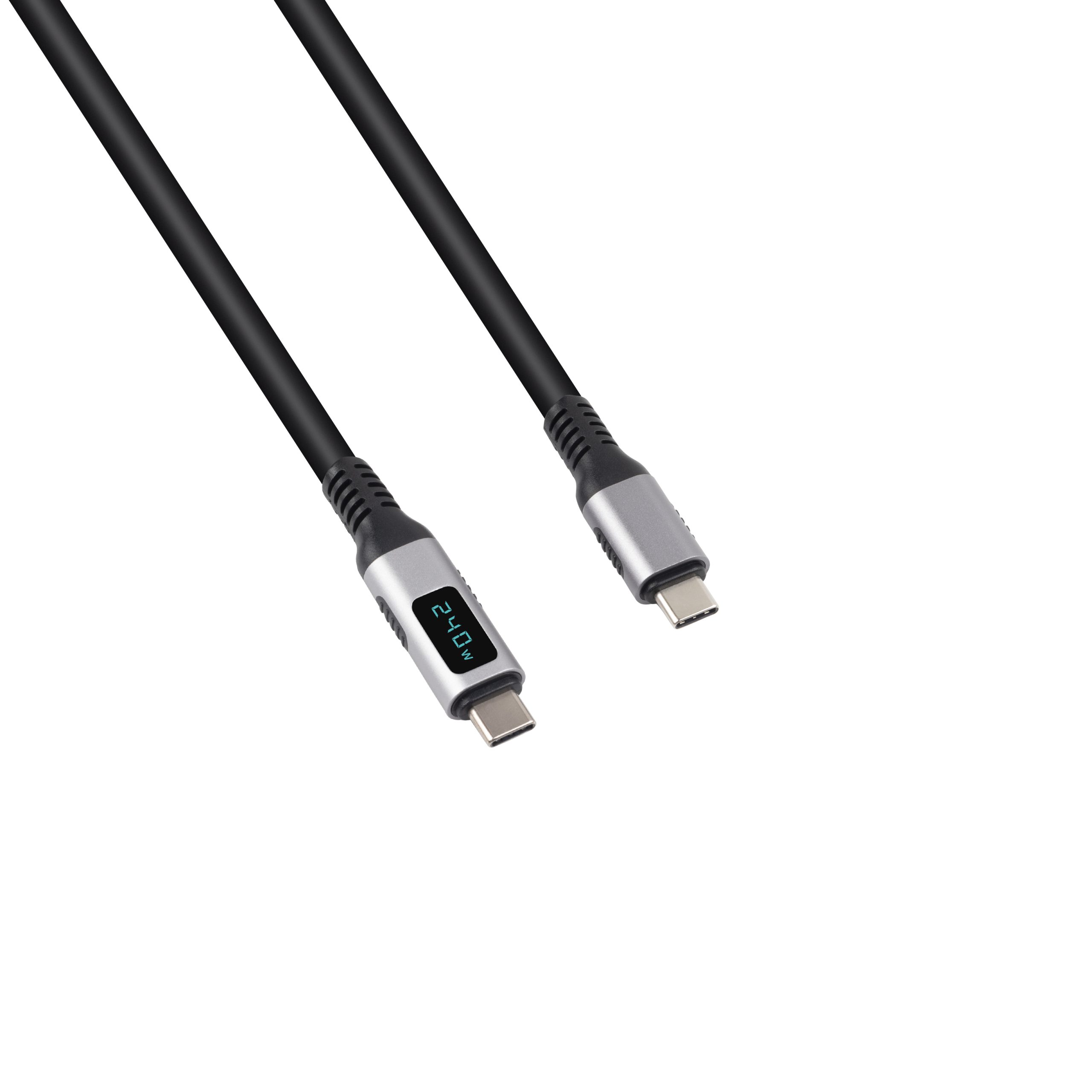
Length interacts with the coil: a 1 m cable stores in a pocket loop, a 1.5 m cable wants a proper wrap, and a 2 m cable needs a strap. The LED-display braided charging cable shows what a mid-run module does to both, and the module has to be planned into the loop rather than fought. A magnetic anti tangle USB-C cable for travel kits is usually specified at 1 m with a flat jacket, because the bag punishes stiff coils.
A magnetic USB-C cable for phone and laptop use in one kit also has to answer which end is which, and colour coding at the moulding is the cheapest answer available. Length labels and coloured collars cost nothing at the drawing stage and save the user a guess every morning, which is why they belong on the same sheet as the jacket callout. Where a plain cable is the second unit in the same bag, a 480 Mbps cable rated for 100 W to 240 W is the comparison sample to hold side by side, so the coil decision is made with the real jacket in hand.
What Records Should an Export Order Carry?
Export work is judged on papers as much as on pictures. CE marking requirements for magnetic USB-C cable shipments sit with the party placing the product on the market, and USB-IF certification requirements cover the USB side separately; neither can be asserted on a buyer’s behalf. The document set is short: a bill of materials naming the magnet class and tip plating, a drawing of the jacket and loop, and which entity holds the technical file.
A supplier that answers with a drawing rather than a listing is worth a second round, and Eilinks Eletronics works from drawings.
Frequently Asked Questions
Does a magnetic anti tangle USB-C cable charge as fast as a plain one?
It can. A tip with the full pin set negotiates the same power as a plain cable, and 60 W at 20 V × 3 A is common on current phones. The limit is the tip: USB 2.0-only assemblies cap out far lower, so check the wattage on the tip.
Can a magnetic tip damage the phone port over time?
The port sees gentler mating because the tip is lighter, and the receptacle is rated for 10,000 insertion cycles. Wear moves to the pogo pins inside the tip, which take side load whenever the device is lifted by the cable, so lift the device.
Is a retractable magnetic USB-C cable worth carrying?
At a fixed desk, usually yes: the length is set once and the housing keeps the coil tidy. In a travel bag the answer is weaker, because the housing is the stiffest part of the assembly and does not fold. A flat-jacket cable packs more easily.
What data rate should a magnetic USB-C cable be expected to carry?
Plan on 480 Mbps unless the listing says otherwise. That covers file sync, phone control and firmware work, and it does not cover a 5 Gbps USB 3.2 Gen 1 workflow or video capture. For video, a plain full-pin cable is safer.
What should a buyer ask a China magnetic anti tangle USB-C cable factory for?
A bill of materials naming the magnet class and tip plating, a drawing of the jacket and coil loop, and which entity holds the technical file for the destination market. CE marking requirements sit with the party placing the product on the market, so ask who signs that file.
Where the Checks Lead
Three questions settle a magnetic order: what the magnet has to hold, what the link has to carry, and how the cable is stored. Two are answered before a catalogue is opened, and both belong on a drawing. A partner that works from drawings gives the better second round.
Send the device mass, the coil habit and the required rate to our engineers, and Eilinks can match the assembly to the kit before a sample is cut.
