logo
✕
  • Home
  • Products
  • About Us
  • Contact
logo
  • Home
  • Products

    USB-C Cable

    • USB 4.0
    • USB 3.2
    • USB 3.0
    • USB 2.0

    Thunderbolt 5/4/3 Cable

    • Thunderbolt 5 Cable
    • Thunderbolt 4 Cable
    • Thunderbolt 3 Cable

    Audio/video Adapter Cable

    • DisplayPort To HDMI Cable
    • HDMI To DispalyPort Cable
    • HDMI To USB-C Cable
    • USB-C To DisplayPort Cable
    • USB-C To HDMI Cable

    USB-C Adapter

    • USB 4.0
    • USB 3.2
    • USB 3.0
    • USB 2.0
  • About Us
  • Contact
Published by eadmin on 2026-04-21
Categories
  • Blog
Tags
  • 240W USB-C
  • USB-C cable
  • USB4 cable

USB Power Delivery 3.1 Explained: How 240W Charging Changes Everything in 2026

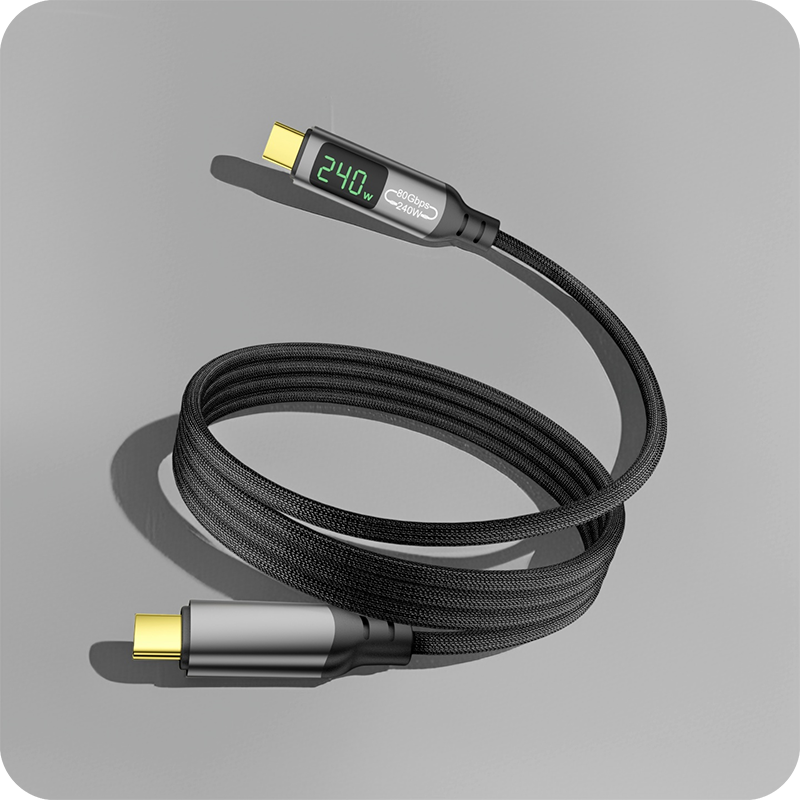
USB-C 240W PD EPR charging cable with LED

When the USB Power Delivery 3.1 specification dropped, it sent shockwaves through the consumer electronics world. We went from 100W to 240W of power delivery over a single USB-C cable — and that is not a small incremental jump. For the first time, USB-C could power monitors, workstations, gaming laptops, and even some small appliances with a single universal connector. Eilinks Electronics has been at the forefront of this transition, engineering USB4 cables and USB-C cable manufacturer solutions that fully leverage the new PD 3.1 standard. In this guide, we break down everything you need to know about 240W USB-C charging in 2026.

What Is USB Power Delivery 3.1?

USB Power Delivery 3.1 (PD 3.1) is the latest revision of the USB-IF’s power delivery protocol. It builds on PD 3.0 by introducing two new power profiles — Extended Power Range (EPR) and Adjustable Voltage Supply (AVS) — that allow devices to negotiate significantly higher wattages than before.

The Jump from 100W to 240W

The original USB-C specification capped power delivery at 20V / 5A = 100W. PD 3.0 maintained this ceiling. But PD 3.1 smashes it:

  • Standard Power Range (SPR): 5V, 9V, 15V, 20V at up to 5A = 100W max (same as before)
  • Extended Power Range (EPR): 28V, 36V, and 48V at up to 5A = up to 240W USB-C charging

Why Does 240W Matter?

Until now, many high-performance laptops, monitors, and peripherals still required proprietary barrel connectors or dedicated power bricks. The 240W ceiling means:

  • Gaming laptops (often 180W–230W TDP) can now charge via USB-C
  • 27-inch and 32-inch monitors can be powered and video-fed through a single cable
  • Workstations, eGPUs, and docking stations can eliminate dedicated power adapters
  • Some small kitchen appliances and power tools may eventually adopt USB-C EPR

How Does PD 3.1 Work?

Voltage and Current Negotiation

USB-C cables and devices use a smart handshake protocol. When you plug a device into a charger, they negotiate the optimal power profile in real time. The device tells the charger what it needs, and the charger responds with what it can deliver. PD 3.1 supports five fixed voltages (5V, 9V, 15V, 20V, 28V, 36V, 48V) plus an Adjustable Voltage Supply mode that lets devices request any voltage between 15V and the maximum in 50mV steps.

EPR Cables: What Makes Them Different?

Not every USB-C cable can handle 240W USB-C charging. EPR cables are specially engineered to support the higher 28V, 36V, and 48V voltages. You will recognize them by the EPR logo on the cable body or packaging. A non-EPR cable will negotiate at the standard 100W maximum — it simply will not go higher, even if both device and charger support EPR.

At Eilinks Electronics, all our EPR-rated cables are tested to support 48V / 5A = 240W sustained power delivery, with robust shielding to prevent overheating during extended high-wattage sessions.

The Role of USB4 Cables

USB4 cables are the ideal physical carrier for PD 3.1 EPR power delivery. USB4 version 2.0 supports 120W by default, but when paired with an EPR-rated USB4 cable, you can achieve the full 240W while simultaneously enjoying 40Gbps or 80Gbps data transfer. This convergence of data, video, and power on a single cable is exactly why USB4 is becoming the de facto standard for modern workstations.

USB Power Delivery 3.1 vs PD 3.0: Full Comparison

Feature USB PD 3.0 USB PD 3.1 EPR
Maximum Power 100W (20V / 5A) 240W (48V / 5A)
Voltage Options 5V, 9V, 15V, 20V 5V, 9V, 15V, 20V, 28V, 36V, 48V + AVS
Cable Type Required Standard USB-C (100W) EPR-rated USB-C Cable
Data + Power Simultaneously Yes (USB 3.2) Yes (USB4 40/80Gbps)
PPS Support Yes (Programmable Power Supply) Enhanced PPS + AVS
Typical Use Cases Phones, tablets, ultrabooks Gaming laptops, monitors, workstations, eGPUs

What Devices Support 240W USB-C Charging in 2026?

Laptops and Mobile Workstations

The list of laptops supporting 240W USB-C charging has grown dramatically in 2026. Major brands including Dell XPS, Lenovo ThinkPad X1 Carbon, Apple MacBook Pro (M4 series), and ASUS ROG have all adopted EPR-based USB-C charging. Some high-performance gaming laptops require 180W–230W, and the jump to 240W means these machines can now run and charge off a single USB4 cable — eliminating the need for a separate power brick.

Monitors and Displays

USB-C monitor charging has been limited to 65W–100W for years, which was fine for ultrabooks but insufficient for larger workstations. With PD 3.1 EPR, monitors like the Dell UltraSharp 32 6K and LG UltraFine series can now deliver 96W–140W to connected laptops while driving the display — all through one USB-C cable.

Docking Stations and eGPUs

Docking stations that previously required a separate barrel jack for power can now rely solely on USB-C EPR. High-end Thunderbolt 4 and USB4 docking stations from Eilinks Electronics are engineered to deliver up to 240W upstream power to a connected laptop while providing video, ethernet, and USB-A connectivity downstream.

Safety Considerations: Can 240W Damage Your Device?

This is the question we get most often at Eilinks Electronics. The short answer: no — USB Power Delivery 3.1 is designed with multiple safety layers.

Over-Current and Over-Voltage Protection

Every PD 3.1 certified device and charger implements strict current limiting. The handshake protocol means a device will never draw more power than it negotiates for. If you plug a phone that only needs 18W into a 240W charger, the charger will only deliver 18W. The device is always in control.

Cable Safety and Heat Management

The concern with high-power cables is heat. USB-IF requires EPR cables to pass rigorous thermal testing. Eilinks Electronics EPR cables feature multi-layer shielding, high-temperature-rated insulation, and gold-plated connectors to ensure safe operation even at maximum sustained load. Always look for the USB-IF certification logo when purchasing high-wattage USB-C cables.

The Risk of Non-Certified Cables

Counterfeit and non-certified USB-C cables are a genuine risk at high wattages. A cable that claims to support 240W but lacks proper EPR certification may overheat, melt, or cause device damage. We strongly recommend purchasing from reputable manufacturers like Eilinks Electronics who subject every cable to USB-IF compliance testing before release.

How to Identify PD 3.1 EPR Cables and Chargers

Not all USB-C cables and chargers are created equal. Here is how to make sure you are getting a true PD 3.1 EPR product:

  • Look for the EPR logo (a cable icon with a power rating of 240W) on the product or packaging
  • Check the specs: 28V, 36V, or 48V support must be explicitly listed
  • USB-IF certification is available at usb.org — verify the product is in the certified registry
  • Inspect the connector: EPR cables typically have reinforced strain relief and thicker gauge wire

At Eilinks Electronics, all our USB-C EPR cables are fully USB-IF certified and available in the USB-C cable shop with detailed specifications for every product.

The Future of USB Power Delivery

USB-IF is already working on future revisions of the PD specification. We expect higher wattages (potentially up to 480W) in the next generation, driven by the growing power demands of AI PCs, electric vehicle accessories, and smart home devices. The USB-C connector is rapidly becoming the universal power standard that the industry has needed for decades.

Eilinks Electronics is committed to staying ahead of these developments. Our engineering team actively participates in USB-IF working groups and tests new EPR and USB4 2.0 products in our Shenzhen facility before global release.

Frequently Asked Questions (FAQ)

1. Can I use a 240W USB-C charger to charge my phone?

Yes. USB Power Delivery 3.1 is fully backward compatible. Your phone will negotiate the wattage it needs — typically 18W to 65W — regardless of the charger’s maximum output. A 240W charger will safely deliver only what your device requests.

2. Do I need a special cable for 240W charging?

Yes. You need an EPR-rated USB-C cable that supports 48V / 5A. Standard USB-C cables are limited to 100W (20V / 5A) and will not negotiate higher voltages even if connected to a 240W charger.

3. Will 240W USB-C charging damage my laptop battery?

No. PD 3.1 chargers and devices communicate to determine the exact power requirements. Your laptop’s battery management system controls charging current and voltage. High-wattage chargers do not “force” more power into the battery than it can safely accept.

4. What is the difference between USB PD 3.1 and Thunderbolt 4?

USB Power Delivery is a power negotiation protocol. Thunderbolt 4 is a data/video/power protocol that incorporates USB PD alongside high-speed data transfer (40Gbps) and video output (dual 4K or single 8K). Many Thunderbolt 4 cable products support PD 3.0 at up to 100W, and newer Thunderbolt 5 and USB4 2.0 cables support EPR at up to 240W.

5. Why choose Eilinks Electronics for USB-C EPR cables?

Eilinks Electronics is a professional USB-C cable manufacturer with USB-IF certification, in-house testing labs, and 15+ years of experience producing high-speed data and power delivery cables for global brands. Every EPR cable we sell is individually tested for 48V / 5A sustained performance before shipping.

eadmin
eadmin

Related posts

2026-05-08

USB-C Cable for Drone and Robotics 2026: Lightweight High-Speed Data


Read more
2026-05-08

USB-C Cable for Data Center and Server Room 2026: High-Density Power and Data


Read more
2026-05-08

USB-C Cable Care and Maintenance Guide 2026: Extend Cable Lifespan


Read more

Leave a Reply Cancel reply

Your email address will not be published. Required fields are marked *

Navigation

  • About
  • Contact

Products

  • USB-C Adapter
  • Thunderbolt 5/4/3 Cable
  • Audio/video Adapter Cable
  • USB-C Cable

Contacts

+86 13242969135
Sales@eilinks.com
Chashan Town, Dongguan City, Guangdong , China
© Dongguan Eilinks Eletronics Co.,Ltd All Rights Reserved
  • Consent
  • Details
  • About Cookies

This website uses cookies

We use cookies to personalise content and ads, to provide social media features and to analyse our traffic. We also share information about your use of our site with our social media, advertising and analytics partners who may combine it with other information that you’ve provided to them or that they’ve collected from your use of their services.

Necessary

Necessary cookies help make a website usable by enabling basic functions like page navigation and access to secure areas of the website. The website cannot function properly without these cookies.

Analytics & Performance

Statistic cookies help website owners to understand how visitors interact with websites by collecting and reporting information anonymously.

Marketing

Marketing cookies are used to track visitors across websites. The intention is to display ads that are relevant and engaging for the individual user and thereby more valuable for publishers and third party advertisers.

Cookies are small text files that can be used by websites to make a user's experience more efficient.

The law states that we can store cookies on your device if they are strictly necessary for the operation of this site. For all other types of cookies we need your permission. This means that cookies which are categorized as necessary, are processed based on GDPR Art. 6 (1) (f). All other cookies, meaning those from the categories preferences and marketing, are processed based on GDPR Art. 6 (1) (a) GDPR.

This site uses different types of cookies. Some cookies are placed by third party services that appear on our pages.

You can at any time change or withdraw your consent from the Cookie Declaration on our website.

Learn more about who we are, how you can contact us and how we process personal data in our Privacy Policy.

Please state your consent ID and date when you contact us regarding your consent.

Deny Customize Allow selected Allow all