
logo
✕
  • Home
  • Products
  • About Us
  • Contact
logo
  • Home
  • Products

    USB-C Cable

    • USB 4.0
    • USB 3.2
    • USB 3.0
    • USB 2.0

    Thunderbolt 5/4/3 Cable

    • Thunderbolt 5 Cable
    • Thunderbolt 4 Cable
    • Thunderbolt 3 Cable

    Audio/video Adapter Cable

    • DisplayPort To HDMI Cable
    • HDMI To DispalyPort Cable
    • HDMI To USB-C Cable
    • USB-C To DisplayPort Cable
    • USB-C To HDMI Cable

    USB-C Adapter

    • USB 4.0
    • USB 3.2
    • USB 3.0
    • USB 2.0
  • About Us
  • Contact
Published by eadmin on 2026-05-07
Categories
  • Blog
Tags

USB-C Cable Charging Speed Comparison Chart 2026

When it comes to powering your devices efficiently, understanding the USB-C cable charging speed comparison in 2026 is essential. With rapid advancements in USB Power Delivery technology, choosing the right USB-C cable can mean the difference between a 20-minute top-up and a 2-hour wait. Eilinks Electronics has been at the forefront of cable engineering, delivering certified high-performance cables that meet the latest USB-IF specifications. Whether you need a standard USB-C cable or a USB4 cable, this guide breaks down every charging tier available today.

Understanding USB-C Charging Speeds in 2026

The USB-C cable ecosystem has evolved dramatically. In 2026, charging speeds range from 15W basic charging up to 240W with USB PD 3.1 Extended Power Range. The key factor is whether your cable carries an eMarker chip, which negotiates higher power levels between the source and device. Eilinks Electronics ensures all its high-power cables include certified eMarkers for safe, reliable charging.

USB PD Power Profiles

The USB Power Delivery specification defines several power profiles that determine how much power can flow through a USB-C cable:

PD Profile Voltage Current Max Power Cable Requirement
PD 2.0 5V 3A 15W Standard USB-C
PD 2.0 9V 3A 27W Standard USB-C
PD 3.0 9V 3A 27W eMarker for >3A
PD 3.0 15V 3A 45W eMarker required
PD 3.0 20V 5A 100W 5A eMarker cable
PD 3.1 EPR 28V 5A 140W EPR-rated cable
PD 3.1 EPR 36V 5A 180W EPR-rated cable
PD 3.1 EPR 48V 5A 240W EPR-rated cable

Charging Speed Comparison by Device Type

Different devices demand different charging speeds. A smartphone may only need 27W for fast charging, while a MacBook Pro or gaming laptop requires 100W or more. Here is a practical comparison of real-world charging times using Eilinks Electronics certified cables:

Device Battery Charging Wattage 0-50% Time 0-100% Time
iPhone 16 Pro 3,582 mAh 27W (PD 3.0) ~25 min ~65 min
Samsung Galaxy S26 5,000 mAh 45W (PD 3.0) ~20 min ~55 min
iPad Pro M4 10,308 mAh 45W (PD 3.0) ~45 min ~120 min
MacBook Air M4 52.6 Wh 70W (PD 3.1) ~35 min ~90 min
MacBook Pro 16″ 100 Wh 140W (PD 3.1) ~30 min ~75 min
Gaming Laptop 90 Wh 240W (PD 3.1) ~25 min ~60 min

Why Cable Quality Matters for Charging Speed

Not all USB-C cables deliver the same performance. A cheap uncertified cable may claim 100W support but lack the proper eMarker chip, causing the charger to fall back to 60W or even 15W for safety. Eilinks Electronics tests every cable against USB-IF compliance standards to guarantee rated performance. Key quality factors include:

  • Wire gauge: Thicker wires (lower AWG) reduce resistance and heat, enabling 5A current at 48V
  • eMarker chip: Required for any power delivery above 60W; authenticates cable capability to source and device
  • Shielding: Proper EMI shielding prevents interference that can disrupt PD negotiation
  • Connector durability: High-quality pins maintain low contact resistance over thousands of insertions

For the best results with high-power charging, choose a certified USB-C cable from Eilinks Electronics that matches your power requirements.

Thunderbolt vs USB-C Charging

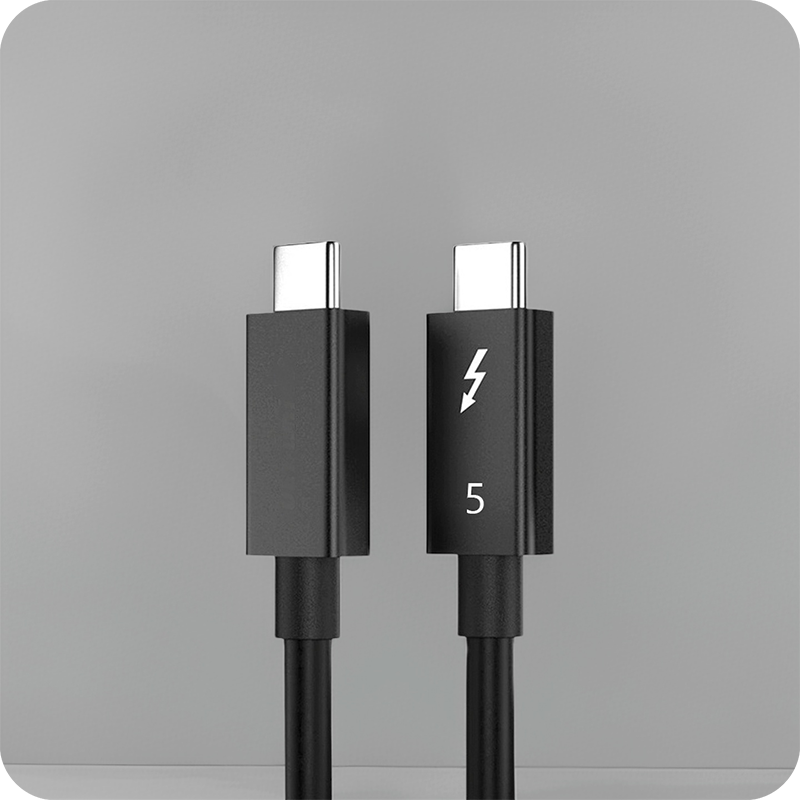
Many users confuse Thunderbolt cables with standard USB-C charging cables. While all Thunderbolt cables use the USB-C connector, they offer additional data capabilities. A Thunderbolt 4 cable supports 100W charging alongside 40Gbps data, and the newer Thunderbolt 5 cable delivers up to 240W with 120Gbps bandwidth. If you need both fast charging and high-speed data, Eilinks Electronics Thunderbolt cables are the ideal solution.

Thunderbolt Charging Capabilities

Cable Type Max Charging Max Data Speed Typical Use Case
USB-C (USB 2.0) 60W 480 Mbps Basic charging
USB-C (USB 3.2) 100W 20 Gbps General use
Thunderbolt 4 100W 40 Gbps Docking stations
Thunderbolt 5 240W 120 Gbps Pro workstations

How to Choose the Right USB-C Cable for Charging

Selecting the correct USB-C cable for your charging needs involves three steps. First, check your device maximum charging wattage. Second, verify the cable supports at least that wattage with an eMarker if needed. Third, ensure the cable length is appropriate, as longer cables may have higher resistance. Eilinks Electronics offers cables in various lengths from 0.5m to 2m, all rated for their specified power delivery.

Always look for USB-IF certification logos on packaging. These logos confirm the cable has passed independent testing for safety and performance. Eilinks Electronics cables carry these certifications, giving you confidence that the charging speeds listed on the label are the speeds you will actually experience.

FAQ Section

What is the fastest USB-C charging speed available in 2026?

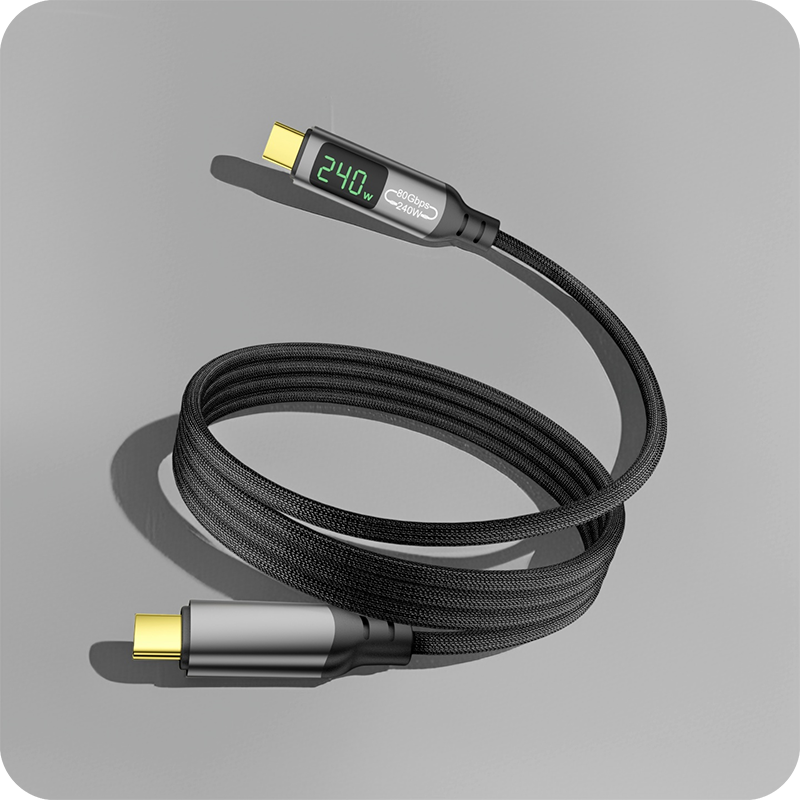
The fastest USB-C charging speed in 2026 is 240W (48V/5A) under the USB PD 3.1 Extended Power Range specification. This requires an EPR-certified cable like those from Eilinks Electronics.

Do all USB-C cables support fast charging?

No. Only cables with an eMarker chip support charging above 60W. Basic USB-C cables without eMarkers are limited to 3A at 20V (60W maximum). For higher speeds, choose a certified USB-C cable.

Can a USB-C cable affect my charging speed?

Absolutely. A cable with thin wires, no eMarker, or poor construction will limit charging speed. The charger and device negotiate power based on cable capability, so an inadequate cable forces a lower wattage.

Is 240W USB-C charging safe?

Yes, when using certified cables. The USB PD 3.1 specification includes multiple safety mechanisms including over-voltage protection, over-current protection, and thermal monitoring. Eilinks Electronics EPR cables are fully tested to these standards.

What cable do I need for 140W MacBook Pro charging?

You need a USB-C cable rated for PD 3.1 EPR with support for 28V/5A. A USB4 cable or Thunderbolt 4 cable from Eilinks Electronics will support this wattage.

eadmin
eadmin

Related posts

2026-05-08

USB-C Cable for Drone and Robotics 2026: Lightweight High-Speed Data


Read more
2026-05-08

USB-C Cable for Data Center and Server Room 2026: High-Density Power and Data


Read more
2026-05-08

USB-C Cable Care and Maintenance Guide 2026: Extend Cable Lifespan


Read more

Leave a Reply Cancel reply

Your email address will not be published. Required fields are marked *

Navigation

  • About
  • Contact

Products

  • USB-C Adapter
  • Thunderbolt 5/4/3 Cable
  • Audio/video Adapter Cable
  • USB-C Cable

Contacts

+86 13242969135
Sales@eilinks.com
Chashan Town, Dongguan City, Guangdong , China
© Dongguan Eilinks Eletronics Co.,Ltd All Rights Reserved
  • Consent
  • Details
  • About Cookies

This website uses cookies

We use cookies to personalise content and ads, to provide social media features and to analyse our traffic. We also share information about your use of our site with our social media, advertising and analytics partners who may combine it with other information that you’ve provided to them or that they’ve collected from your use of their services.

Necessary

Necessary cookies help make a website usable by enabling basic functions like page navigation and access to secure areas of the website. The website cannot function properly without these cookies.

Analytics & Performance

Statistic cookies help website owners to understand how visitors interact with websites by collecting and reporting information anonymously.

Marketing

Marketing cookies are used to track visitors across websites. The intention is to display ads that are relevant and engaging for the individual user and thereby more valuable for publishers and third party advertisers.

Cookies are small text files that can be used by websites to make a user's experience more efficient.

The law states that we can store cookies on your device if they are strictly necessary for the operation of this site. For all other types of cookies we need your permission. This means that cookies which are categorized as necessary, are processed based on GDPR Art. 6 (1) (f). All other cookies, meaning those from the categories preferences and marketing, are processed based on GDPR Art. 6 (1) (a) GDPR.

This site uses different types of cookies. Some cookies are placed by third party services that appear on our pages.

You can at any time change or withdraw your consent from the Cookie Declaration on our website.

Learn more about who we are, how you can contact us and how we process personal data in our Privacy Policy.

Please state your consent ID and date when you contact us regarding your consent.

Deny Customize Allow selected Allow all