logo
✕
  • Home
  • Products
  • About Us
  • Contact
logo
  • Home
  • Products

    USB-C Cable

    • USB 4.0
    • USB 3.2
    • USB 3.0
    • USB 2.0

    Thunderbolt 5/4/3 Cable

    • Thunderbolt 5 Cable
    • Thunderbolt 4 Cable
    • Thunderbolt 3 Cable

    Audio/video Adapter Cable

    • DisplayPort To HDMI Cable
    • HDMI To DispalyPort Cable
    • HDMI To USB-C Cable
    • USB-C To DisplayPort Cable
    • USB-C To HDMI Cable

    USB-C Adapter

    • USB 4.0
    • USB 3.2
    • USB 3.0
    • USB 2.0
  • About Us
  • Contact
Published by eadmin on 2026-04-28
Categories
  • Blog
Tags

USB-C Cables for Data Centers: High-Speed Connectivity for Modern Infrastructure in 2026

Data centers are undergoing a fundamental connectivity shift. As servers, storage arrays, and networking equipment increasingly adopt USB-C and USB4 interfaces, the traditional dominance of proprietary and niche connectors is being challenged. USB-C offers a universal, hot-pluggable, high-bandwidth interface that simplifies cable management, reduces costs, and enables new deployment architectures. Eilinks Electronics, a professional USB-C cable manufacturer, examines how USB-C cables are being adopted in data center environments and what specifications matter most.

Why USB-C in Data Centers?

Traditional data center connectivity relies on a mix of SAS, SATA, Ethernet (RJ45), SFP+, and proprietary management ports. USB-C consolidation offers several advantages:

  • Universal connector: One cable type for management, storage connectivity, and peripheral attachment reduces cable inventory and training requirements
  • Hot-pluggable: USB-C supports hot-swap connections, enabling zero-downtime maintenance
  • Power + Data: USB-C PD powers connected devices while carrying data, reducing power cable runs
  • High bandwidth: A USB4 cable at 40Gbps matches many direct-attach storage interfaces, and 80Gbps USB4 2.0 exceeds them
  • PCIe tunneling: USB4 and Thunderbolt support PCIe data tunneling for NVMe storage and GPU connectivity

Key Data Center Applications

Server Management and Console Access

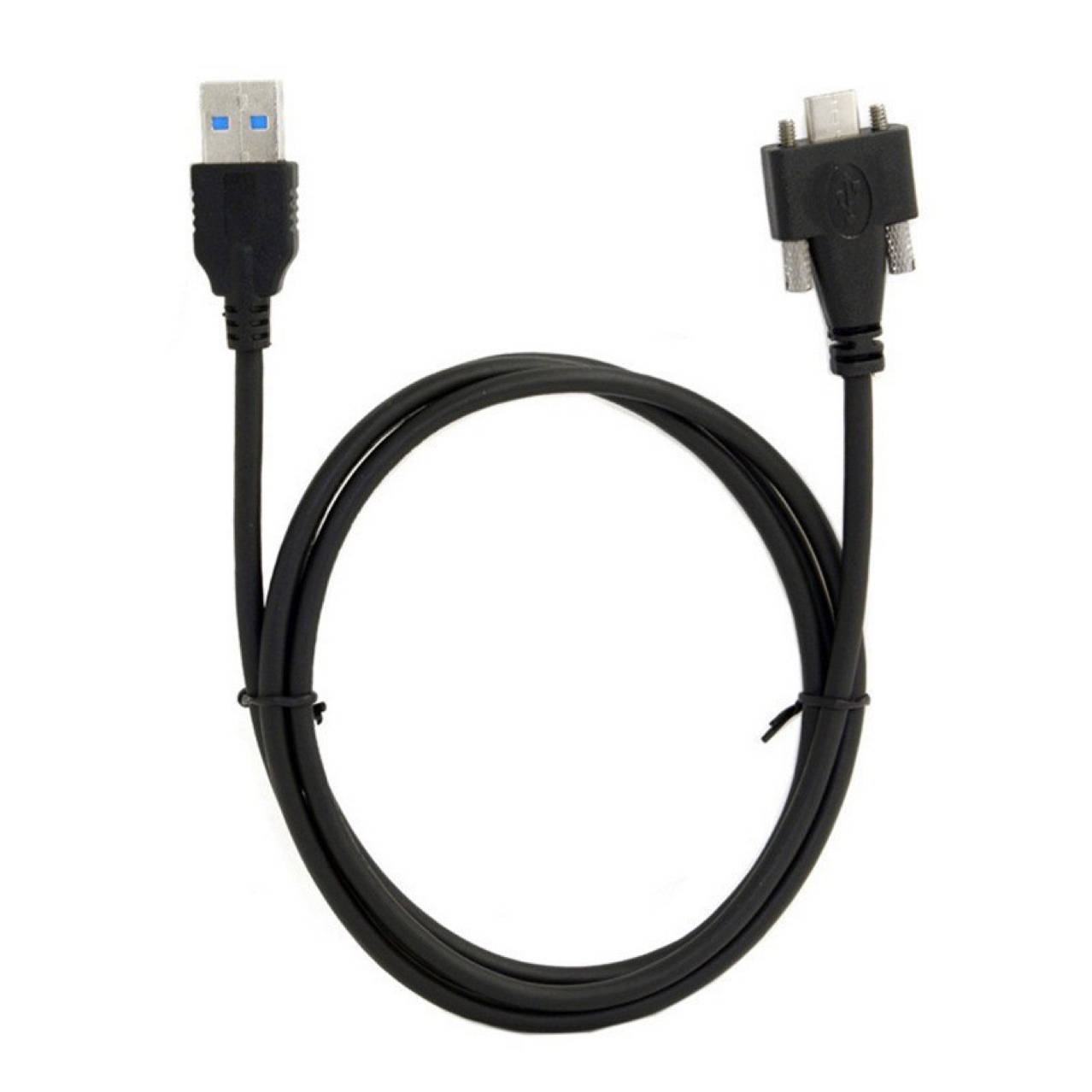
Data center administrators need reliable console access to servers for BIOS configuration, OS installation, and troubleshooting. USB-C increasingly replaces traditional RS-232 serial and proprietary management ports. A single USB-C connection can carry keyboard, video (KVM), and mouse signals, along with network data for out-of-band management. A USB 2.0 Cable is sufficient for basic KVM console access, while USB-C to HDMI or DisplayPort adapters add video output.

Direct-Attach Storage (DAS)

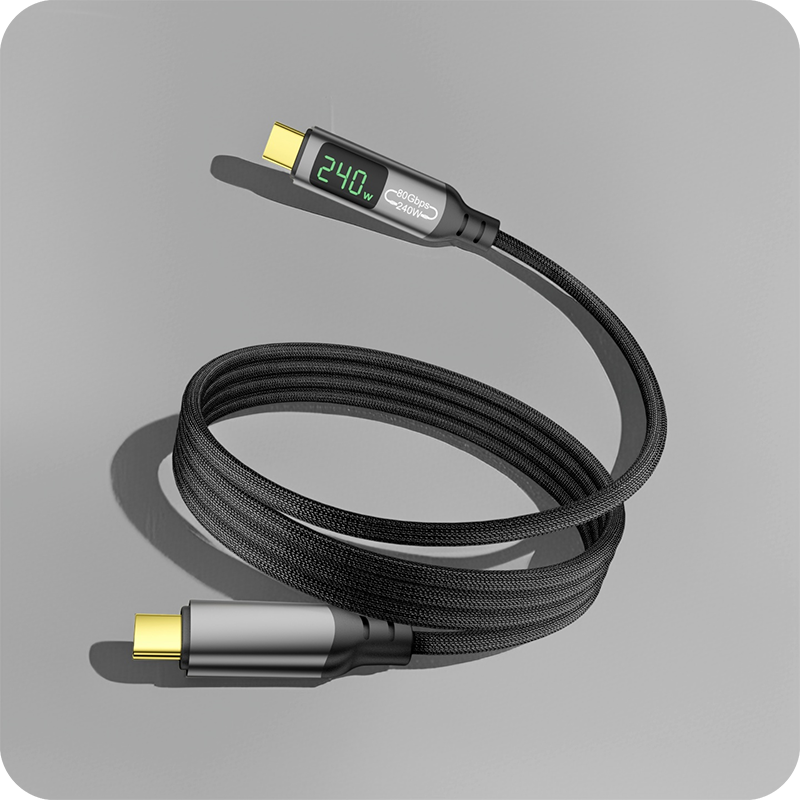
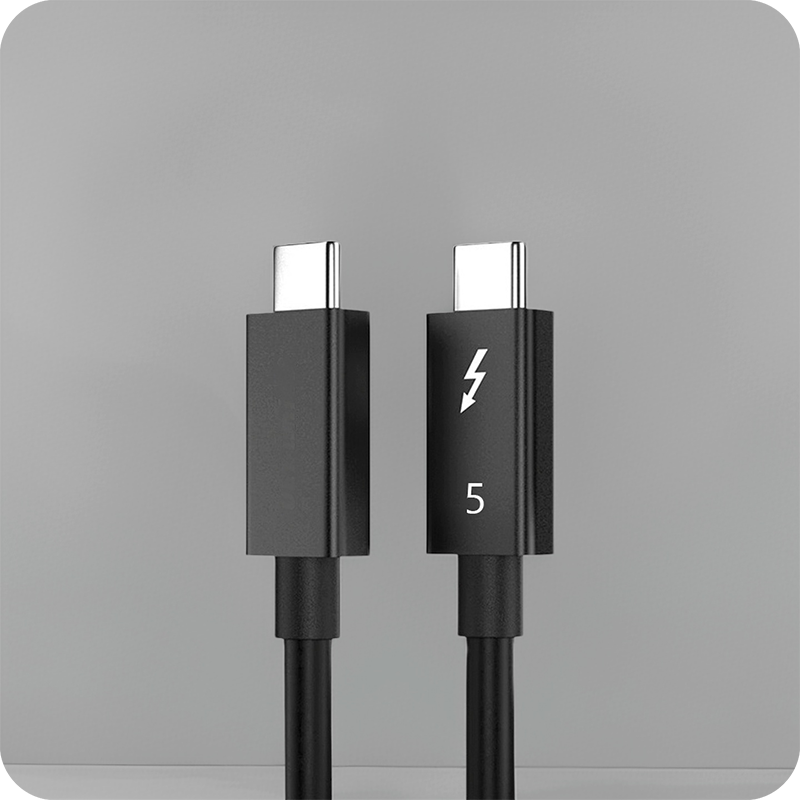
USB4 and Thunderbolt have become viable alternatives to SAS and SATA for direct-attach storage in small and medium data centers. A Thunderbolt 4 cable at 40Gbps provides bandwidth comparable to 4-lane PCIe 3.0, supporting NVMe SSD enclosures at near-native speeds. USB4 2.0 at 80Gbps via a Thunderbolt 5 cable approaches PCIe 4.0 x4 bandwidth, enabling external NVMe storage that performs nearly as well as internal drives.

Interface Max Bandwidth Max Cable Length Cable Cost
SAS 12Gbps 12 Gbps 6m (passive) High
USB4 40Gbps 40 Gbps 2m (passive) Moderate
USB4 80Gbps 80 Gbps 1m (passive) High
Thunderbolt 4 40 Gbps 2m (passive) High
Thunderbolt 5 80 Gbps (bidirectional) 1m (passive) High

External GPU (eGPU) for Edge Computing

Edge computing nodes in data centers use external GPU enclosures connected via Thunderbolt for AI inference, video transcoding, and computational workloads. A Thunderbolt 5 cable at 80Gbps with asymmetric bandwidth (120Gbps host-to-device) provides sufficient bandwidth for most GPU workloads. While eGPU solutions cannot match the bandwidth of direct PCIe slots, they offer unmatched flexibility for dynamic workload allocation.

Network Attached Storage (NAS) Expansion

Modern NAS devices increasingly feature USB-C ports for direct-attach expansion or backup connectivity. A USB 3.2 Cable at 10Gbps connects external storage arrays for backup or expansion, providing a cost-effective alternative to 10GbE networking for point-to-point connections.

Cable Specifications for Data Center Use

Shielding Requirements

Data centers have extreme EMI environments with thousands of cables running in close proximity. USB-C cables for data center use require maximum EMI shielding to maintain signal integrity. A triple-shield construction (individual foil pairs + overall foil + overall braid) is recommended for any USB4 cable or Thunderbolt cable in a rack environment.

Reliability and Retention

Data center cables are rarely unplugged once installed, but when maintenance requires disconnection, the retention mechanism must prevent accidental pullout. Locking USB-C connectors (USB-C Type 2.1 specification) provide a locking mechanism rated at 100N retention force, ideal for rack-mounted equipment where vibration and cable weight can stress connections.

Operating Temperature

Data center environments maintain ambient temperatures between 18 and 27 degrees Celsius, but cable routing near hot aisles can expose cables to temperatures exceeding 45 degrees Celsius. TPE-jacketed USB-C cables rated to 80 degrees Celsius provide adequate thermal margin. For cables routed through hot aisle containment, verify the maximum operating temperature specification.

Cable Management Best Practices

  • Label all USB-C cables with speed ratings and connected equipment identifiers
  • Use color-coded cables for different speed grades (e.g., blue for USB4, black for USB 2.0)
  • Maintain minimum bend radius specifications to prevent signal degradation
  • Keep USB-C cables separated from high-power AC lines to minimize EMI
  • Document cable runs and lengths for future capacity planning

Cost Analysis: USB-C vs. Traditional Interfaces

USB-C cables offer significant cost advantages over traditional data center interfaces:

  • USB-C eliminates the need for separate power and data cables in many applications
  • Universal USB-C reduces cable inventory from dozens of SKUs to a few speed grades
  • Commodity pricing for USB-C cables drives costs down as volumes increase
  • Reduced vendor lock-in compared to proprietary interfaces

Eilinks Electronics provides bulk pricing and custom cable assemblies for data center deployments, including pre-terminated lengths, custom jacket colors, and labeling services.

Frequently Asked Questions

Can USB-C Replace Ethernet in a Data Center?

For short-range point-to-point connections (under 2 meters), USB4 at 40Gbps offers comparable bandwidth to 40GbE Ethernet. However, USB-C cannot match Ethernet’s maximum cable length (100 meters for Cat6a) or its switching and routing ecosystem. USB-C is best suited as a complement to Ethernet for server-to-storage connections, management interfaces, and peripheral connectivity, not as a replacement for network infrastructure.

Is USB-C Reliable Enough for Enterprise Storage?

Yes. USB4 and Thunderbolt provide enterprise-grade reliability with error correction, link-level retry mechanisms, and CRC protection on all data transfers. For NVMe-over-USB4 storage connectivity, the protocol includes full NVMe command set support with enterprise features. Eilinks Electronics manufactures USB4 and Thunderbolt cables with enterprise-grade shielding and connector specifications for data center environments.

What Cable Length Should I Use for Rack-Mounted USB-C Connections?

For intra-rack connections (within a single server rack), 0.5 to 1 meter cables are typical. For inter-rack connections (between adjacent racks), 2-meter passive cables work for USB4 40Gbps. For longer runs, active optical USB-C cables (AOCs) can extend USB4 to 10-30 meters, though at significantly higher cost.

Does USB-C Support Redundant Connections?

USB-C itself does not have built-in redundancy protocols like Ethernet’s LACP or SATA’s multipath. However, servers with multiple USB-C ports can use software-based multipathing for USB4 NVMe storage, similar to how SAS multipathing works. For mission-critical connections, using dual independent USB-C cables with software failover provides redundancy.

What Is the Future of USB-C in Data Centers?

The USB4 80Gbps standard and Thunderbolt 5 cable at 120Gbps asymmetric are pushing USB-C deeper into data center applications that previously required proprietary interfaces. As cable lengths improve with active optical technology and locking connectors become standard, USB-C adoption in data centers will continue to grow. The combination of high bandwidth, low latency, USB PD power delivery, and universal compatibility makes USB-C the most versatile connectivity option for modern infrastructure.

Conclusion

USB-C is rapidly establishing itself as a viable connectivity option for data center environments, from server management consoles to high-bandwidth direct-attach storage. With USB4 at 40-80Gbps and Thunderbolt 5 at 80Gbps, USB-C cables offer bandwidth that competes with traditional enterprise interfaces while providing universal compatibility and simplified cable management. As data centers evolve toward software-defined infrastructure and edge computing, USB-C’s flexibility makes it an increasingly strategic choice. Eilinks Electronics provides enterprise-grade USB-C cables for data center applications with full specification documentation and custom assembly services.

Need Premium USB-C Cables?
Eilinks Electronics manufactures certified USB-C cables with advanced engineering for every application.

Contact UsView Products

USB-C CableUSB4 CableThunderbolt Cable
eadmin
eadmin

Related posts

2026-05-08

USB-C Cable for Drone and Robotics 2026: Lightweight High-Speed Data


Read more
2026-05-08

USB-C Cable for Data Center and Server Room 2026: High-Density Power and Data


Read more
2026-05-08

USB-C Cable Care and Maintenance Guide 2026: Extend Cable Lifespan


Read more

Leave a Reply Cancel reply

Your email address will not be published. Required fields are marked *

Navigation

  • About
  • Contact

Products

  • USB-C Adapter
  • Thunderbolt 5/4/3 Cable
  • Audio/video Adapter Cable
  • USB-C Cable

Contacts

+86 13242969135
Sales@eilinks.com
Chashan Town, Dongguan City, Guangdong , China
© Dongguan Eilinks Eletronics Co.,Ltd All Rights Reserved
  • Consent
  • Details
  • About Cookies

This website uses cookies

We use cookies to personalise content and ads, to provide social media features and to analyse our traffic. We also share information about your use of our site with our social media, advertising and analytics partners who may combine it with other information that you’ve provided to them or that they’ve collected from your use of their services.

Necessary

Necessary cookies help make a website usable by enabling basic functions like page navigation and access to secure areas of the website. The website cannot function properly without these cookies.

Analytics & Performance

Statistic cookies help website owners to understand how visitors interact with websites by collecting and reporting information anonymously.

Marketing

Marketing cookies are used to track visitors across websites. The intention is to display ads that are relevant and engaging for the individual user and thereby more valuable for publishers and third party advertisers.

Cookies are small text files that can be used by websites to make a user's experience more efficient.

The law states that we can store cookies on your device if they are strictly necessary for the operation of this site. For all other types of cookies we need your permission. This means that cookies which are categorized as necessary, are processed based on GDPR Art. 6 (1) (f). All other cookies, meaning those from the categories preferences and marketing, are processed based on GDPR Art. 6 (1) (a) GDPR.

This site uses different types of cookies. Some cookies are placed by third party services that appear on our pages.

You can at any time change or withdraw your consent from the Cookie Declaration on our website.

Learn more about who we are, how you can contact us and how we process personal data in our Privacy Policy.

Please state your consent ID and date when you contact us regarding your consent.

Deny Customize Allow selected Allow all