USB-C Cable in Industrial Automation Applications 2026

USB-C in the Fourth Industrial Revolution
The Fourth Industrial Revolution (Industry 4.0) has fundamentally transformed manufacturing floors, moving from isolated mechanical systems to interconnected, data-driven smart factories. At the heart of this transformation is the USB-C cable, which has emerged as a universal interface for industrial sensors, programmable logic controllers (PLCs), human-machine interfaces (HMIs), and edge computing modules.
Eilinks Electronics has been at the forefront of this transition, engineering industrial-grade USB-C cables that withstand extreme temperatures, vibration, chemical exposure, and electromagnetic interference (EMI) — conditions that would destroy consumer-grade cables within days of deployment.
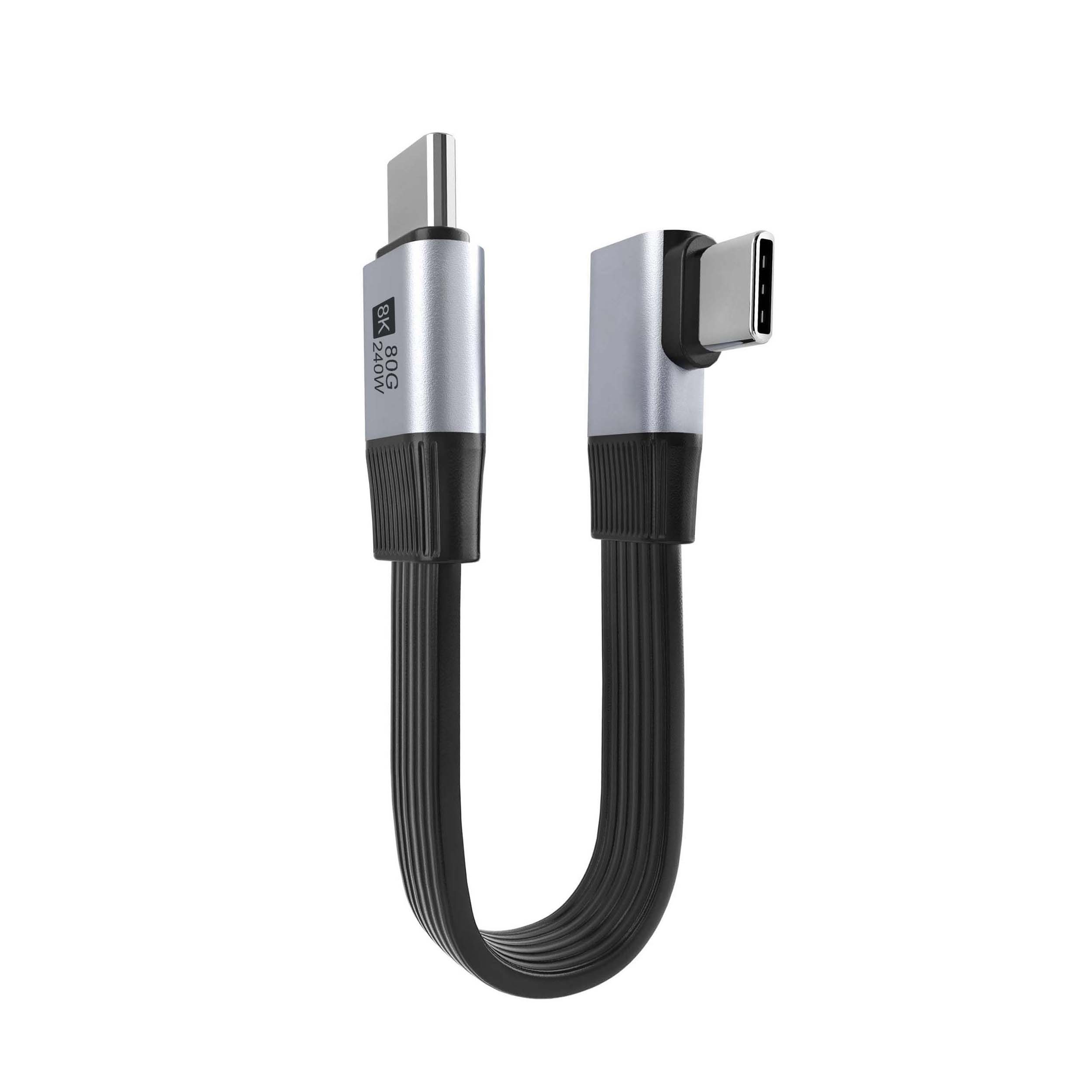
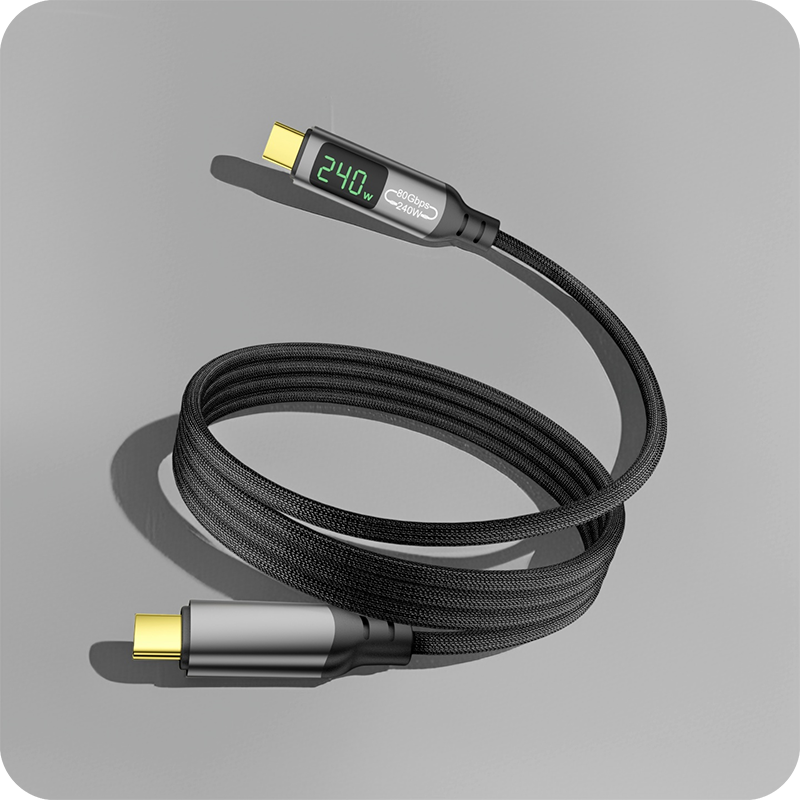
The USB-C connector’s 24-pin architecture, originally designed for consumer electronics, proves remarkably well-suited for industrial applications. Its support for multiple protocols over a single cable (USB data, DisplayPort video, Thunderbolt, and power delivery up to 240W) dramatically simplifies cable management in complex automation cabinets where space is at a premium.
Key Industrial Automation Use Cases
PLC Programming and Debugging
Programmable Logic Controllers (PLCs) are the brains of industrial automation. Modern PLCs from Siemens, Allen-Bradley, Omron, and Mitsubishi now feature USB-C programming ports. A high-quality USB 3.2 Cable (Gen 2, 10 Gbps) connects the engineering workstation to the PLC for program upload/download, real-time debugging, and firmware updates.
The reversible connector design of USB-C cable is particularly valuable in tight control cabinets where visibility is poor. Electricians no longer waste time orienting the connector, reducing mean repair time (MRT) by an estimated 15-20% in field service scenarios.
Industrial HMI and Operator Panels
Human-Machine Interfaces (HMIs) increasingly use USB-C for both touchscreen communication and power delivery. A single USB4 cable can simultaneously deliver video signals to the HMI display, transfer touch input data back to the controller, and provide 60W-100W power — replacing three separate cables in legacy installations.
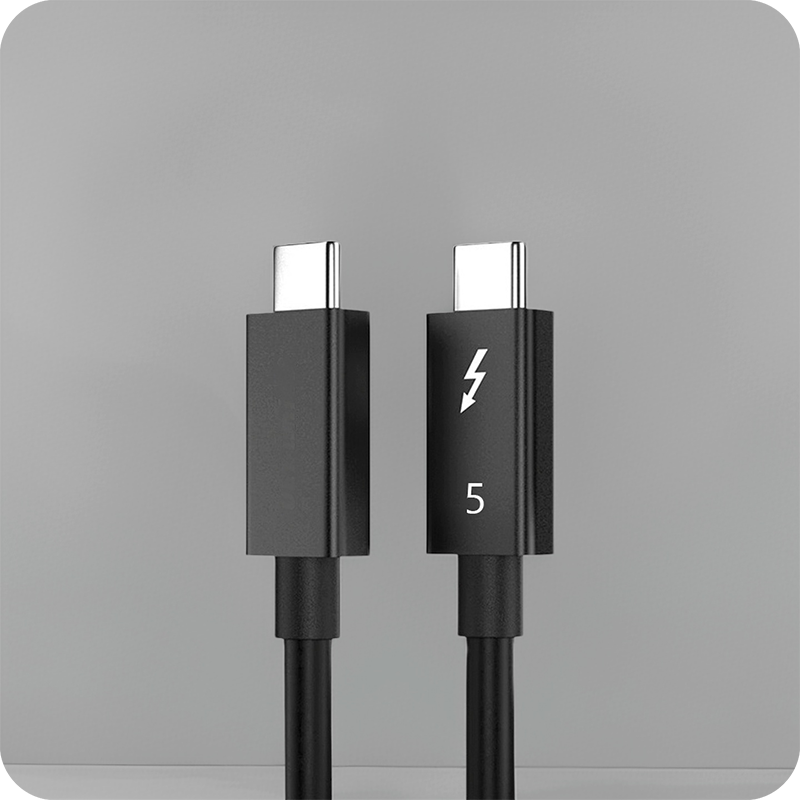
Thunderbolt 4 cable variants are gaining traction in high-performance HMI applications where real-time data visualization demands maximum bandwidth. Eilinks Electronics supplies custom-length industrial USB-C cables with reinforced overmolding for panel-mount HMI installations.
Industrial IoT (IioT) Edge Devices
Edge computing nodes in smart factories process sensor data locally before sending aggregated insights to the cloud. These devices (often NVIDIA Jetson, Intel NUC, or Raspberry Pi-based) rely on USB-C cable connections for high-speed sensor data ingestion, power delivery, and network connectivity via USB-C docks.
The ability to deliver 100W+ power over the same USB-C cable that carries high-speed sensor data eliminates separate power wiring, reducing cabinet complexity and improving maintainability. Our industrial USB-C cables are rated for -40C to +85C ambient temperatures, with specialized jacketing materials (PUR, TPE) that resist industrial oils and coolants.

Industrial-Grade vs Commercial USB-C Cables
The difference between a $8 consumer USB-C cable and a $45 industrial-grade cable is not merely profit margin — it represents fundamental differences in materials, construction, and testing standards:
| Specification | Commercial Grade | Industrial Grade |
|---|---|---|
| Operating temperature | 0C to +60C | -40C to +85C |
| Jacket material | PVC or TPE | PUR (polyurethane) or TPE-E |
| Oil resistance | None | ISO 1817 compliant |
| Minimum bend radius | 10x cable diameter | 5x cable diameter |
| Flex life (drag chain rated) | Not rated | 10 million+ cycles |
| EMI shielding effectiveness | -20dB typical | -40dB @ 5GHz |
| Connector retention force | 35-75N | 80-100N |
| Vibration resistance | Not tested | IEC 60068-2-6 compliant |
| MTBF (mean time between failures) | ~5,000 hours | 100,000+ hours |
| Certifications | None / USB-IF basic | UL, CE, FCC, RoHS, IP67 |
Eilinks Electronics tests every industrial USB-C cable batch per IEC 61131-2 (PLC environments) and IEC 61000-6-2/4 (EMC immunity/ emissions for industrial environments). Our quality management system is ISO 9001:2015 certified, and our industrial cable assemblies carry full traceability from raw materials to finished product.
EMI Shielding in Industrial Environments
Industrial environments are electromagnetically noisy: variable frequency drives (VFDs), servo motors, welding equipment, and radio transmitters all generate interference that can corrupt data signals. A commercial USB 2.0 Cable without proper shielding will experience bit error rates exceeding 10^-3 in such environments, rendering it useless for reliable automation communication.
Multi-Layer Shielding Architecture
Industrial USB-C cables from Eilinks Electronics incorporate up to four shielding layers:
- Inner foil shield: Aluminum-polyester tape wrap with 100% coverage, providing the primary barrier against high-frequency EMI
- Braided shield: Tinned copper braid (85%+ coverage) for low-frequency EMI suppression and mechanical protection
- Connector shell shielding: Die-cast zinc alloy shell with conductive nickel plating, creating a continuous shield from device to host
- Ferrite bead (optional): Integrated ferrite core at the connector interface for supplemental low-frequency EMI suppression
This architecture achieves >40dB shielding effectiveness from 30 MHz to 3 GHz, ensuring reliable data transfer even in the most aggressive electromagnetic environments. Our USB 3.2 Cable and USB4 cable products maintain bit error rates below 10^-12 under full load in EMI-chamber testing.
Power Delivery in Industrial Applications
24V Industrial Power Architectures with USB-C PD
Traditional industrial devices operate on 24V DC power rails. Integrating USB-C Power Delivery (PD) into industrial designs requires DC-DC buck-boost converters that can negotiate USB-PD profiles and deliver regulated 24V output. A growing number of industrial USB-C cable assemblies now integrate these converters directly in the overmolded connector, enabling direct connection of USB-PD sources (such as industrial USB-C power supplies or USB-C equipped industrial PCs) to 24V industrial loads.
EPR-rated cable (Extended Power Range, up to 240W) enables direct powering of industrial devices that previously required separate 24V power supplies. For example, an industrial vision system camera consuming 40W-60W can now be powered entirely through its USB-C cable, simplifying installation and reducing wiring costs by an estimated $45-$85 per device in materials and labor.
Redundant Power over USB-C
Mission-critical industrial systems require power redundancy. Advanced USB-C cable implementations can accept power from two independent USB-PD sources, with automatic failover in under 50ms. This capability, combined with the connector’s four VBUS pins and four GND pins, provides inherent redundancy that single-wire power solutions cannot match.

USB4 and Thunderbolt for Industrial Data Acquisition
Modern industrial data acquisition (DAQ) systems require bandwidths that were unimaginable a decade ago. High-speed vision inspection (camera Link HS, 10GigE), multi-axis motion control feedback, and real-time spectral analysis all demand the bandwidth that only USB4 cable and Thunderbolt 4 cable can provide.
Vision System Connectivity
Industrial machine vision cameras now routinely exceed 2.5 Gbps data rates (5GigE, 10GigE, Camera Link HS). A USB4 cable with 40 Gbps aggregate bandwidth can simultaneously carry video streams from multiple cameras, control signals, and power over a single cable. This consolidation reduces the complexity of vision system installations by an estimated 60% compared to traditional multi-cable solutions.
Real-Time Control Networks
EtherCAT, PROFINET IRT, and Powerlink real-time Ethernet networks are increasingly interfacing with higher-level systems via USB-C bridges. The deterministic latency characteristics of USB4 cable (sub-microsecond for isochronous transfers) make it suitable for bridging real-time control networks to industrial PCs and edge computing nodes.
Selecting the Right Industrial USB-C Cable
Procurement teams specifying USB-C cables for industrial deployments should evaluate these critical factors:
- Flex rating: For drag chain or robotic applications, verify TUV or IEC 62153 flex cycle certification
- Chemical resistance: PUR jacketing resists most industrial oils, coolants, and hydraulic fluids
- Connector retention: Industrial USB-C connectors should have screw-lock or latch mechanisms to prevent vibration-induced disconnection
- Temperature range: Verify the entire assembly (cable + overmolding + connector) is rated for your ambient conditions
- Agency approvals: UL 1977, IEC 60664-1 (creepage/clearance), and IP rating for the intended environment
- ESD protection: Integrated ESD suppressors on the CC and D+/D- pins are essential in static-prone industrial environments
Eilinks Electronics provides free technical consultation for industrial cable specification. Our engineering team reviews your application requirements and recommends the optimal USB-C cable, USB4 cable, or Thunderbolt 4 cable solution with full agency approvals for your target markets.
Frequently Asked Questions
Can I use consumer USB-C cables in industrial environments?
Not recommended. Consumer cables lack the robust jacketing, shielding, and strain relief required for industrial use. They typically fail within weeks in continuous-flex or high-EMI environments. The cost savings of using consumer USB-C cables are quickly erased by unplanned downtime and replacement labor costs. Always specify industrial-grade cables from a reputable USB-C cable manufacturer like Eilinks Electronics for automation applications.
What is the maximum USB-C cable length for industrial applications?
For 10 Gbps operation, passive USB 3.2 Cable can reach up to 2 meters. For 40 Gbps USB4/Thunderbolt, passive cables are limited to 0.8 meters. Beyond these lengths, active (re-timed) or optical USB-C cables are required. Eilinks Electronics manufactures active optical USB-C cables up to 50 meters for large facility installations where the control room is distant from the production floor.
Is USB-C compatible with existing industrial communication protocols?
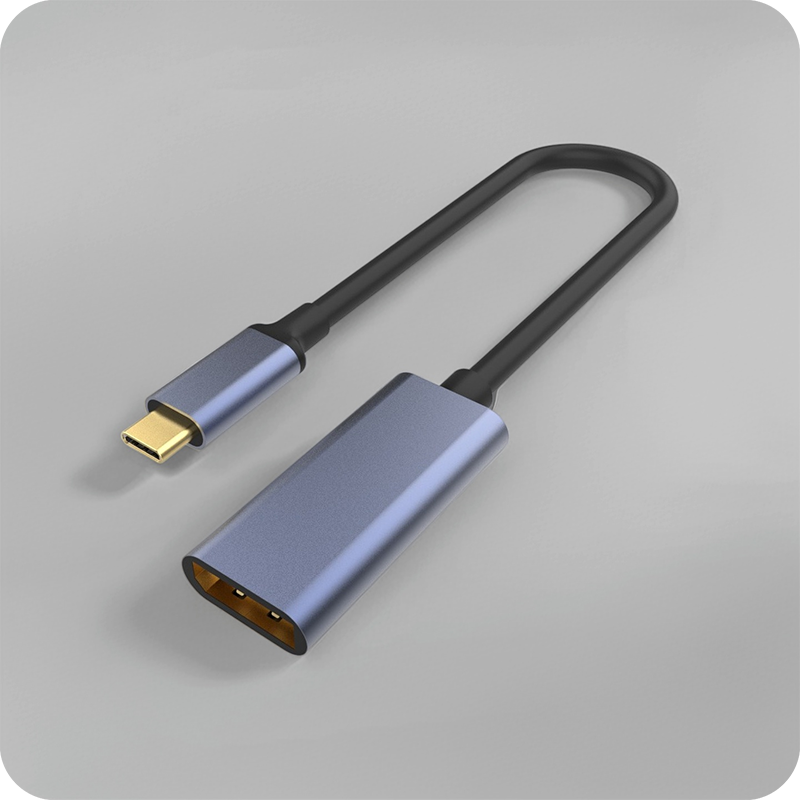
USB-C itself carries USB protocol, but protocol bridges are widely available: USB-C to RS-232/485, USB-C to CAN bus, USB-C to EtherCAT, and USB-C to PROFINET. These bridge devices allow modern USB-C cable infrastructure to interface seamlessly with legacy industrial networks. Many modern industrial devices now integrate these bridges directly, presenting a USB-C interface to the host while communicating in PROFINET or EtherCAT on the device side.
How do I ensure USB-C cable reliability in high-vibration environments?
Specify cables with screw-lock USB-C connectors or integrated strain relief boots. The cable should be routed with appropriate minimum bend radius (5x diameter for industrial-grade) and secured with cable ties or conduits. For extreme vibration (e.g., near large stamping presses), consider Eilinks Electronics‘s heavy-duty industrial USB-C cable with reinforced armor jacketing and dual-shield architecture tested to IEC 60068-2-6 vibration profiles.
What certifications should industrial USB-C cables have?
At minimum: UL 1977 (component connectors), IEC 60664-1 (insulation coordination), IP65 or higher (ingress protection), and RoHS/REACH compliance. For European markets, CE marking is mandatory. For North America, UL recognition is strongly recommended. Eilinks Electronics‘ industrial USB-C cables carry all major global certifications, simplifying your equipment approval process.