
logo
✕
  • Home
  • Products
  • About Us
  • Contact
logo
  • Home
  • Products

    USB-C Cable

    • USB 4.0
    • USB 3.2
    • USB 3.0
    • USB 2.0

    Thunderbolt 5/4/3 Cable

    • Thunderbolt 5 Cable
    • Thunderbolt 4 Cable
    • Thunderbolt 3 Cable

    Audio/video Adapter Cable

    • DisplayPort To HDMI Cable
    • HDMI To DispalyPort Cable
    • HDMI To USB-C Cable
    • USB-C To DisplayPort Cable
    • USB-C To HDMI Cable

    USB-C Adapter

    • USB 4.0
    • USB 3.2
    • USB 3.0
    • USB 2.0
  • About Us
  • Contact
Published by eadmin on 2026-04-28
Categories
  • Blog
Tags

USB-C Connector Types Explained: USB-A, USB-B, Micro-USB, and the USB-C Transition in 2026

The USB connector landscape has evolved dramatically over the past decade. From the rectangular USB-A ports that defined PC peripherals for 20 years to the tiny micro-USB connectors on early smartphones, the industry has consolidated around one universal standard: USB-C. But understanding the full connector family, including legacy types, helps buyers and engineers make smarter decisions when sourcing cables from a USB-C cable manufacturer like Eilinks Electronics.

A Brief History of USB Connectors

USB (Universal Serial Bus) was introduced in 1996 with the Type-A connector. Over the years, the USB-IF introduced multiple form factors to serve different devices: USB-B for printers, Mini-USB for early cameras, Micro-USB for smartphones, and eventually USB-C as the universal replacement for all of them. By 2026, the European Union mandates USB-C on all consumer electronics, cementing its position as the single dominant connector.

The Complete USB Connector Family

USB Type-A

The original rectangular connector, always host-side (plugs into computers, chargers, hubs). It is non-reversible and still found on millions of devices worldwide. While new designs overwhelmingly use USB-C, USB-C to USB-A adapter cables remain high-demand products for bridging legacy devices.

  • Host-only (never found on peripherals as the input port)
  • Non-reversible orientation
  • USB 2.0 (4 pins) or USB 3.0/3.2 (9 pins) versions
  • Still common on desktop PCs, older laptops, and chargers

USB Type-B

The square-ish connector primarily used for printers and scanners. Like Type-A, it is being phased out in favor of USB-B alternatives and ultimately USB-C on both ends. Industrial equipment still uses Type-B extensively.

Micro-USB

The dominant smartphone connector from 2007 to roughly 2015. Micro-USB 2.0 has 5 pins, while Micro-USB 3.0 (found on some Galaxy S5 phones) has 10 pins in a dual-layout design. It is now considered obsolete for consumer electronics but persists in some IoT devices, Bluetooth speakers, and budget electronics in emerging markets.

USB Type-C

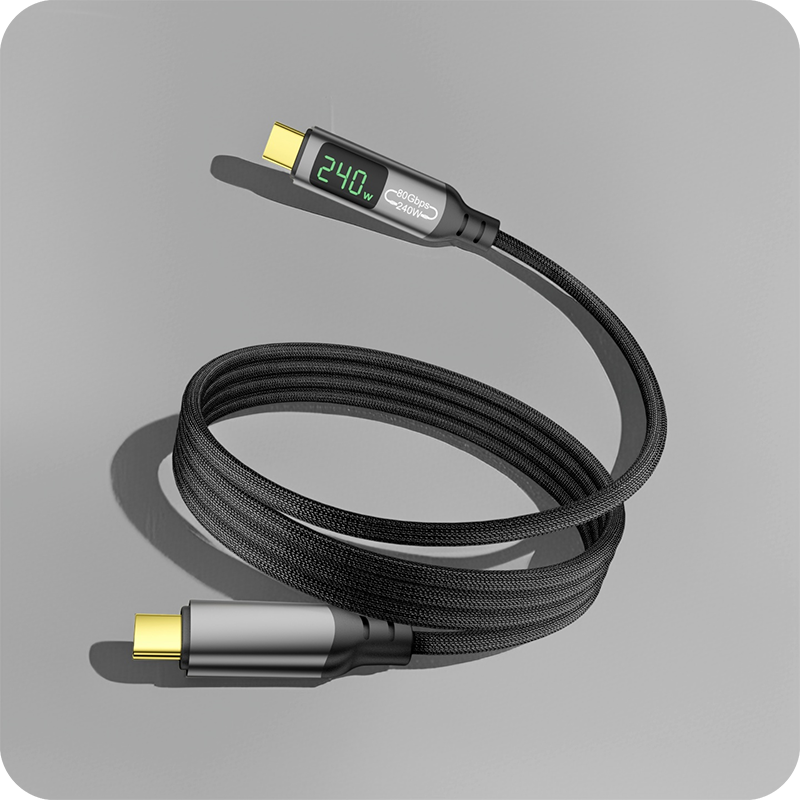
The modern universal connector. Reversible, compact (8.4mm x 2.6mm), and capable of carrying data, video, and power simultaneously. A single USB-C cable can deliver up to 240W USB-C power, 80Gbps data via USB4 2.0, and video output for dual 4K displays. It is the only USB connector designed to replace all previous types.

  • Reversible 24-pin design (works in either orientation)
  • Supports USB 2.0 through USB4 2.0 protocols
  • Alternate Mode for DisplayPort, HDMI, and Thunderbolt
  • Power Delivery up to 240W (EPR)
  • USB4 cable and Thunderbolt 4/5 cable compatibility

Connector Comparison Table

Feature USB-A USB-B Micro-USB USB-C
Reversible No No No Yes
Max Data Speed 20Gbps (3.2 Gen 2×2) 10Gbps (3.0) 10Gbps (3.0) 80Gbps (USB4 2.0)
Max Power N/A (host only) N/A Up to 15W Up to 240W (EPR)
Video Output No No No DisplayPort Alt Mode
Current Status Legacy (declining) Legacy Obsolete Universal standard
Pin Count 4 or 9 4 or 9 5 or 10 24
Typical Use PC host ports Printers Older phones/IoT All modern devices

The USB-C Transition: Where Are We in 2026?

Smartphones and Tablets

The transition is essentially complete. Apple switched iPhone 15 to USB-C in 2023, and the EU mandate effective from December 2024 ensured Android manufacturers completed the switch. Virtually every new smartphone, tablet, and e-reader shipped in 2026 uses USB-C exclusively.

Laptops

Most laptops now include at least two USB-C ports, with many using USB-C as the sole charging port. Gaming laptops and mobile workstations have adopted 240W USB-C EPR charging via USB-C. Some budget laptops still retain one USB-A port for legacy peripheral compatibility.

Desktop PCs

New motherboards increasingly feature front-panel USB-C headers. However, rear I/O panels still commonly include USB-A 3.2 ports alongside USB-C. This mixed approach supports both new and legacy peripherals.

Peripherals and Accessories

Keyboards, mice, headphones, and external storage have largely transitioned. Specialty devices like industrial sensors, medical equipment, and legacy industrial PCs still use older connectors, creating ongoing demand for adapter cables and transition products.

Why Legacy Connector Cables Still Matter

Despite the USB-C revolution, the installed base of legacy devices numbers in the billions. Eilinks Electronics continues to manufacture USB-C to USB-A adapter cable products, Micro-USB cables for IoT devices, and USB-B cables for industrial printers. When sourcing from a USB-C cable manufacturer, consider your complete ecosystem, not just the newest devices.

The Future: USB-C Only

By 2028, most industry analysts expect USB-A to disappear from new consumer devices entirely. The USB4 cable standard and Thunderbolt 5 cable will drive even faster data speeds, making USB-C the definitive connector for data, power, and video across all device categories.

Frequently Asked Questions

Is USB-C Replacing All Other USB Connectors?

Yes. USB-C is designed as the universal replacement for USB-A, USB-B, Micro-USB, and Mini-USB. In 2026, USB-C is the standard on virtually all new consumer electronics. Legacy connectors persist in industrial and specialized applications, but new designs universally use USB-C.

Can a USB-C Cable Work with USB-A Devices?

Yes, through an adapter or a cable with different connectors on each end. A USB-C to USB-A adapter cable lets you connect USB-C devices like smartphones to older USB-A ports on PCs and chargers. However, data speeds and charging power are limited by the USB-A side specifications.

Why Is USB-C Better Than Micro-USB?

USB-C offers reversible plug orientation (no more guessing which way is up), significantly faster data speeds (up to 80Gbps vs. 10Gbps), far higher power delivery (up to 240W USB-C vs. 15W), and native video output capability. It is also more durable with a rated insertion cycle of 10,000+ times.

Will USB-A Disappear Completely?

For consumer devices, yes. USB-A is already declining sharply. However, industrial equipment, legacy enterprise systems, and embedded applications will continue using USB-A for many years. This creates steady demand for USB 2.0 Cable and USB 3.0 Cable products with USB-A connectors.

What Is the Difference Between a USB4 Cable and a Regular USB-C Cable?

A USB4 cable is a USB-C cable that meets the USB4 specification for high-speed data transfer (20-80Gbps). Not all USB-C cables support USB4 speeds. A basic USB 2.0 Cable with USB-C connectors only handles 480Mbps. Always verify the USB specification when purchasing from your USB-C cable manufacturer.

Conclusion

The USB connector family has undergone a remarkable consolidation, with USB-C emerging as the single universal standard. While legacy connectors still serve billions of devices worldwide, the future is unequivocally USB-C. Whether you need a Thunderbolt 4 cable for high-speed data, a USB-C to USB-A adapter cable for legacy compatibility, or an EPR cable for 240W USB-C charging, Eilinks Electronics offers a comprehensive range of certified USB-C cables for every application.

Need Custom USB-C Cables?
Eilinks Electronics is a trusted USB-C cable manufacturer with 15+ years of experience in OEM and ODM production.

Contact UsView Products

USB-C CableUSB4 CableUSB 2.0 CableThunderbolt Cable
eadmin
eadmin

Related posts

2026-05-08

USB-C Cable for Drone and Robotics 2026: Lightweight High-Speed Data


Read more
2026-05-08

USB-C Cable for Data Center and Server Room 2026: High-Density Power and Data


Read more
2026-05-08

USB-C Cable Care and Maintenance Guide 2026: Extend Cable Lifespan


Read more

Leave a Reply Cancel reply

Your email address will not be published. Required fields are marked *

Navigation

  • About
  • Contact

Products

  • USB-C Adapter
  • Thunderbolt 5/4/3 Cable
  • Audio/video Adapter Cable
  • USB-C Cable

Contacts

+86 13242969135
Sales@eilinks.com
Chashan Town, Dongguan City, Guangdong , China
© Dongguan Eilinks Eletronics Co.,Ltd All Rights Reserved
  • Consent
  • Details
  • About Cookies

This website uses cookies

We use cookies to personalise content and ads, to provide social media features and to analyse our traffic. We also share information about your use of our site with our social media, advertising and analytics partners who may combine it with other information that you’ve provided to them or that they’ve collected from your use of their services.

Necessary

Necessary cookies help make a website usable by enabling basic functions like page navigation and access to secure areas of the website. The website cannot function properly without these cookies.

Analytics & Performance

Statistic cookies help website owners to understand how visitors interact with websites by collecting and reporting information anonymously.

Marketing

Marketing cookies are used to track visitors across websites. The intention is to display ads that are relevant and engaging for the individual user and thereby more valuable for publishers and third party advertisers.

Cookies are small text files that can be used by websites to make a user's experience more efficient.

The law states that we can store cookies on your device if they are strictly necessary for the operation of this site. For all other types of cookies we need your permission. This means that cookies which are categorized as necessary, are processed based on GDPR Art. 6 (1) (f). All other cookies, meaning those from the categories preferences and marketing, are processed based on GDPR Art. 6 (1) (a) GDPR.

This site uses different types of cookies. Some cookies are placed by third party services that appear on our pages.

You can at any time change or withdraw your consent from the Cookie Declaration on our website.

Learn more about who we are, how you can contact us and how we process personal data in our Privacy Policy.

Please state your consent ID and date when you contact us regarding your consent.

Deny Customize Allow selected Allow all