
Extended Length USB-C Cable: How Far a Run Goes
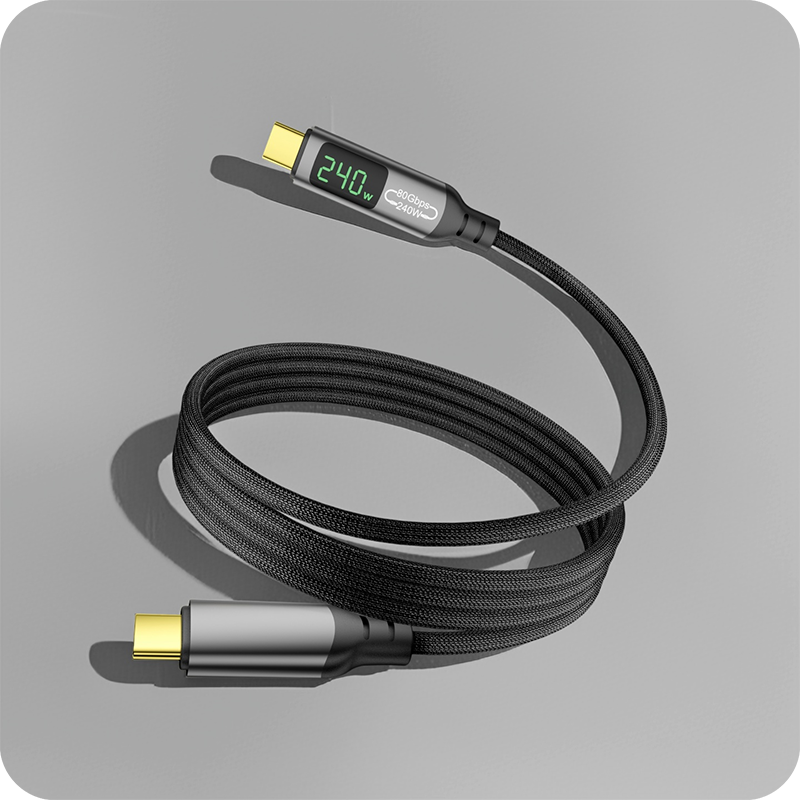
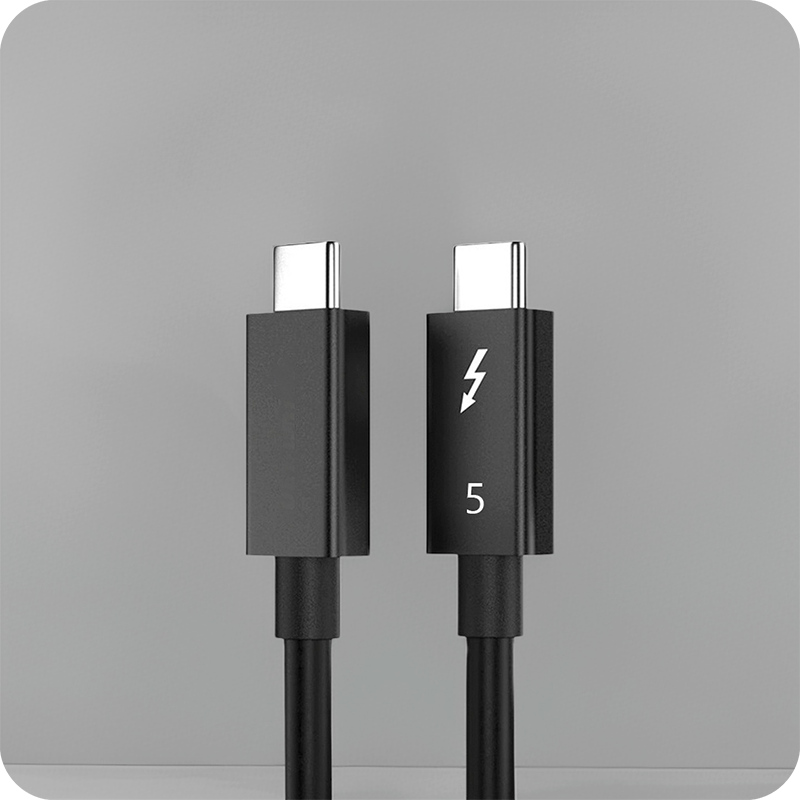
An extended length USB-C cable runs into a wall that has nothing to do with the connector: insertion loss at the lane rate grows with length, and past a certain point the receiver cannot recover the eye. Eilinks quotes the achievable rate at the length asked for rather than a single headline figure, so the limit is visible before a sample is cut. The wall sits at about 5 m for a 480 Mbps lead, 3 m for 5 Gbps, 2 m for 10 Gbps, 1 m for 20 Gbps and 0.8 m for 40 Gbps, all on a passive build at the usual gauges. Buyers sourcing a run for a classroom cart, a wall plate or a machine frame usually discover the wall as a link that trains down rather than as a cable that fails. The shield bonding on a long run note covers the measurement side. This guide sets out what the extended length USB-C cable limits are at each rate, when an extended length USB-C cable active build is the right answer, how much extended length USB-C cable power drop a 5 A run produces, why extended length USB-C cable shielding decides whether a long run radiates, and the fields a China extended length USB-C cable supplier needs before quoting.
Extended length USB-C cable limits: what each rate allows
The limit is a loss budget, not a rule of thumb. A passive assembly has to deliver enough signal at the far end for the receiver’s equaliser to reconstruct the eye, and the loss per metre rises with frequency. That is why the same cable that reaches 5 m at 480 Mbps reaches 3 m at 5 Gbps and 0.8 m at 40 Gbps. The conductor gauge and the dielectric move the numbers, but the shape of the curve does not.
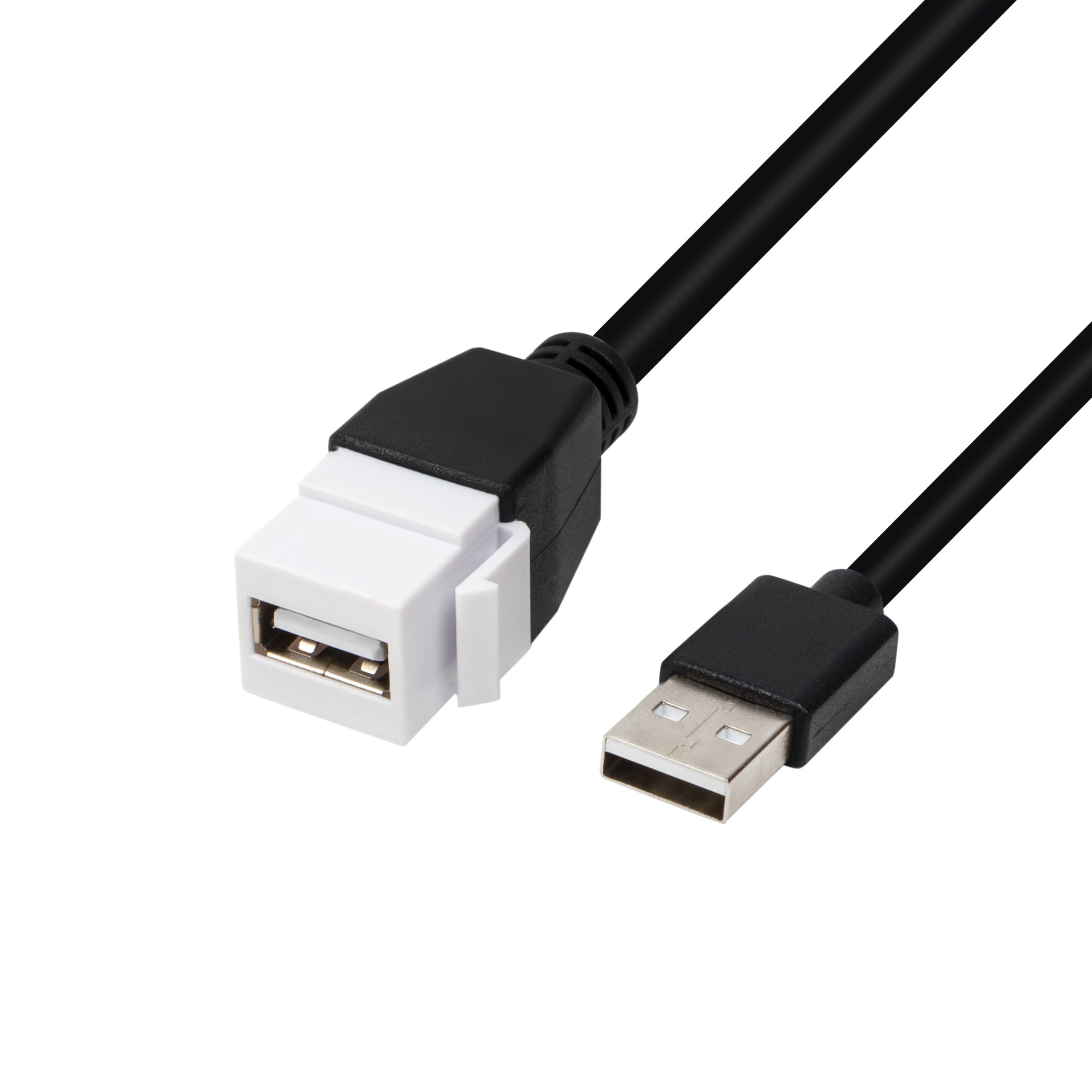
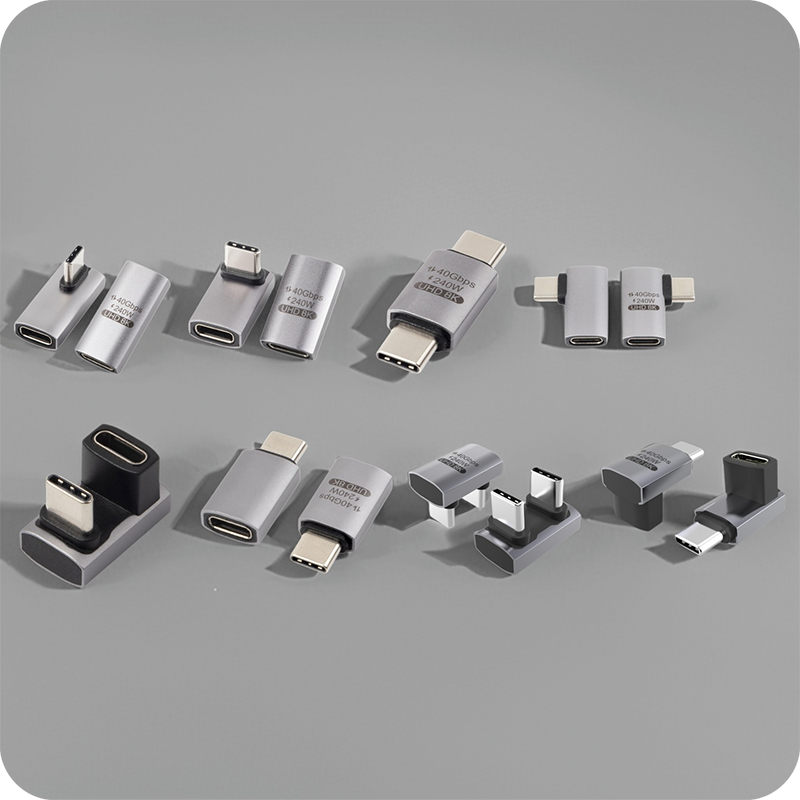
A coupler or a wall plate adds loss without adding length. Every mated pair in the run costs a fraction of a decibel, and a run with two couplers behaves like a longer cable than its physical length suggests. A buyer planning a 3 m run through two plates should specify it as a 3.5 m equivalent and check the budget against that figure. Eilinks Eletronics quotes the equivalent length rather than the physical one for that reason. The rate and connector definitions behind the budget are published by the USB Implementers Forum.
Length tolerance matters at the top of the range. A 0.8 m build that measures 0.85 m can fail at 40 Gbps while a 0.75 m build passes, so the drawing should carry a tolerance rather than a nominal figure.
Extended length USB-C cable active: retimer and redriver
An active assembly puts a chip in the plug to reshape the signal. A redriver applies equalisation and gain without retiming the data; a retimer recovers the clock and regenerates the stream. A redriver is cheaper and works over a moderate extension; a retimer costs more and reaches further at the top rate. Both need power from the link and both add heat at the plug.
The choice depends on the rate and the length together. Extending 5 Gbps from 3 m to 5 m is usually a redriver job. Extending 40 Gbps past 1 m needs a retimer, and even then the practical ceiling is around 2 m to 3 m depending on the build. A buyer who needs 5 m at 40 Gbps is asking for an optical assembly rather than a copper one, and the cost changes by an order of magnitude.
Active builds also invert the usual failure mode. A passive cable that is too long trains down and stays connected; an active cable that loses power drops the link entirely. That difference matters in a fixed installation where the cable is powered from a host that sleeps. A right-angle tether lead on a camera rig faces the same question at a lower rate, covered in the right-angle tether lead at 5 Gbps.
Extended length USB-C cable power drop: 5 A over a long run
Power and data hit different walls. A 5 A run through a 20 AWG pair drops about 0.55 V over 1 m and about 1.6 V over 3 m, which a laptop sees as a lower input and compensates by drawing more current. At some length the charger’s cable-compensation range runs out and the laptop stops charging at full rate. An 18 AWG pair roughly halves the drop, which is why a long high-power run gets thicker rather than longer.
| Power pair | Drop over 1 m at 5 A | Drop over 3 m at 5 A |
|---|---|---|
| 24 AWG | About 1.4 V | About 4.2 V |
| 20 AWG | About 0.55 V | About 1.6 V |
| 18 AWG | About 0.35 V | About 1.0 V |
The practical rule is that a 3 m run at 240 W needs 18 AWG, and a 5 m run at 240 W is better served by a separate power path rather than a longer cable. Buyers should state the current and the length together, because a gauge quoted without the length has not answered the question. Eilinks answers both on one line.
A device that needs both power and data over one long lead is the hard case. An OTG adapter with charge and data on one port shows how a short adapter handles the split when the run itself stays short.
Extended length USB-C cable shielding: why long runs radiate
A long cable is an antenna. The shield has to be bonded at both ends to keep the return path short, and the braid coverage has to stay high enough that the pair does not couple to the environment. A foil-only shield with a drain wire works at 480 Mbps and becomes marginal at 5 Gbps over 3 m, because the foil’s transfer impedance rises with frequency.
The shield also carries the return current for the high-speed pairs, so a break in the bond shows up as radiated noise rather than as a continuity failure. That is why a continuity check passes on a cable that fails an emissions test. A buyer specifying a long run for a classroom or an office should ask for the shield construction and the bond method rather than the coverage figure alone.
Dongguan Eilinks bonds the shield to the shell at both ends on every build above 5 Gbps, and the difference shows up in a 30 MHz to 1 GHz sweep rather than in a bench continuity test. A classroom cart is a typical long-run case, and the classroom cart run notes cover the routing constraints.
Extended length USB-C cable RFQ fields buyers should fix
An RFQ for an extended length USB-C cable should name the rate, the physical length, the equivalent length including couplers, the power current and the gauge. Add the shield construction and bond method, the active or passive choice, the plug orientation, the jacket compound, the bend radius the route allows, the marking, and the packaging count. A supplier quoting a length without the rate has quoted a number, not a cable.
The test record is where a long run is proved. A first-article report should show the eye diagram at the stated rate and the full length, the insertion loss at the Nyquist frequency, and a continuity result after a bend run if the cable moves. A report issued on a 0.5 m sample says nothing about a 3 m order, so Eilinks issues it at the length ordered.
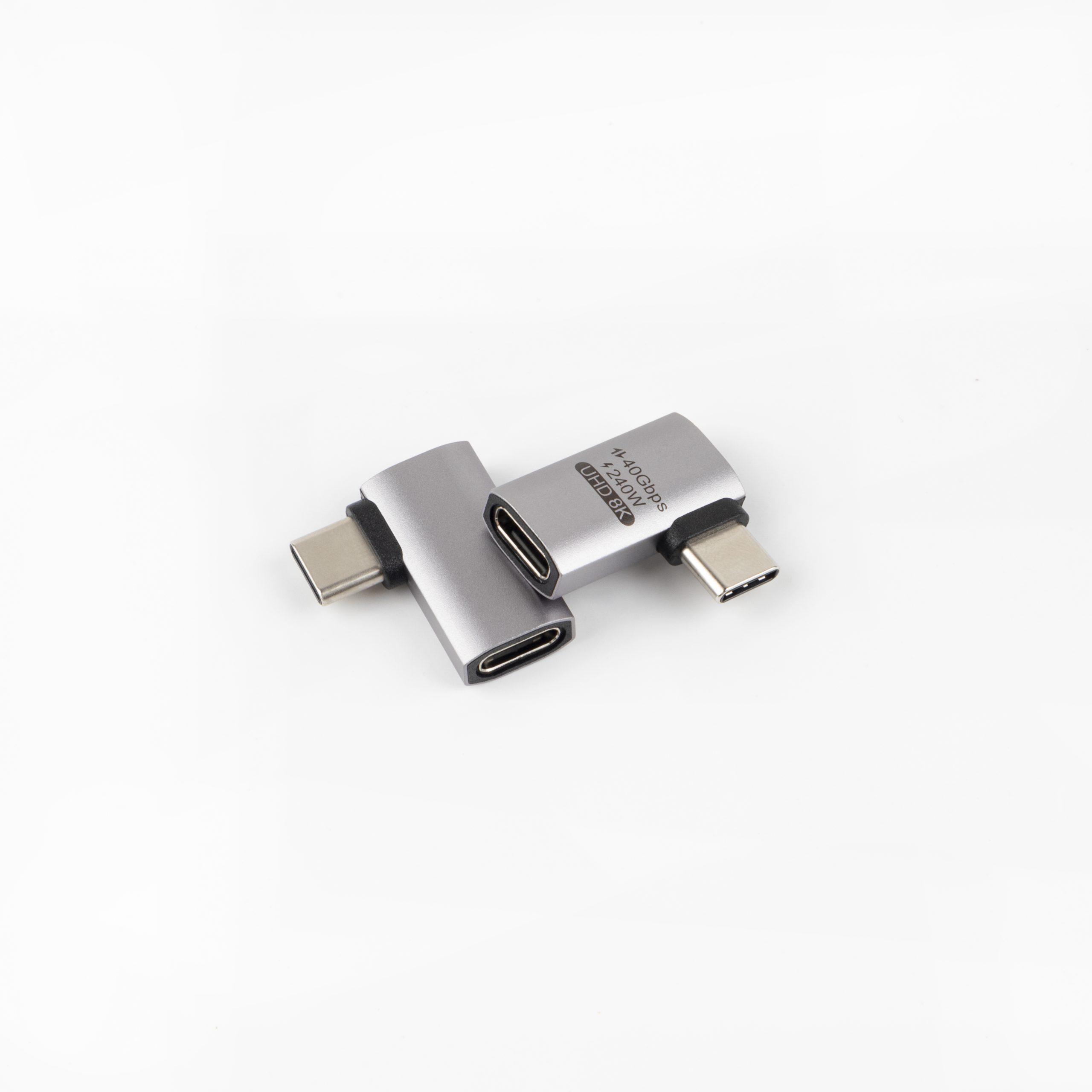
A field kit that mixes lengths should sort by device first, because a long lead on a fast device is the combination that fails. A tablet accessory kit is a common case, and the field OTG selection table covers the pairing rules.
| RFQ field | What it settles |
|---|---|
| Rate and length | Whether the link trains at the claimed speed |
| Equivalent length | Couplers and plates counted in the budget |
| Active or passive | Whether an extension is reachable at all |
| Power pair gauge | Voltage drop at the current asked for |
| Shield bond | Whether a long run radiates |
Extended length USB-C cable questions buyers ask
How far can a USB-C cable run? It depends on the rate. About 5 m at 480 Mbps, 3 m at 5 Gbps, 2 m at 10 Gbps, 1 m at 20 Gbps and 0.8 m at 40 Gbps on a passive build. An active build roughly doubles the top three figures.
Does a coupler count as length? Yes. Each mated pair adds loss, so a 3 m run through two plates should be specified as a 3.5 m equivalent.
Can I extend 40 Gbps with a passive cable? Not past about 1 m. Beyond that the link trains down to a lower rate and the customer sees a slow drive rather than a broken cable.
Why does a long run charge slowly? Voltage drop across the power pair. A 3 m run at 5 A on 20 AWG loses about 1.6 V, and the charger’s compensation range runs out.
What should a buyer send with the first enquiry? The device rate, the physical length, the number of couplers and the current. Eilinks answers with the achievable rate at that length, and buyers can talk to a China extended length USB-C cable supplier about the active option before a sample is booked.

1 Comment
[…] on a sample from each batch, which costs less than the test and catches a substituted part. The cable length guide covers the run side of the same […]