logo
✕
  • Home
  • Products
  • About Us
  • Contact
logo
  • Home
  • Products

    USB-C Cable

    • USB 4.0
    • USB 3.2
    • USB 3.0
    • USB 2.0

    Thunderbolt 5/4/3 Cable

    • Thunderbolt 5 Cable
    • Thunderbolt 4 Cable
    • Thunderbolt 3 Cable

    Audio/video Adapter Cable

    • DisplayPort To HDMI Cable
    • HDMI To DispalyPort Cable
    • HDMI To USB-C Cable
    • USB-C To DisplayPort Cable
    • USB-C To HDMI Cable

    USB-C Adapter

    • USB 4.0
    • USB 3.2
    • USB 3.0
    • USB 2.0
  • About Us
  • Contact
Published by eadmin on 2026-04-29
Categories
  • Blog
Tags

USB-C Cable Certification Bodies Compared: USB-IF, Thunderbolt, MFi, and More in 2026

When sourcing USB-C cable products, certification matters. A certified cable guarantees compliance with safety, performance, and interoperability standards. But the USB-C ecosystem involves multiple certification bodies, each covering different aspects of cable quality. Understanding which certifications matter for your application helps procurement managers make better sourcing decisions. Eilinks Electronics, a certified USB-C cable manufacturer, provides this comprehensive comparison of the major USB-C certification programs.

The Major USB-C Certification Bodies

USB-IF (USB Implementers Forum)

The USB-IF is the primary governing body for all USB standards. USB-IF certification is the foundation for any USB-C Cable product. It covers electrical compliance, mechanical durability, EMI performance, and safety testing. USB-IF certification is required to display the official USB logo on products and packaging.

  • Covers all USB specifications: USB 2.0 through USB4 2.0
  • Includes USB Power Delivery compliance testing
  • Requires authorized testing laboratories (ATLs)
  • Mandatory for displaying USB speed logos (5Gbps, 10Gbps, 20Gbps, 40Gbps, 80Gbps)

Intel Thunderbolt Certification

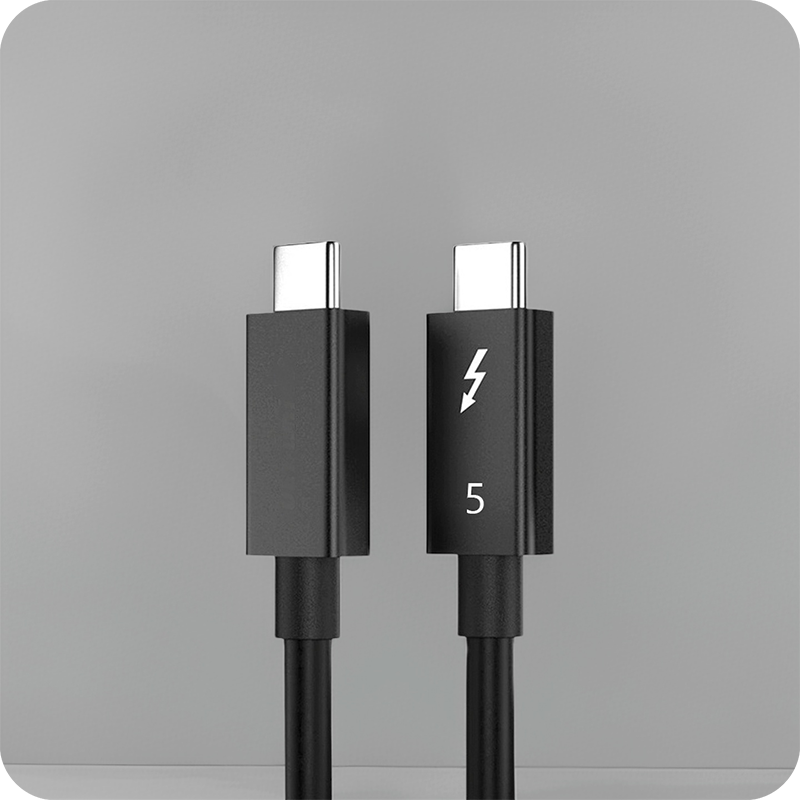
Thunderbolt certification ensures a Thunderbolt 4 cable or Thunderbolt 5 cable meets Intel’s requirements for data speed, display support, power delivery, and minimum PCIe bandwidth. While USB4 and Thunderbolt share the USB-C connector, Thunderbolt certification adds stricter requirements for guaranteed performance.

  • Guaranteed 40Gbps data speed (Thunderbolt 4) or 80Gbps (Thunderbolt 5)
  • Minimum PCIe bandwidth requirement (32Gbps for TB4)
  • Dual 4K display support mandatory
  • Intel silicon validation and testing

Apple MFi (Made for iPhone/iPad)

Apple’s MFi program certifies Lightning and USB-C accessories for Apple devices. For USB-C products, MFi certification ensures compatibility with iPhone, iPad, and Mac charging and data requirements. MFi-certified cables use Apple-specified components and undergo Apple’s testing protocols.

  • Required for optimal charging performance on Apple devices
  • Ensures compatibility with Apple power adapters
  • Uses Apple-specified USB-C connector components
  • Mandatory for Apple retail and authorized reseller channels

UL (Underwriters Laboratories)

UL certification focuses on electrical safety rather than data performance. UL Listed USB-C cables have been tested for fire, electric shock, and mechanical hazard risks. This certification is particularly important for cables sold in North American markets and is often required by commercial and industrial buyers.

CE and RoHS (European Market)

CE marking indicates compliance with European safety, health, and environmental directives. RoHS compliance restricts hazardous substances (lead, mercury, cadmium) in cable materials. These are mandatory for selling USB-C cables in the European Union.

Certification Comparison Table

Body Focus Area Cost Time Market Requirement
USB-IF Performance, interoperability High ($5,000-$15,000) 2-4 months Global (recommended)
Intel Thunderbolt Data speed, display, PCIe Very High ($20,000+) 3-6 months Thunderbolt products
Apple MFi Apple device compatibility Medium ($2,000-$5,000) 1-3 months Apple ecosystem
UL Electrical safety Medium ($3,000-$8,000) 1-2 months North America
CE / RoHS Safety, environmental Low-Medium 1-2 months European Union (mandatory)

Which Certifications Do You Actually Need?

Consumer Retail Market

For consumer USB-C cables sold through retail channels, USB-IF certification is the minimum standard. Adding UL listing provides additional consumer confidence and meets retailer requirements for stores like Best Buy, Walmart, and Amazon. If targeting Apple users, MFi certification is essential for iPhone and iPad cables.

B2B and OEM Procurement

Bulk buyers and OEM customers typically require USB-IF certification as a baseline, with additional certifications depending on the market. European customers require CE and RoHS. North American commercial buyers often require UL. Industrial customers may request IEC or ISO certifications.

High-Speed Data Products

For a USB4 cable or Thunderbolt 4 cable, USB-IF certification at the appropriate speed grade is essential. Thunderbolt certification from Intel is required for Thunderbolt-branded products. These certifications are expensive but necessary for professional-grade cables where signal integrity at 40-80Gbps is non-negotiable.

The Certification Process

Step 1: Pre-Compliance Testing

Before submitting to a certification body, manufacturers conduct internal testing using the same test equipment and procedures. Eilinks Electronics performs comprehensive pre-compliance testing on all new cable designs to identify and resolve issues before formal submission.

Step 2: Authorized Testing Laboratory

USB-IF and Intel require testing at authorized laboratories (ATLs) such as Intertek, UL, TUV, or Gran River Labs. The ATL performs electrical, mechanical, and environmental testing per the specification requirements.

Step 3: Certification Approval

Upon passing all tests, the manufacturer receives certification and license to use the official logos. USB-IF maintains a public product database where buyers can verify certified products.

Step 4: Ongoing Compliance

Certification requires ongoing factory audits and periodic re-testing. Manufacturers must maintain consistent production quality to retain their certification status.

How to Verify Cable Certification

  • USB-IF: Check the official product listing at usb.org
  • Thunderbolt: Look for the Thunderbolt logo and certification number
  • MFi: Verify through Apple’s MFi portal or look for the MFi logo
  • UL: Search the UL Product iQ database by manufacturer name
  • CE: Look for the CE mark on the product or packaging

Eilinks Electronics provides certification documentation and test reports for all cable products upon request, enabling buyers to verify compliance before purchase.

Frequently Asked Questions

Are Uncertified USB-C Cables Dangerous?

They can be. Uncertified cables may have undersized conductors that overheat at rated currents, poor shielding that causes data errors, or insulation materials that fail under thermal stress. In extreme cases, uncertified cables have caused fires. Always source from certified manufacturers to ensure safety and performance.

How Much Does USB-IF Certification Cost?

USB-IF certification typically costs between $5,000 and $15,000 per product, including testing fees at an authorized laboratory. The cost varies based on the complexity of the cable (USB 2.0 is cheaper than USB4) and the testing laboratory chosen. Eilinks Electronics absorbs certification costs for standard product lines.

Do I Need Thunderbolt Certification for USB4 Cables?

No. A USB4 cable only requires USB-IF certification at the appropriate speed grade. Thunderbolt certification is only needed if you want to market the cable as Thunderbolt-compatible and use the Thunderbolt logo. However, Thunderbolt certification ensures guaranteed minimum performance that basic USB4 certification does not.

Can a Cable Have Multiple Certifications?

Yes, and premium cables often do. A high-quality Thunderbolt 4 cable from Eilinks Electronics may carry USB-IF, Intel Thunderbolt, UL, CE, and RoHS certifications simultaneously. Multiple certifications demonstrate comprehensive compliance across different standards.

How Long Does Certification Take?

USB-IF certification typically takes 2-4 months from initial submission to approval. Thunderbolt certification takes longer (3-6 months) due to Intel’s validation requirements. UL listing takes 1-2 months. Pre-compliance testing and design iterations can add additional time to the overall process.

Conclusion

Certification is the hallmark of a quality USB-C cable. USB-IF certification is the essential baseline for all USB-C products, while additional certifications from Intel, Apple, UL, and CE address specific market requirements. When sourcing from a USB-C cable manufacturer, always verify the certifications relevant to your market and application. Eilinks Electronics maintains comprehensive certification across all product lines and provides full documentation for procurement compliance.

Need Certified USB-C Cables?
Eilinks Electronics is a certified USB-C cable manufacturer with USB-IF, UL, CE, and RoHS compliant products.

Contact UsView Products

USB-C CableUSB4 CableThunderbolt CableUSB 3.2 Cable
eadmin
eadmin

Related posts

2026-05-08

USB-C Cable for Drone and Robotics 2026: Lightweight High-Speed Data


Read more
2026-05-08

USB-C Cable for Data Center and Server Room 2026: High-Density Power and Data


Read more
2026-05-08

USB-C Cable Care and Maintenance Guide 2026: Extend Cable Lifespan


Read more

Leave a Reply Cancel reply

Your email address will not be published. Required fields are marked *

Navigation

  • About
  • Contact

Products

  • USB-C Adapter
  • Thunderbolt 5/4/3 Cable
  • Audio/video Adapter Cable
  • USB-C Cable

Contacts

+86 13242969135
Sales@eilinks.com
Chashan Town, Dongguan City, Guangdong , China
© Dongguan Eilinks Eletronics Co.,Ltd All Rights Reserved
  • Consent
  • Details
  • About Cookies

This website uses cookies

We use cookies to personalise content and ads, to provide social media features and to analyse our traffic. We also share information about your use of our site with our social media, advertising and analytics partners who may combine it with other information that you’ve provided to them or that they’ve collected from your use of their services.

Necessary

Necessary cookies help make a website usable by enabling basic functions like page navigation and access to secure areas of the website. The website cannot function properly without these cookies.

Analytics & Performance

Statistic cookies help website owners to understand how visitors interact with websites by collecting and reporting information anonymously.

Marketing

Marketing cookies are used to track visitors across websites. The intention is to display ads that are relevant and engaging for the individual user and thereby more valuable for publishers and third party advertisers.

Cookies are small text files that can be used by websites to make a user's experience more efficient.

The law states that we can store cookies on your device if they are strictly necessary for the operation of this site. For all other types of cookies we need your permission. This means that cookies which are categorized as necessary, are processed based on GDPR Art. 6 (1) (f). All other cookies, meaning those from the categories preferences and marketing, are processed based on GDPR Art. 6 (1) (a) GDPR.

This site uses different types of cookies. Some cookies are placed by third party services that appear on our pages.

You can at any time change or withdraw your consent from the Cookie Declaration on our website.

Learn more about who we are, how you can contact us and how we process personal data in our Privacy Policy.

Please state your consent ID and date when you contact us regarding your consent.

Deny Customize Allow selected Allow all