
Flat USB-C Cable: Routing Checks for Tight Runs
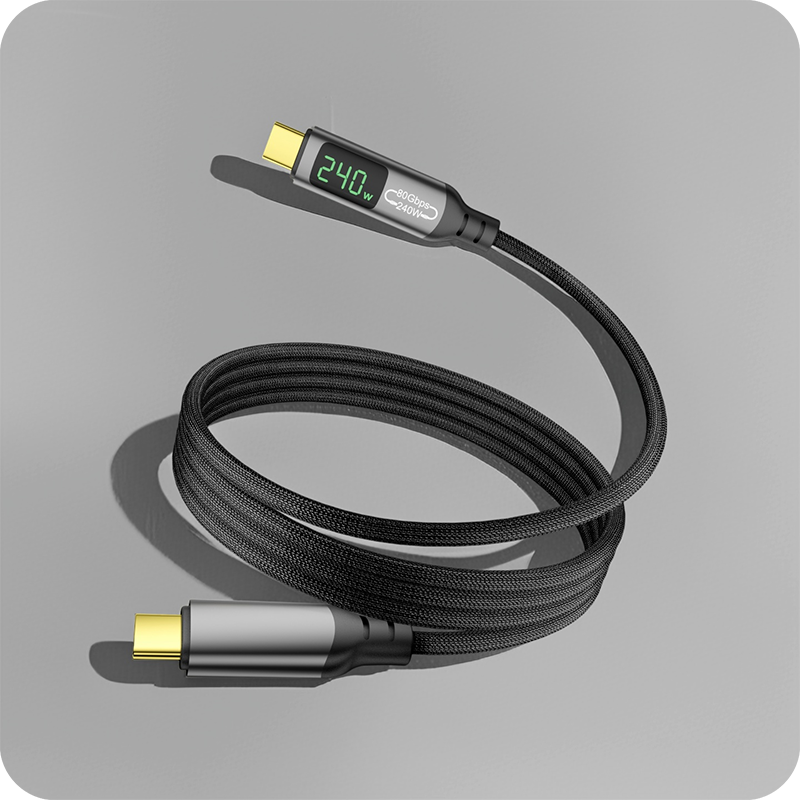
A flat USB-C cable solves a routing problem rather than an electrical one. The conductors sit side by side in one plane, so the assembly lies under a carpet edge, a desk mat or a shallow cable channel without lifting whatever goes over it. Eilinks builds the flat profile for installers who have already discovered that a round lead will not sit where the drawing says it should.
Everything electrical is unchanged by the shape. The rate, the power rating and the pin-out come from the conductors, the shielding and the connector rather than from the jacket, so a flat USB-C cable sold at 80 Gbps has to meet the same signalling budget as a round one. Where a flat profile sits among the full list of connector and jacket options is therefore a mechanical question before it is an electrical one.
What does a flat USB-C cable change about a run?
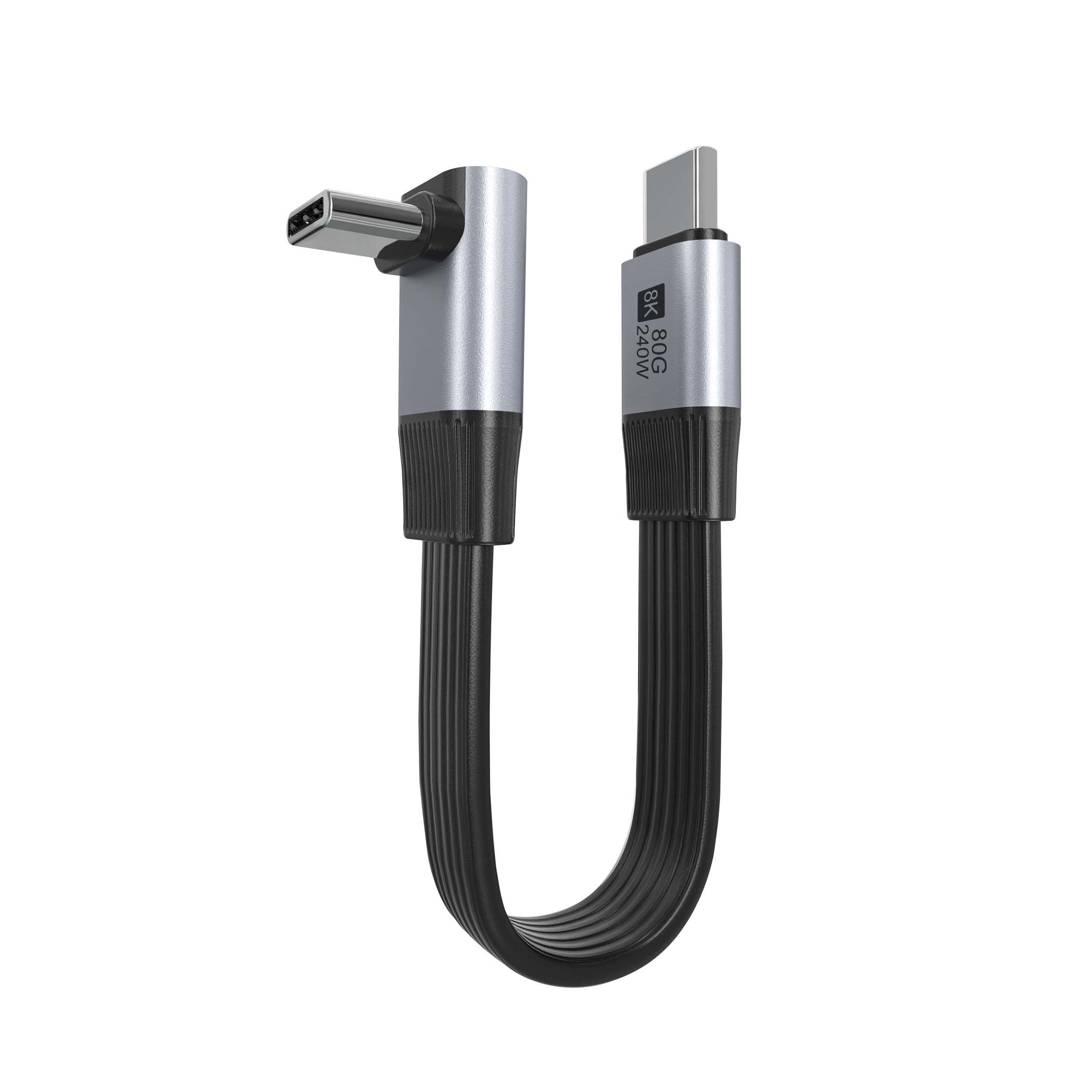
Two bend axes exist, and a flat assembly only gives up one of them. It folds across its width the way a ribbon folds, and it resists folding across its thickness, so a run that turns in the wrong plane fights the jacket instead of following it. Most installation complaints about this profile start at a corner that was drawn for a round lead and then built with a flat one.
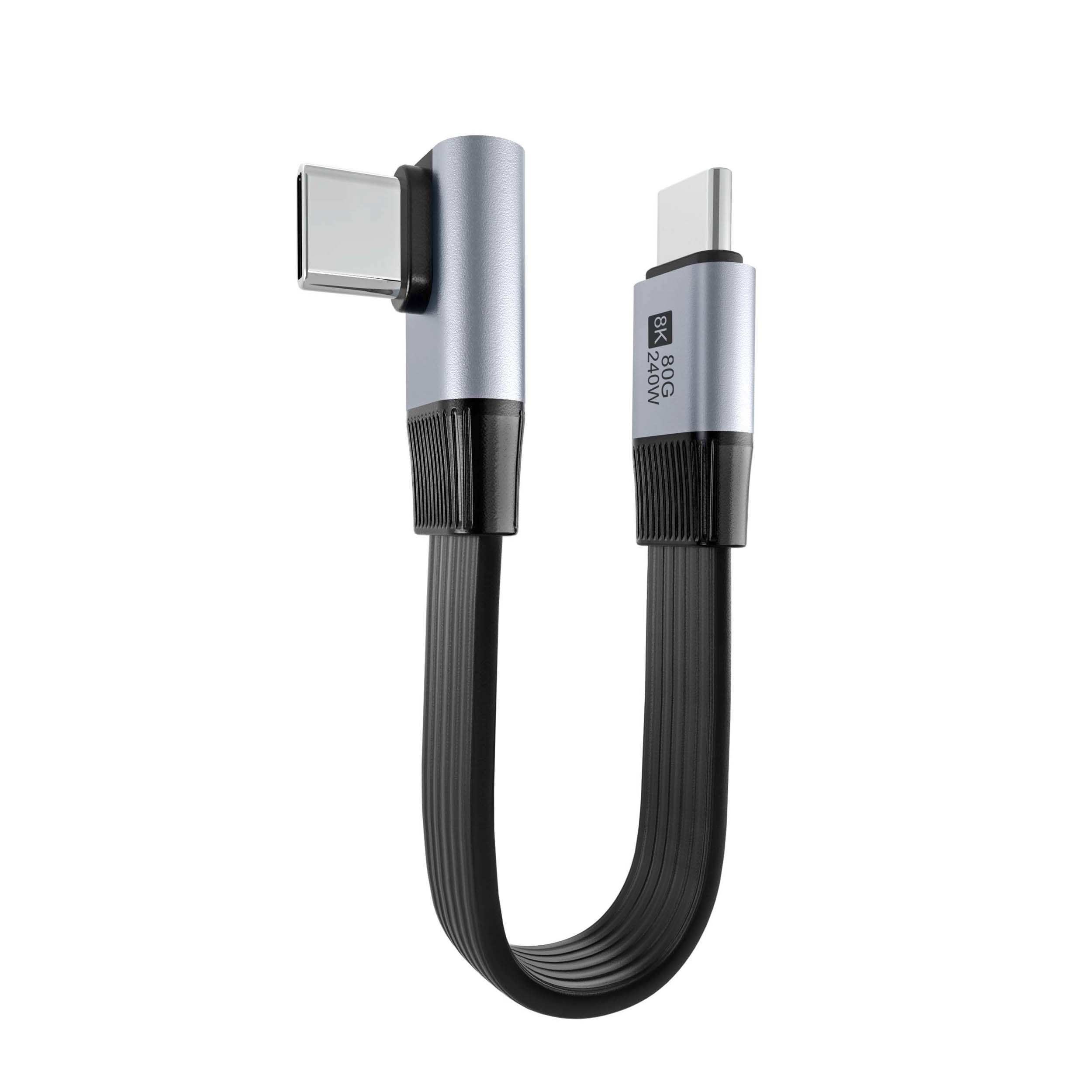
Contact area is the second change. A flat lead rests against a surface along its whole width, which is exactly what makes it disappear under a mat, and it is also why the face that touches the floor cannot shed heat the way a round lead sheds it around a full circumference.
None of that alters the signalling budget, which is still set by the conductors and the shielding.
Flat USB-C cable vs round cable: the trade
The comparison is easier to settle with a table than with an opinion, because the two profiles win in different places. A flat USB-C cable vs round cable decision usually comes down to whether the run is covered, how tight the turn is, and whether anybody has to pull the lead again after commissioning.
| Run condition | Flat profile | Round profile |
|---|---|---|
| Under a mat or carpet edge | Lies flush, no lift | Raises the covering |
| Turn around a desk leg | Resists the turn | Turns in any plane |
| Heat dissipation against a floor | One face blocked | Sheds around the jacket |
| Repeated pull after install | Jacket can crease | Recovers its shape |
A Chinese-made flat USB-C cable rated for the same 80 Gbps and the same 240 W has to prove both figures in the flat build, not inherit them from a round one that already passed.
The 80 Gbps figure is worth reading as a raw rate rather than a file-transfer promise. Eighty billion bits per second, grouped eight to a byte, is 10 GB/s of raw signalling before encoding overhead, and the 240 W extended power range figure is 48 V at 5 A.
Both numbers come from the specification rather than from the profile. A flat assembly that reaches them is a flat assembly that was engineered to reach them, and that is the sentence to look for on the datasheet.
Where does a flat USB-C cable bend badly?
Three places account for most of the returns: a turn taken edge-on, a run clamped flat against something warm, and a lead pulled out of a channel by its plug rather than its body. Each one produces a different failure, and only the third is obvious on inspection.
Heat is the quiet one. Where the run sits under a covering, the temperature rating of a flat lead against a floor matters more than the printed current, because the blocked face raises the working temperature of the whole assembly.
Pulling is the visible one. A flat jacket creases where a round one rolls, and a crease that survives one service visit usually survives the second one as a tear.
What the plug still carries on a flat build
The connector does not change with the profile. A USB-C plug still presents 24 contacts in the same arrangement, so a flat build has to route the same number of conductors into the same shell, which is why the transition between ribbon and plug is the place where a cheap assembly fails first.
| Failure point | What to look for | When it appears |
|---|---|---|
| Ribbon-to-plug transition | Strain relief moulded over the flat body | First pull after install |
| Edge-on turn | Crease along the narrow face | At commissioning |
| Covered run | Warm jacket under the covering | After a week in service |
| Repeat service | Jacket torn at the crease | Second visit |
- Check the moulded transition before the order
- Check the turn direction against the flat face
- Check the covering above a run that carries power
- Check the jacket after the first service pull
Strain relief is the part to look at on a sample. A moulded boot that grips the ribbon along its width spreads the load; one that grips only the edges concentrates it at the crease, and the crease is where a flat assembly eventually tears. Eilinks Eletronics moulds that boot over the flat body rather than over a round insert, because the transition is where a flat build gives up.
The printed figures still have to be read the same way as on any other lead, so the power and speed marks printed on a flat jacket follow the same convention and carry the same limits. A mark that only appears on the round version of the same part number is a mark worth querying before the order goes in.
Flat USB-C cable for under-desk and floor runs
Under-desk work is where the profile earns its cost, because a lead that disappears under a mat is a lead nobody trips over. Floor runs are the harder case: the covering adds heat on one side and the traffic adds movement on the other, and both of them arrive after the installer has gone home. A flat build for shallow cable channels solves the trip hazard and leaves the thermal question open.
Length is the other half of that decision, and a flat build is not exempt from it. The point where a passive run stops holding its rate is set by the conductors and the shielding, so the flat profile buys clearance, not distance.
A flat USB-C cable for shallow cable channels is usually bought in a fixed length, cut to the run once, and then left alone. That is the use the profile was designed for, and it is worth stating on the drawing so the next buyer inherits the same assumption rather than ordering a round lead into the same channel.
China flat USB-C cable supplier checks
Eilinks is a flat USB-C cable manufacturer, and three questions separate a partner who can support a programme from one who only ships boxes. Can they state the rate and the power figure for the flat build specifically? Can they say which bend axis the assembly is built for? And can they hold the moulded transition across repeat batches, so that the second order behaves like the first?
The reference to expect in writing is the USB4 Version 2.0 specification, because 80 Gbps and its signalling budget sit inside that document rather than in a product description. A China flat USB-C cable supplier and a flat USB-C cable factory in China are both judged on the same three answers, and a Chinese flat USB-C cable supplier that cannot answer them is quoting a round part in a flat jacket.
Eilinks’ quotation packs state the bend axis and the transition drawing, because those two items decide whether a repeat batch behaves like the approved sample.
Flat USB-C cable checks before a batch order
USB-IF certification requirements for flat USB-C cable describe what an assembly has to be able to do, and CE marking requirements for flat USB-C cable sit with the finished product placed on the market. Neither document replaces a sample tested in the channel it will run in.
- The installer confirms the bend axis and the covering
- The sourcing engineer confirms the rate and the power figure for the flat build
- Eilinks pins the transition drawing and the jacket material
- The commissioning team confirms the jacket after the first service pull
A sample run in the actual channel is worth more than any printed rating, because the channel decides the bend axis, and spare leads belong in the commissioning kit.
Questions buyers ask
Does a flat USB-C cable carry less power than a round one?
Not if it was engineered for the rating. The 240 W extended power range figure is 48 V at 5 A, and a flat assembly that reaches it has the conductor cross-section to match. The printed mark is the claim to check rather than the profile.
Why does a flat USB-C cable crease where a round one does not?
A flat jacket has one bend axis that is easy and one that is not, so a fold taken across the thickness puts the whole strain into a single line. A round jacket spreads the same fold around its circumference.
Can a flat USB-C cable run under a carpet?
It can lie there without lifting the covering, which is the point of the profile. The check that follows is thermal: the covered face cannot shed heat, so the run has to be within the temperature rating of the jacket as well as within its current rating.
What should appear on a flat USB-C cable drawing?
The length, the rate, the power figure, the bend axis the assembly is built for, and the transition detail where the ribbon enters the plug. Those five items decide whether a repeat batch matches the approved sample.
Where the checks lead
Almost every flat USB-C cable problem traces back to three points: which way the run was meant to turn, whether the assembly was rated in the flat build, and how the transition into the plug was moulded.
Send the run length, the bend axis and the covering to the Eilinks flat-profile cable desk and the assembly can be matched to the channel rather than the channel being reworked around the part.
