
Hi speed USB 240W USB-C cable: Power Tier and Batch Checks
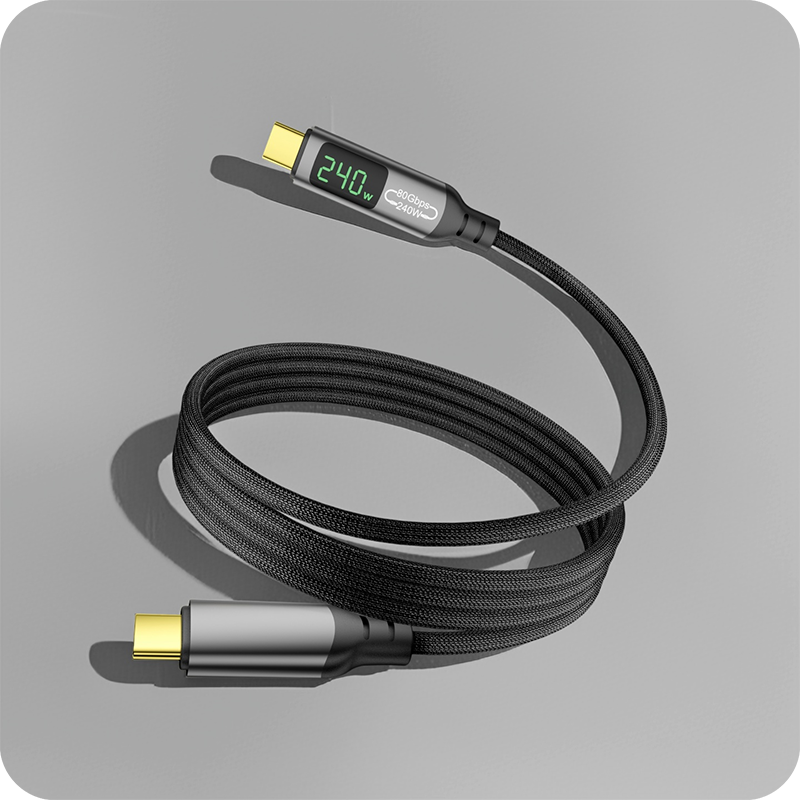
A hi speed USB 240W USB-C cable from a China factory moves up to 240 watts and 80 Gbps over one connector, so a buyer can power a creator laptop and feed a 4K display from a single line. Eilinks builds these assemblies on a production line that keeps the electrical test record with the spool, so the number on the sheath matches the batch it shipped from. Sourcing the right lead means checking the e-marker declaration, the wire size, and the conformity file before a buyer sends a request for quote. The power versus data ratings on one connector explains where the 100 W tier ends and the 240-watt line begins. The 50 V and 5 A pair that defines the boosted rating is what separates a 240-watt lead from the older 100 W ceiling, and the gap shows up the moment a dock pulls past 100 W. A short desk run and a long equipment rack need different wire sizes to hold the same 5 A without overheating at the far end, which is why the lead length belongs in the spec sheet rather than the marketing copy.
How does the hi speed USB 240W USB-C cable reach 240 watts?
The assembly built on that line reaches its rating by raising the link to 50 volts and 5 amps, a step above the 20 V ceiling of the older 100 W profile. A passive build must keep the voltage drop small across its length, which is why the wire size and the e-marker matter as much as the connector.

The host reads the declared current and length from the e-marker before it raises the voltage, and a mismatched lead can trip the contract and fall back to a lower wattage. Eilinks keeps the declared values on file so a workstation dock can draw the full boost instead of defaulting to 60 W when the negotiation fails. The two power pairs and the CC line do the real work, and a clean bond at each end keeps the resistance where the drawing puts it.
The 50 V and 5 A pair
Inside the run the two power pairs carry 50 V while the CC line negotiates the contract. The e-marker stores the declared current and the lead length, and the source reads it before raising the voltage. Choosing a lead that documents both numbers lets a dock draw full boost instead of defaulting to 60 W when the negotiation fails. A thicker wire holds the same current with less heat, which is why the spool label and the test record must agree before the lead leaves the line.
What the PD 3.1 profile changes for buyers
The PD 3.1 profile changes the buying decision because the same connector now carries four times the old wattage. A buyer comparing a 240-watt lead against a 100 W lead is really comparing two different power tiers, not two speeds. The data tiers stay the same from 480 Mbps to 80 Gbps, so the choice is about how much load the line must feed, not how fast the signal moves. When the run needs distance, the 240-watt extension for external GPU docks keeps the wattage while stretching the lead to the monitor wall without a second brick. Specifying the profile up front also keeps the bill of materials honest, because the higher tier needs a rated connector and a tested e-marker from the start. Buyers who skip this step often discover the limit only after a dock refuses to charge at full rate. The public text of the profile sits in the document library at usb.org. A hi speed USB 240W USB-C cable quoted by a Chinese supplier should list the tier, the length and the wire size on one sheet.
Where the reel lot jacket meets the plug
The reel lot jacket meets the plug shell because the negotiation happens at the connector, not halfway down the run. Eilinks Eletronics stamps the declared values during moulding, which keeps the marker readable after repeated mating cycles. A source that skips the e-marker forces the host to assume the worst case, so the link stays at 60 W no matter what the label claims. The plug-side detail lives in the e-marker chip guide for equipment integration, useful when a lead must sit inside a product. Reading the stored values takes one command from the host, and a mismatch between the marker and the sheath is the fastest way to trip a safety fallback.
Why the marker must stay readable
A marker that wears off after a few hundred mates turns a rated lead into an unknown one, because the host can no longer trust the declared current. Eilinks moulds the chip under the shell rather than gluing it on, so the reading survives the bench abuse a dock sees in a shared office. Buyers who resell the lead downstream should keep the batch file close to the spool for the whole life of the product.
| Scenario | 100 W lead | 240-watt lead |
|---|---|---|
| Creator laptop, 130 W | Falls back to 60-100 W | Holds the full 130 W contract |
| Dock with 4 ports | Caps at 100 W shared | Feeds each port near spec |
| Small workstation | Under-powered | Matches the 240-watt draw |
- List the largest single device draw first.
- Add the downstream dock ports you plan to use.
- Pick the profile that covers the sum with margin.
Workstation docking and the gauge solder joint
A workstation docking setup shares the power budget across ports, so the headroom above 100 W stops the whole hub from throttling. The shielding and pair work is covered in the shielding and ESD notes that apply to high-current runs. Integrators who specify a 240-watt lead up front avoid the support tickets that arrive when a 100 W lead meets a loaded dock. The lead is the cheapest part of the system to over-spec, and the easiest to forget during the bill of materials review. A shielded pair also keeps the 80 Gbps signal clean next to the 50 V rail, which is the part most buyers overlook yet still pay for. Teams that overlook this usually find the fault after the hardware is already in the field. For a bench stocked from a China factory, the hi speed USB 240W USB-C cable drawing states the tier per spool, so the desk order matches the sample.
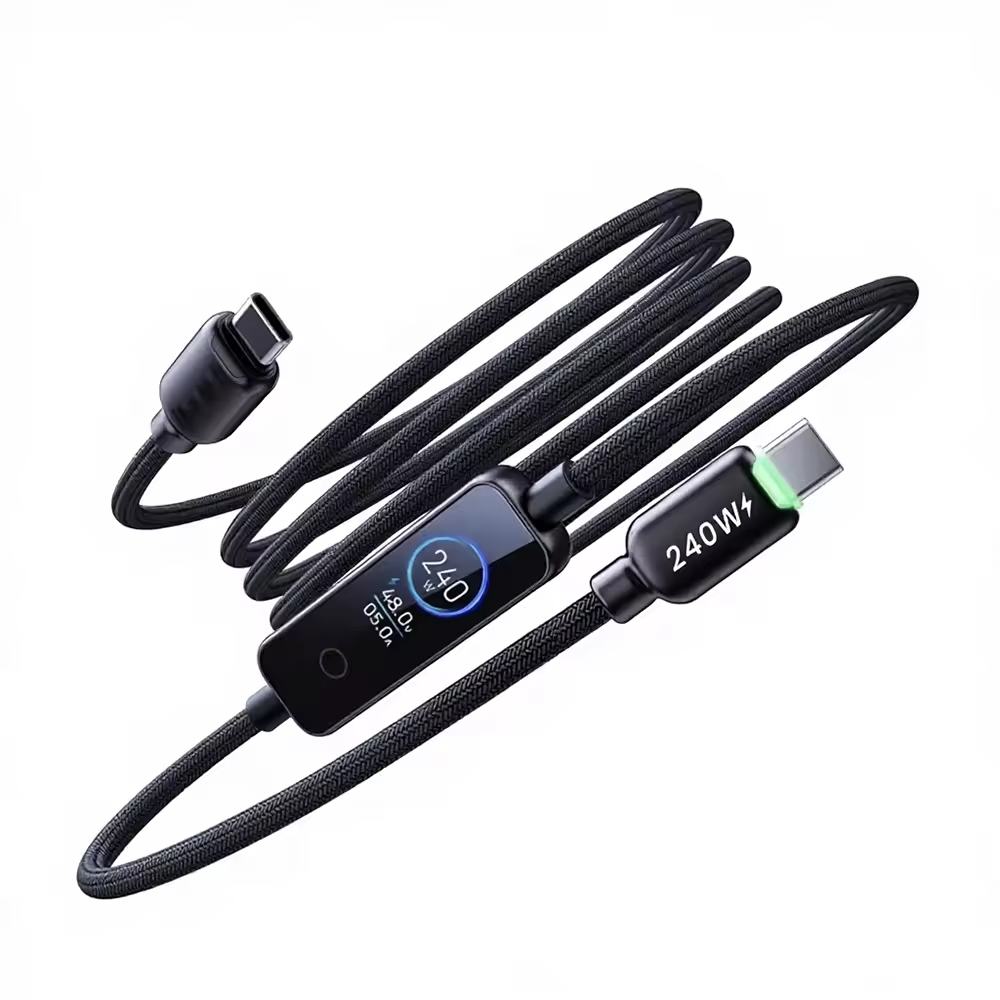
Where the hi speed USB 240W USB-C cable earns its place
A lead like this earns its place wherever one line must both power a machine and feed data. A single run replaces a separate brick and a data lead, which cleans up the desk and removes a failure point. Most of these orders come from equipment integrators rather than home users, because the savings show up only when many desks share the same batch. For a ready-made option, ask the factory for the 240-watt USB4 assembly that carries the boosted rating on a 40 Gbps line. The same drawing serves a test bench and a video wall, so the integrator keeps one spare type instead of three.
Do all high-power leads need the mating moulding cycle?
The higher tier is what lets a 240-watt lead reach 50 V safely, and a buyer should know whether the target device can accept it before specifying the lead. A 100 W device does not use the higher tier, and most phones stay at 20 V or below. The risk is not the rating itself but a mismatched lead on a host that expects the lower ceiling. The 240-watt USB4 lead on the shelf shows how a declared tier travels with the product from the line. Eilinks documents the supported tiers on every spool so a buyer can match the lead to the dock without a return. When the host and the lead disagree on the tier, the contract simply steps down, which is why the declared numbers on the spool matter more than the print on the box. That record travels with the spool, so the tier on the box matches the file.
| Lead length | Wire size note |
|---|---|
| Desk run, up to 2 m | Standard gauge holds 5 A with margin |
| Rack run, 3-5 m | Thicker wire keeps the drop inside budget |
Questions buyers ask
Can a 240-watt lead charge a 100W device?
A 240-watt lead charges a 100 W device without issue because the PD contract negotiates down to what the device requests. The higher rating is a ceiling, not a forced draw, so the same lead serves both a phone and a workstation. Buyers gain flexibility, not risk, when the lead serves mixed gear. A single rated lead also cuts the spare-parts list, which matters when a fleet of docks shares one storeroom.
Is every 240-watt lead the same length?
No. Lead lengths vary from short desk runs to several metres for equipment racks, and the length changes the voltage-drop budget. A longer lead needs a thicker wire to hold the same 5 A without overheating at the far end. Buyers should match the length to the run and confirm the declared wire size instead of assuming one spec fits every distance. The spool label should state both the length and the wire size, and the test record must back the claim before the lead ships.
Do I need the batch file before import?
The batch file holds the records an importer must keep, and CE marking plus the standards-body paperwork point to the same set a buyer already holds for other electronics. A complete set turns a customs check into a five-minute task rather than a held container. Eilinks keeps the declaration in the same batch file as the electrical test, so a buyer can confirm one lead maps to one spool before placing a large order.
What papers should the shipment include?
A shipment should include the lot number, the e-marker declaration, and the batch file the importer must keep. The PD 3.1 profile sets the electrical behaviour the records describe. Request a quote and the batch file together, and the compliance piece stops being the part you worry about.
To start a build, ask the factory for a quotation and the batch file with the e-marker declaration and conformity papers. The power spec defines the contract a 240-watt lead must follow. Buyers who consolidate dock, display and laptop leads onto one rated assembly trim the bill of materials and the spares shelf.
By Eilinks Eletronics
