
Juice Braided USB-C Cable: Jacket Checks for Desk Kits
A Juice braided USB-C cable is specified by the weave on its jacket as much as by the silicon at each end, and buyers who source by connector type alone miss the failure that actually shows up in a desk kit: a sleeve that frays at the strain relief long before the data pins wear out. Eilinks, a China-based manufacturer, publishes the jacket and gauge figures that let procurement teams compare two quotations on equal terms, and the tier and length rules behind a desk run set the speed classes referenced below. This guide gives the checks that separate a documented braid from a marketing word — the yarn count and denier behind the sleeve, how the overmould bonds to it, what 240 W at 48 V and 5 A demands of the conductors inside, and which first-article records should travel with a volume order. Working through those checks takes a drawing, a sample and about ten minutes, and it prevents the most common mistake in a bulk purchase: approving a sleeve that looks right in a photo and then finding it splits after a few weeks of edge routing. Everything here is a verification step for the purchaser, not a promise from a listing page.
What the braid on a Juice braided USB-C cable actually does
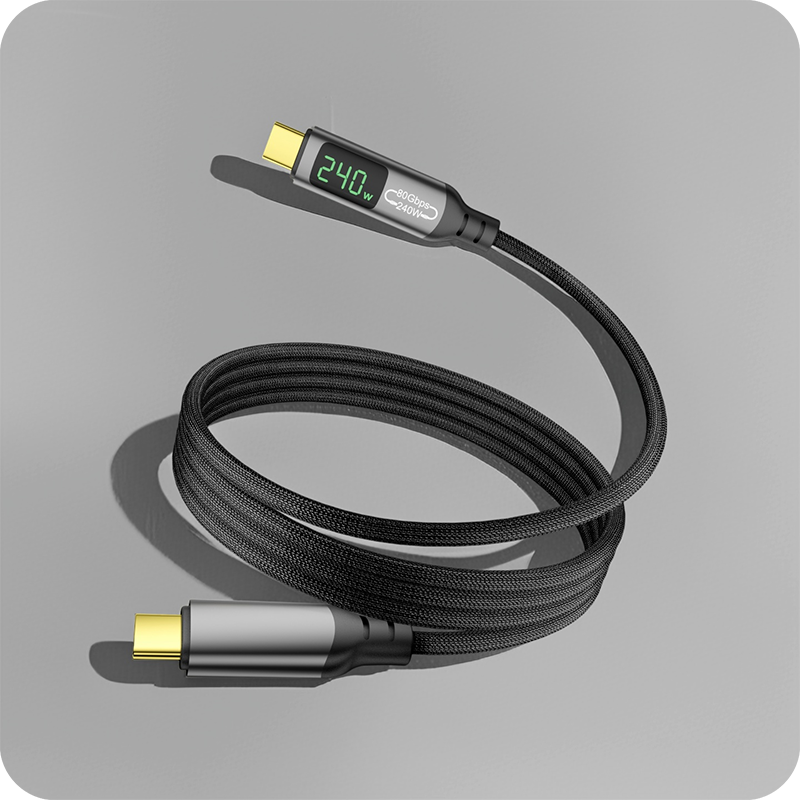
The braided versus TPE jacket comparison sets out the trade-off in detail: a woven sleeve resists scraping and kinks well, but it is only as good as the bond where it meets the plug. A braided jacket is a woven sleeve of polyester or nylon yarn over the conductor bundle, and it takes abrasion and bending off the insulation underneath. A Juice braided USB-C cable datasheet should state the yarn material and the weave density, because those two lines decide whether the part survives a rolling chair or simply looks tougher on the shelf.
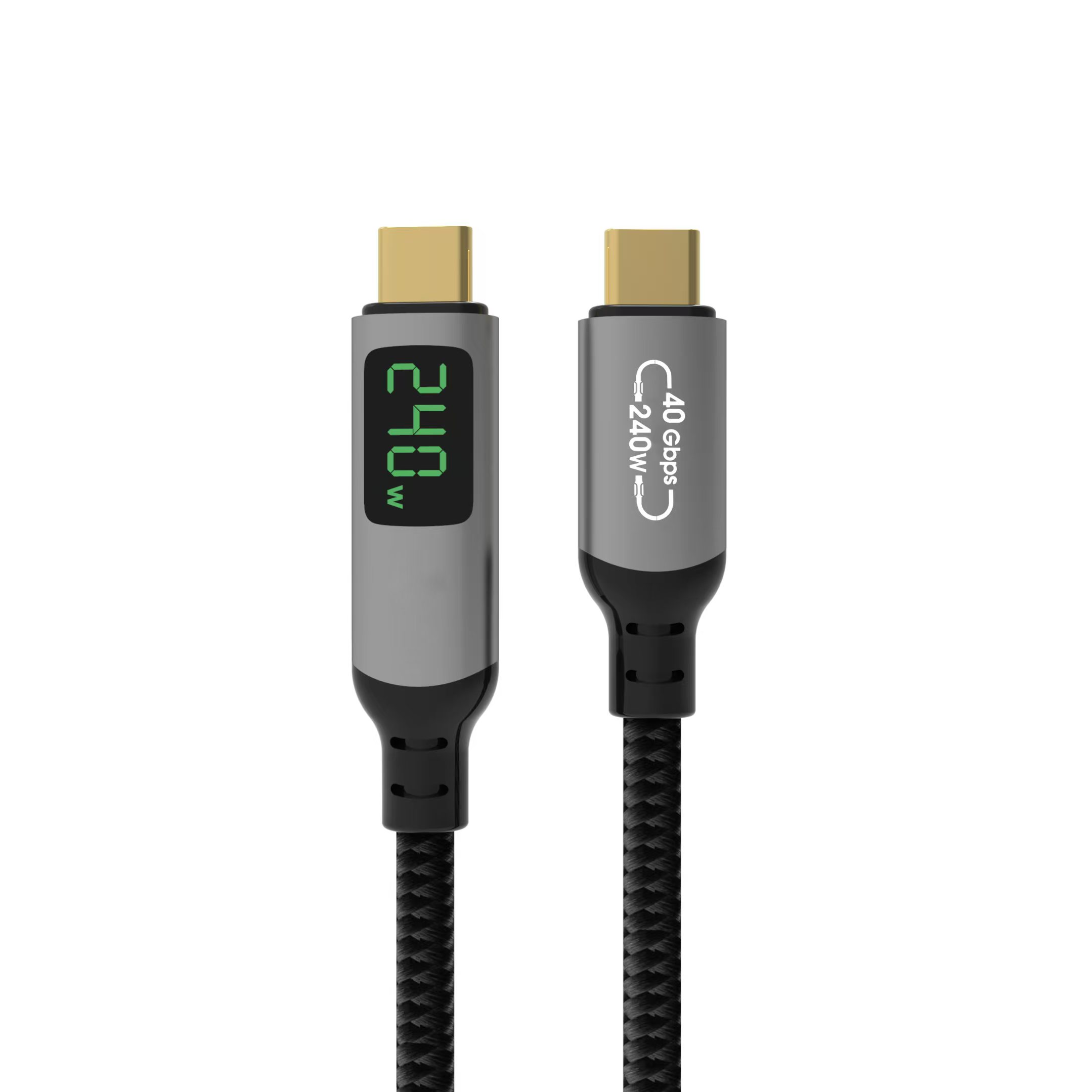
Because the weave carries the mechanical load, the overmould is where it usually fails. A short flexible boot has to transfer bending from the moving cable into the rigid plug without concentrating it at one edge. Eilinks anchors the sleeve under that boot rather than relying on a surface bond, since a weave that is merely glued will peel back after repeated flexing even when the yarn itself is sound.
Which weave figures decide a Juice braided USB-C cable purchase?
Three figures decide it, and the first is yarn specification. A datasheet should name the fibre and give a denier or yarn count that can be checked lot to lot. A China Juice braided USB-C cable supplier should be able to produce that line on request, because a quotation that says only “braided” gives a buyer nothing to compare and is where a thinner sleeve tends to hide.
The second figure is the extension range at the plug. A woven jacket should stay flexible down to a stated bend radius, and the boot should keep the first centimetre of run from kinking. The third is power. The USB Power Delivery 3.1 Extended Power Range defines a 240 W budget at 48 V and 5 A, and a sleeve around a 5 A assembly must leave enough conductor gauge inside to carry that current without heating. The USB Power Delivery specification on usb.org is the neutral reference when two datasheets disagree on the power line.
| Check | Figure to request | Why it matters |
|---|---|---|
| Yarn | fibre type and denier | sets abrasion life |
| Boot | bend radius at the plug | stops peel-back |
| Power | conductor gauge at 5 A | holds the 240 W budget |
- Confirm the yarn specification.
- Read the boot bend radius.
- File the conductor gauge.
How does a 240 W rating hold on a shared run?
A 240 W rating holds only when the whole assembly is built to the Extended Power Range, and the outer weave is not part of that electrical path. The conductors, the contacts and the e-marker inside the plug decide the wattage; the sleeve decides how long the part survives physically. A China Juice braided USB-C cable factory should therefore publish two separate lines — the electrical class and the jacket construction — rather than implying a tough weave raises the power figure.
That separation matters on a shared lead. One assembly may carry a laptop at 48 V while it is also moved, coiled and rubbed against a frame edge, so the mechanical and electrical margins are both exercised at once. Eilinks Eletronics keeps the two ratings on separate lines, and the power and data rating distinction explains why the wattage line and the data line are verified on separate evidence.
Does the strain relief change how long the sleeve lasts?
It changes it more than the yarn does. The strain relief is the point where a flexible weave meets a rigid shell, and a long tapered boot spreads the bend over centimetres while a short stub concentrates it at one seam. A Chinese Juice braided USB-C cable manufacturer should treat the boot geometry as part of the sleeve specification, quoting a flex-cycle figure at the boot as well as the yarn data, because a woven jacket rarely wears evenly along its length.
Routing finishes the job. The run over a desk edge should leave a service loop and avoid a tight wrap around a sharp corner, which keeps the weave inside its stated bend radius through months of use. A sleeve treated gently at the plug outlasts one that is yanked there, whatever the denier on the sheet.

When does a Juice braided USB-C cable run need a different build?
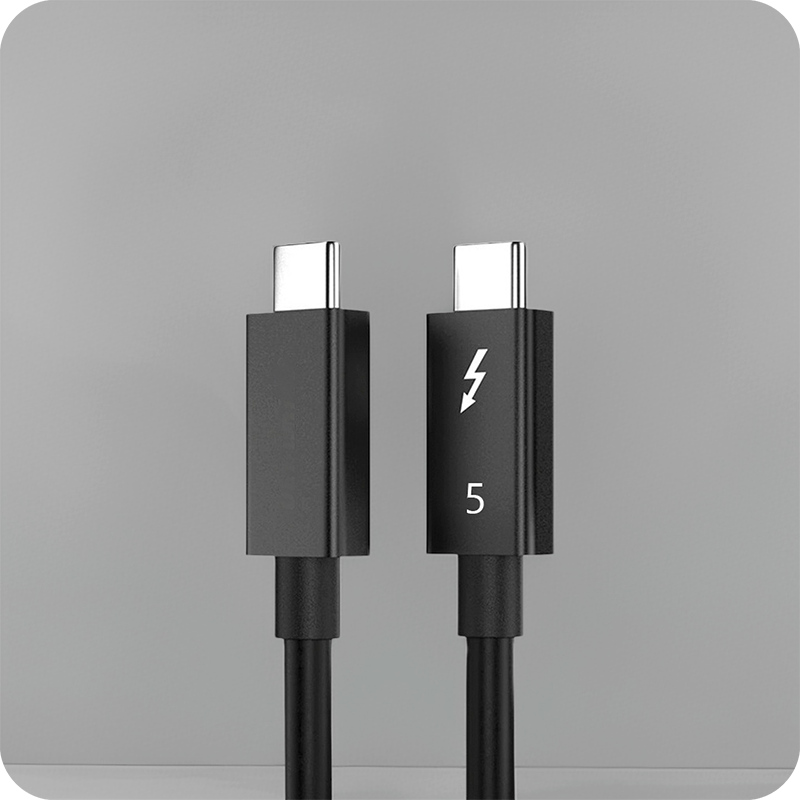
A passive lead keeps its class only over a limited length, and the sheet should state that ceiling honestly. Within roughly 0.8 metres at the full rate a passive construction holds together; beyond that the honest options are an active stage or a shorter route from the host. Eilinks Eletronics publishes the tested ceiling for each construction, so a buyer can plan the run before the parts arrive on site rather than discovering the limit during installation. The passive and active length limits compared page explains where that ceiling comes from and when an active build is the better purchase for a longer desk or rack route. The outer weave does not move the electrical boundary — it only decides how well the part survives being routed right up to the stated limit over months of daily handling.
What gets documented before a Juice braided USB-C cable order
A volume order should arrive with the yarn specification, the class and wattage lines, and a first-article report tied to the tooling revision. The drawing lets a mechanical team confirm the boot profile against the desk clamp before production, and the report confirms the parts in hand match the parts that were quoted. The reference assembly listed by Eilinks in the nylon-braided part built by a China supplier ships with those records, which is the set a purchaser should treat as standard rather than a favour.
Lot checks typically cover continuity on every pin, an insulation check and a flex sample at the boot. None of that is a certification; it confirms the lot matches the drawing the buyer approved. Each shipment carries a lot traceability record, because a changed yarn source shows up in flex life long before it shows up in a photo.
| Document | What it confirms |
|---|---|
| Yarn specification | fibre and denier |
| Class sheet | data and wattage lines |
| First-article report | boot tooling tolerance |
- Request the yarn sheet.
- Read the class sheet.
- File the first-article report.
Questions buyers ask
Does a woven jacket make the lead stronger electrically?
No. The weave improves abrasion and kink resistance; the conductors and contacts set the data and power rating. Read the electrical class and the jacket construction as two separate lines on the sheet.
Which yarn suits a shared desk kit?
Nylon resists abrasion better and suits a part that moves often; polyester is cheaper and adequate for a lead that stays put. Choose on the handling the run will see, not on the marketing word.
Can a woven lead still carry 240 W?
Yes, when the conductors, contacts and e-marker are rated for the Extended Power Range at 48 V and 5 A. The outer weave does not change that rating, so verify the electrical line on its own evidence.
What shortens a sleeve’s life first?
Flexing at the strain relief in most desk installs, not wear along the straight run. A long tapered boot, a service loop and routing clear of sharp corners address the failure that actually appears.
The practical path is to read the yarn line, check the boot geometry and collect the first-article report before the order. A Juice braided USB-C cable earns its place in a desk kit when those three checks happen first. Documented stock lengths are held ready, so contact the team for a sample and a drawing review before the next batch is scheduled.
