
HDMI Female to Female Keystone Jack: 4K60 Panel Checks
An HDMI female to female Keystone jack turns one wall opening into two HDMI ports, and the whole part is a passive barrel with no chip inside. Pin 18 carries the +5 V rail and pin 19 is the hot-plug detect line, so a bent contact can leave a display unseen even though the picture path is intact. The jack is a straight-through part: pin 1 meets pin 1 on all 19 pins of the Type-A connector, with no equalisation and no re-clocking. The HDMI 2.0 keystone jack for in-wall runs is rated to 18 Gbps with 4K at 60 Hz, HDR and 3D on the same page. The jack is rated to 18 Gbps under HDMI 2.0, which carries 4K at 60 Hz, and it adds one mated pair to the chain. The connector is the same 19-pin Type-A, so a 2.1 display accepts it, but a passive barrel cannot create the 48 Gbps budget. A passive module sits under the EMC and RoHS directives, and the file has to show the tests behind the pack claim. It costs margin, not quality, and the margin is finite at 18 Gbps. Buyers should ask for the HDMI Female to Female Keystone Jack test record together with the quotation.
A coupler and a pigtail solve the same problem in different ways. The jack snaps into a standard keystone opening and presents a socket on each face; a pigtail leaves a short lead behind the plate. The planning notes for a keystone wall plate set the two side by side, and the depth each one needs is the first thing a wall decides.
What an HDMI female to female Keystone jack actually joins
It joins two male HDMI leads, and it joins nothing else. The jack is a straight-through part: pin 1 meets pin 1 on all 19 pins of the Type-A connector, with no equalisation and no re-clocking. One lead comes from the source into the back, a second lead leaves the front for the display, and the wall between them is all the part is hiding from the room around it.
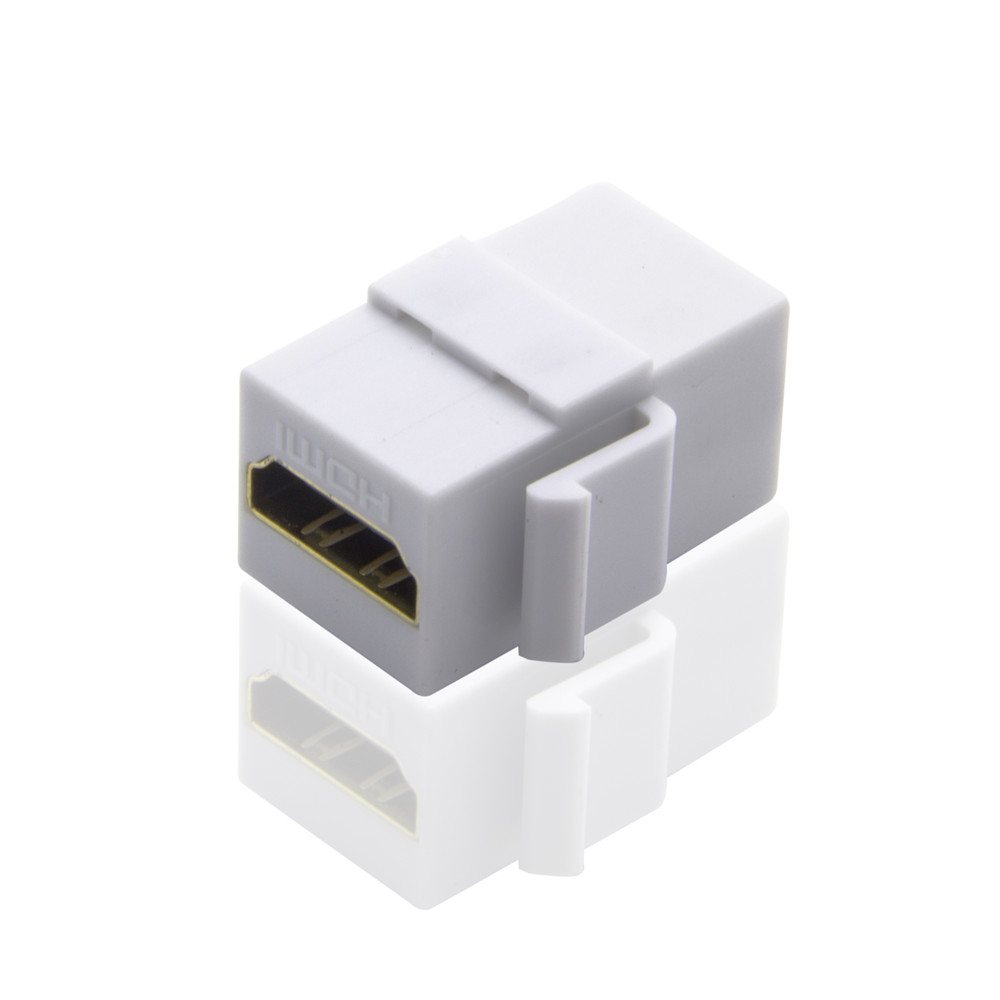
Where a lead is already long enough, that is the whole of the job. Where the run has to change direction behind the plate, the barrel does the turning instead of the cable, which matters because a Type-A plug has no bend relief of its own and a lead pulled sideways at the socket loads the shell of the plate. The HDMI 2.0 keystone jack for in-wall runs is rated to 18 Gbps with 4K at 60 Hz, HDR and 3D on the same page.
Does the coupler cost picture quality at 4K60?
It costs margin, not quality, and the margin is finite at 18 Gbps. An HDMI female to female Keystone jack adds one mated pair, so it adds insertion loss and a small reflection at the joint, and the loss grows with every extra barrel on the same run. Nothing in the part regenerates the signal, so a link that was already at the edge over a long lead can lose lock once the coupler joins the chain, and the symptom is a blank screen or a flicker rather than a softer picture.
| Property | Keystone jack | Pigtail behind a plate |
|---|---|---|
| Ports on the face | One HDMI socket | One HDMI socket |
| Leads needed | Two male leads | One male lead plus a tail |
| Depth behind plate | Barrel only | Tail bend radius |
| Signal path | One extra mated pair | One solder joint |
- Count the leads the wall has to accept
- Check the depth behind the plate
- Confirm the rate the display needs
Fit and strain matter as much as margin. A barrel that sits loose lets the lead’s weight hang on the socket, and the fit checks for a keystone coupler in a wall plate cover the clip and the opening together.
HDR, HDCP and CEC through a passive coupler
All three pass through, because an HDMI female to female Keystone jack passes every pin. HDR rides in the video stream, HDCP is negotiated end to end, and CEC has its own pin, so a straight-through barrel neither strips nor rewrites any of them.
Eilinks Eletronics keeps the pin map on the drawing for that reason. Where a customer reports HDR fell back to standard range after a wall was closed up, the coupler is the first part to swap, because it is the only element added at the wall and the cheapest to change. Pin 18 carries the +5 V rail and pin 19 is the hot-plug detect line, so a bent contact can leave a display unseen even though the picture path is intact.
Why does 4K60 drop out after a coupler and a long cable?
Because the coupler spends bandwidth margin the lead had already used. An HDMI female to female Keystone jack for 4K60 runs sits close to the 18 Gbps ceiling, where 4K at 60 Hz with 4:4:4 colour already lives, and each mated pair adds loss, so a run that measured clean on the bench can fail once the wall plate and its barrel are in the path. Raising the cable grade is the fix, not a second barrel.
The other cause is the display’s own input. Some panels lock at a lower rate when the handshake is marginal, so the source reports 4K60 while the screen shows 1080p, and the wall gets the blame. Eilinks tests the same two leads without the coupler first, which separates the cases in one step.
Panel cutout and depth for a keystone HDMI jack
The jack fits a standard keystone opening, and depth is the number to check. An HDMI Type-A plug is wider than a USB-C plug, so the barrel behind the plate needs more clearance, and a shallow box can stop the second lead seating fully. Measure from the plate face to the nearest obstruction, not from the wall surface.
Where space is tight, a right-angle lead on the display side does more than a shallower jack, because the strain relief sits outside the box. Buyers planning an HDMI female to female Keystone jack for wall plates should fix the lead exit direction on the drawing before the box goes in, since the plate cannot be re-cut once the wall is finished.

HDMI female to female Keystone jack vs a converter
One joins, the other translates. A jack carries HDMI signalling to an HDMI socket, so both ends stay HDMI and the ceiling is whatever the two devices and two leads can hold. A converter changes the signalling to DisplayPort or USB-C alt mode and has to negotiate that change, which is why it costs more and can fail on a standard the jack does not touch.
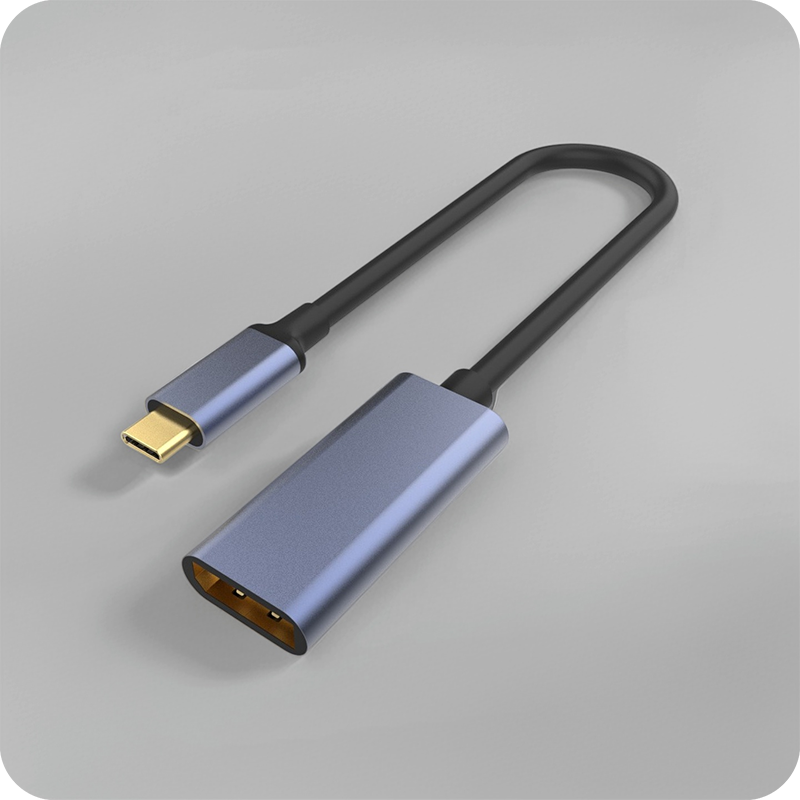
A coupler keeps HDMI as HDMI. Where the far end is a DisplayPort monitor, the part needed is a converter with its own electronics, and the China-built HDMI to DisplayPort cable shows the shape of that part: three plugs, one of them for power, because the chip inside draws current the HDMI rail alone will not supply, and a passive barrel has no way to pass that current through.
For a wall plate, the distinction decides the bill of materials: one passive module for every opening where both ends speak HDMI, and a powered converter only at the device end, not behind the plate. The two are not interchangeable at the plate, and the cost difference follows. Where the source is a laptop with no HDMI port, the video leaves over DisplayPort Alt Mode, whose connector side is defined in the USB Type-C specification at usb.org, and a USB-C to HDMI adapter for a wall plate carries that handshake at the device.
HDMI female to female Keystone jack CE marking requirements
CE marking requirements for an HDMI female to female Keystone jack attach to the finished product placed on the market, so the importer or brand owner holds the technical file and declaration. A passive module sits under the EMC and RoHS directives, and the file has to show the tests behind the pack claim.
HDMI adopter agreement requirements for HDMI female to female Keystone jack parts sit outside CE, and they apply to any product that carries the HDMI name or logo. Dongguan Eilinks keeps the rating figures and the licensing paperwork on separate lines, so a buyer can tell which claim belongs to which document.
What to confirm before ordering the jack
Five items settle the order, each answered by the wall and the two leads rather than by the photograph.
| Check | What to fix on the drawing | What it costs if missed |
|---|---|---|
| Orientation | Socket out on both faces | Plug will not seat at the plate |
| Depth | Clearance for the plug | Second lead stands proud of the box |
| Rate | HDMI 2.0 at 18 Gbps, or 2.1 at 48 Gbps | 4K60 drops once the wall is closed |
| Housing | Metal shell or moulded body | Shell distorts under a tight screw |
| Insertion duty | Cycles expected on a shared wall | Contacts relax inside a season |
A wall drawing, a lead datasheet and the display rate close four of the five before a sample. An HDMI female to female Keystone jack manufacturer works from those three documents, and the drawing review settles the housing.
- Name the two leads and the display rate
- Measure the depth behind the plate
- Fix the housing against the screw load
- Approve a sample in the real box
Questions buyers ask
Will the jack pass 4K at 60 Hz?
Where the two leads and both devices also support it. The jack is rated to 18 Gbps under HDMI 2.0, which carries 4K at 60 Hz, and it adds one mated pair to the chain. A long passive lead usually limits the run, not the module.
Can two couplers be used on one run?
They can be fitted, but each spends margin. Two barrels add four mated pairs to a link that already has two plugs at each end, so a 4K60 run with two couplers is worth testing rather than assuming. One plate per run is safer.
Does the jack work with HDMI 2.1 displays?
The connector is the same 19-pin Type-A, so a 2.1 display accepts it, but a passive barrel cannot create the 48 Gbps budget. A 2.1 source driving 8K through a coupler is limited by the leads and the module’s rating.
What should a China HDMI female to female Keystone jack supplier provide?
The pin map, the module’s rate, the housing material, the depth behind the plate and the insertion duty. A supplier that asks for the lead length and display rate first is working from the run, not a catalogue photo.
A keystone jack is a small part with one job, and the wall decides it. Match the module to the opening, check the depth against a Type-A plug, and keep the rate on the drawing so leads and jack agree. Eilinks Eletronics works from the wall drawing and the lead datasheet, and once those are settled the enquiry can go to the panel desk.

3 Comments
[…] is hard to reach, but it does not extend a run the way an inline coupler does behind the plate. The HDMI female to female Keystone jack panel run shows the same point measured on a 4K60 desk rather than a wall […]
[…] to reach, but it does not extend a VGA run the way an amplified coupler does behind the wall. The HDMI female to female keystone jack panel run shows the same point measured on a 4K60 desk rather than a wall […]
[…] is hard to reach, but it does not extend a run the way an inline coupler does behind the bench. The HDMI female to female keystone jack panel run shows the same point measured on a 4K60 desk rather than a wall […]